Government Fertilizer Subsidy is one of the biggest costs in farming today. When prices go up, farmers feel the pressure immediately—especially small farmers. That is why the government fertilizer subsidy programs in Pakistan are very important. These programs help farmers buy fertilizers at a lower price, so they can produce better crops and earn more profit.
In this simple guide, you will learn what fertilizer subsidies are, which fertilizers are covered (like Urea, DAP, and NPK), who can get the subsidy, how to apply, and how to use fertilizer correctly—especially for wheat. You will also get practical tips that you can use on your farm right away.
What is a Government Fertilizer Subsidy?
A Government Fertilizer Subsidy means the government helps reduce the fertilizer price for farmers. The government pays part of the cost, and the farmer pays the remaining amount.
The main goals are:
- Make fertilizer affordable for farmers
- Increase crop production (especially wheat, rice, sugarcane, cotton, maize)
- Support food security in Pakistan
- Reduce pressure from sudden market price jumps
Subsidy can be given in different ways, such as:
- Reduced price at registered dealers
- Vouchers or coupons
- Direct cash transfer (in some schemes)
- Subsidized bags for specific crops/season
Why Government Fertilizer Subsidy Matters for Pakistani Farmers
Fertilizer prices are linked with gas rates, imports, global markets, and supply. In Pakistan, fertilizers like Urea are locally produced but still affected by gas and transport costs. DAP and some NPK are often imported or linked to international prices, so their prices can rise fast.
A good subsidy program helps farmers:
- Apply the right fertilizer on time
- Avoid under-fertilization (which reduces yield)
- Improve crop quality and grain weight
- Plan farm expenses better
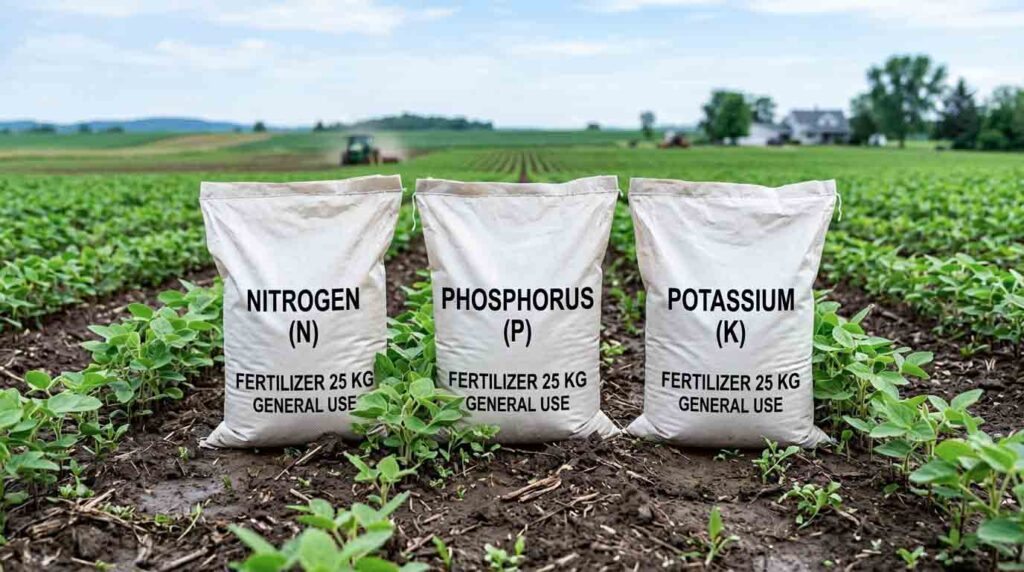
Fertilizer Types Covered in Subsidy Programs (Urea, DAP, NPK)
Most Government Fertilizer Subsidy programs focus on the major fertilizers used in Pakistan:
1) Urea (Nitrogen Fertilizer)
- Main nutrient: Nitrogen (N)
- Use: Fast growth, green color, tillers in wheat, more leaves in crops
- Common issue: If used too much, crop becomes too leafy and can fall (lodging), also attracts pests
Best practice: Split application (2–3 times), not all at once.
2) DAP (Diammonium Phosphate)
- Main nutrients: Phosphorus (P) + some Nitrogen
- Use: Strong roots, early growth, better flowering/grain formation
- Common issue: Farmers skip DAP due to high price, but it reduces yield a lot
Best practice: Apply at sowing time (especially for wheat).
3) NPK (Balanced Fertilizer)
- Main nutrients: Nitrogen + Phosphorus + Potassium
- Use: Balanced nutrition, better plant strength, disease resistance, improved grain filling
- Common issue: Some farmers use only urea and ignore potassium, causing weak plants
Best practice: Use NPK where soil is weak or where potash is needed (often in intensively farmed areas).
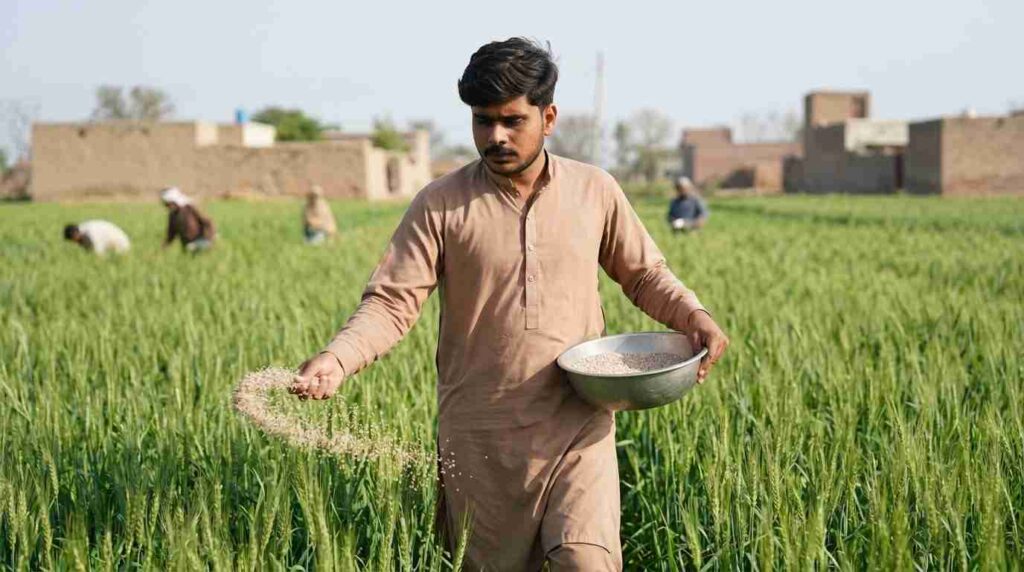
Common Government Fertilizer Subsidy Programs in Pakistan (How They Usually Work)
Programs can change by year and province, but most follow a similar method.
H3: 1) Subsidy Through Registered Dealers
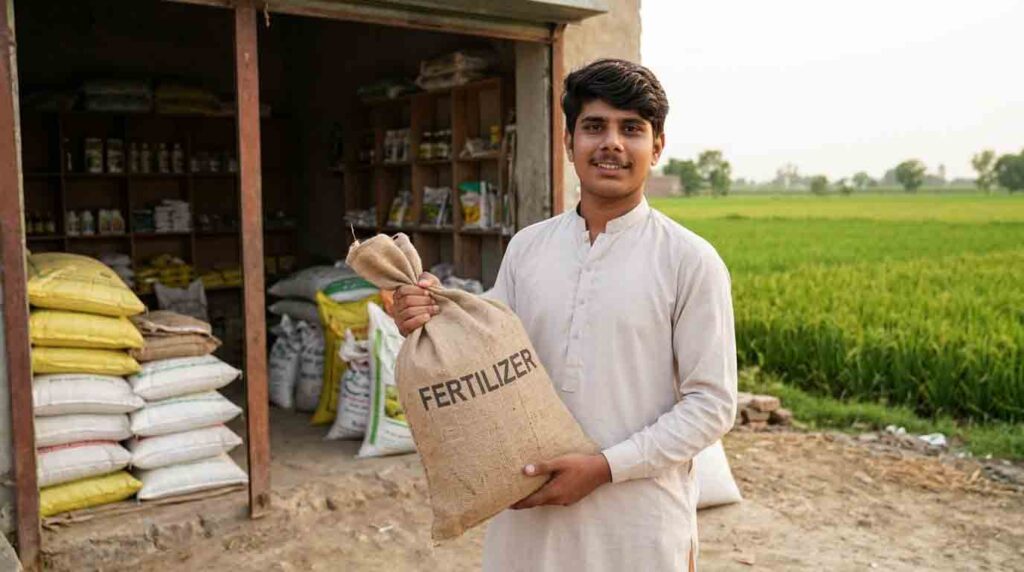
The government allows only registered fertilizer dealers to sell subsidized bags. Farmers buy fertilizer at a reduced price from these shops.
Tip: Always ask for receipt and check bag seal.
H3: 2) Subsidy via Kissan Card / Digital System (Where Available)
Some provinces introduce systems like Kissan Card or digital registration to ensure subsidy reaches real farmers.
Usually you need:
- CNIC
- Land record / tenancy proof (if required)
- Mobile number registered on CNIC
H3: 3) Seasonal Packages (Rabi and Kharif)
Many subsidies are announced for:
- Rabi season: Wheat, oilseeds
- Kharif season: Rice, cotton, sugarcane, maize
Sometimes government supports DAP more during sowing season because it is expensive and important for roots.
Who Can Get Government Fertilizer Subsidy?
In most cases, these farmers can apply:
- Small and medium farmers
- Owner farmers (zamindar)
- Tenant farmers (muzareen) in some programs
- Farmers registered with agriculture department or through digital portal
Farmers should keep these documents ready:
- CNIC
- Proof of farming (Fard, land passbook, or tenancy confirmation if required)
- Mobile SIM on CNIC
- If applying through a scheme: bank account or mobile wallet details (if needed)
Practical tip: If your mobile number is not on your CNIC, update it first. Many applications fail due to SIM mismatch.
How to Apply for Government Fertilizer Subsidy (Simple Steps)
Because different provinces run different systems, the exact method may change. But these steps work in most cases:
- Visit your local Agriculture Office (Tehsil or District)
- Ask about the latest Government Fertilizer Subsidy for your crop/season
- Complete registration (if not already registered)
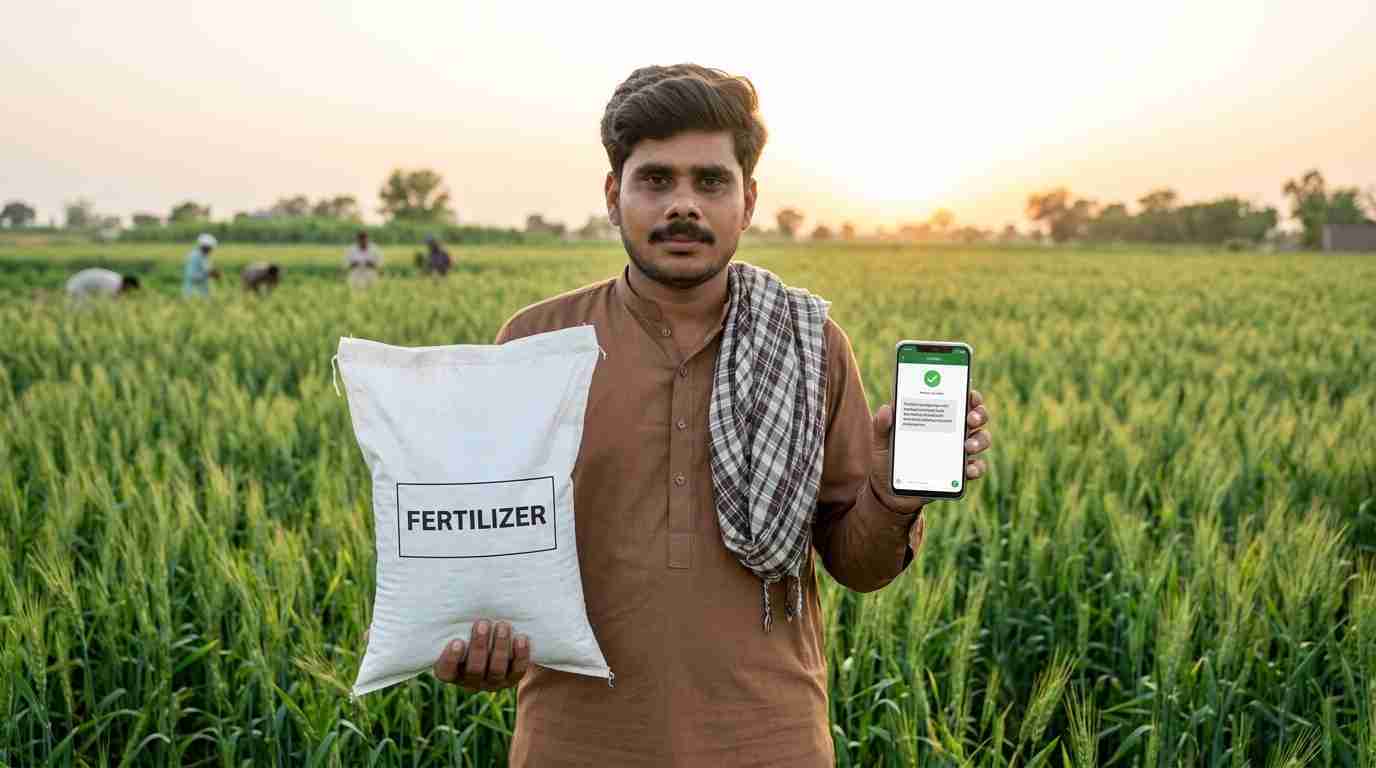
- Buy fertilizer from approved dealer OR receive voucher/confirmation SMS
- Keep record of:
- Dealer name
- Date of purchase
- Bags purchased
- Receipt and SMS

Tip: Do not trust agents who ask for extra money to “approve” subsidy. Government schemes are meant for farmers without bribes.
Wheat Fertilizer Schedule (Simple and Practical)
Wheat is Pakistan’s main food crop. Many farmers lose yield just because fertilizer is late or unbalanced. Below is a practical schedule that suits many wheat fields. For best results, do a soil test, but if not possible, use this as a strong general guide.
Recommended Fertilizer for Wheat (Per Acre)
Option A (Common farmer practice improved):
- DAP: 1 bag (50 kg) at sowing
- Urea: 2 bags (100 kg total) split into 2 times
Option B (Better balanced where possible):
- DAP: 1 bag at sowing
- Urea: 2 to 2.5 bags split
- Potash (if needed): SOP/MOP as per soil (many areas need it after repeated cropping)
H3: Best Time to Apply (Wheat Schedule)
1) At Sowing / Seed Time (Day 0)
Apply:
- DAP (1 bag/acre)
- Plus ½ bag urea if soil is weak or sowing is late (optional)
How to apply:
- Place fertilizer near seed (not directly touching seed) for better germination.
- If using drill, apply with drill for even placement.
2) First Irrigation (20–25 Days After Sowing)
Apply:
- 1 bag urea/acre
Tip: Apply urea just before irrigation or on moist soil. Do not apply on dry soil and then wait many days.
3) Second Irrigation / Tillering Stage (40–50 Days)
Apply:
- ½ to 1 bag urea/acre (depending on crop color and growth)
Simple field check:
- If wheat is pale/light green, urea is needed.
- If wheat is dark green and very lush, reduce urea to avoid lodging.
4) Optional: At Booting Stage (70–80 Days)
Only if crop is weak and you have good moisture:
- ¼ to ½ bag urea (small support dose)
Important: Late heavy urea can increase lodging and disease.
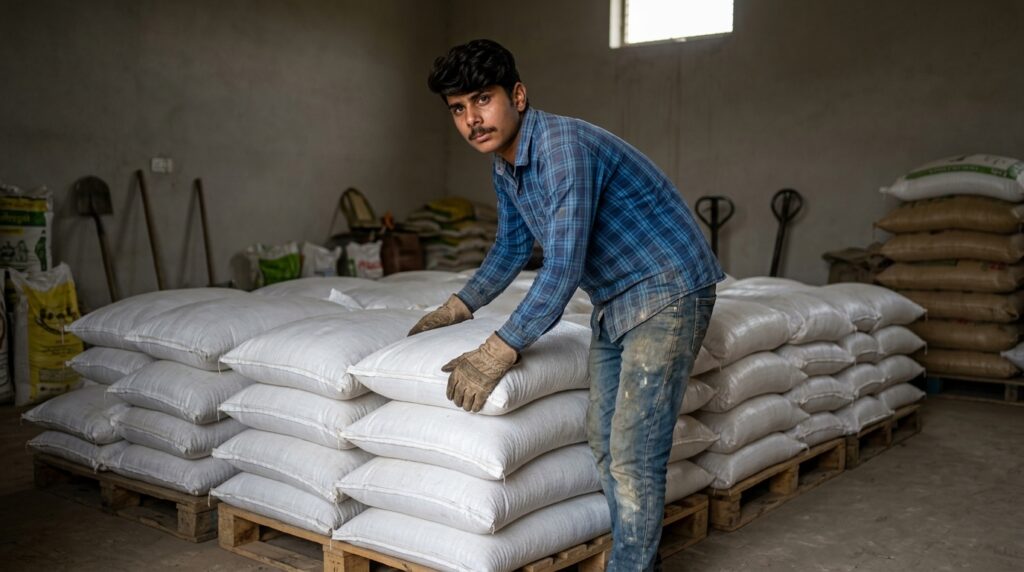
Practical Tips to Get Full Benefit from Subsidized Fertilizer
Subsidy helps only when fertilizer is used correctly. These tips can save your money and increase yield:
- Do not apply all urea at once. Split it for better use and less loss.
- Use DAP at sowing. Late DAP gives less benefit.
- Irrigation + fertilizer timing matters. Apply urea before irrigation or when soil is moist.
- Avoid fertilizer on very hot, dry days. Nitrogen loss increases.
- Check bag quality. Sealed bag, correct weight, proper company marking.
- Store fertilizer safely.
- Keep bags on wooden pallets
- Protect from water and humidity
- Balance nutrients. Only urea is not enough every year. Add phosphorus (DAP) and consider potash where needed.
- Do not overuse urea. Too much nitrogen causes:
- More pests (aphids, armyworm risk)
- Weak stems and lodging
- Lower grain quality
Common Problems Farmers Face (And Simple Solutions)
H3: Problem 1: Subsidized fertilizer not available
Solution:
- Check 2–3 registered dealers
- Contact local agriculture office
- Buy early (at start of season), not at peak demand
H3: Problem 2: Fake/low quality fertilizer
Solution:
- Buy from known dealer only
- Check bag stitching and labeling
- Ask for receipt every time
H3: Problem 3: Subsidy message not received
Solution:
- Confirm your SIM is on CNIC
- Re-check registration details at agriculture office
- Keep CNIC active and mobile reachable
Conclusion
The Government Fertilizer Subsidy programs in Pakistan are a strong support for farmers, especially when fertilizer prices rise. If you register properly, buy from approved dealers, and use fertilizers like Urea, DAP, and NPK at the right time, you can improve wheat and other crop yields without wasting money.
Use the wheat fertilizer schedule given above as a practical starting point. For the best results, try soil testing when possible and keep improving your fertilizer planning every season.
FAQs About Government Fertilizer Subsidy in Pakistan
1) What is the Government Fertilizer Subsidy?
It is government support that reduces fertilizer price for farmers. The government pays part of the cost so farmers can buy fertilizer cheaper.
2) Which fertilizers are usually included in subsidy programs?
Most programs cover Urea and often support expensive fertilizers like DAP and sometimes NPK, depending on the season and province.
3) Can small farmers and tenant farmers get the subsidy?
Small farmers are usually the main target. Tenant farmers may also qualify in some programs, but they may need proof of cultivation or registration through local offices.
4) What is the best fertilizer schedule for wheat in Pakistan?
A common schedule is 1 bag DAP at sowing and 2 bags urea split (first irrigation and second irrigation). Adjust based on crop condition and soil.
5) How can I avoid fake fertilizer when buying on subsidy?
Buy only from registered dealers, check sealed bags and labeling, and always take a receipt. If you suspect fake fertilizer, report to the agriculture department.