Best Way to Store Fertilizer is expensive in Pakistan, so storing it safely is as important as buying it. Many farmers lose money because fertilizer bags get wet in monsoon, hard lumps form, or bags tear due to poor stacking and rats. Bad storage can also create safety problems for children, animals, and workers.
This simple guide explains the best way to store fertilizer safely in Pakistan, especially common fertilizers like Urea, DAP, and NPK. You will also learn a step-by-step fertilizer usage method, and a useful table about soil testing methods, steps, and benefits (so you buy and use the right fertilizer, not extra).
Why Safe Fertilizer Storage Matters in Pakistan
Pakistan’s farming conditions make fertilizer storage challenging:
- High heat in summer (Punjab, Sindh, parts of Balochistan)
- High humidity and rains in monsoon (July–September)
- Flood water risk in some districts
- Small farm stores (kothi/room) with weak roofs and muddy floors
- Rodents and insects that damage bags
- Theft risk when fertilizer is stored in open areas
Common problems caused by poor storage
- Urea becomes wet and forms hard lumps
- Bags tear from the bottom due to damp floors
- Fertilizer gets contaminated with pesticides, diesel, or soil
- Wrong storage leads to wastage and uneven application in the field
Step 1: Buy and Transport Fertilizer Carefully (First Safety Step)
Safe storage starts before you reach home.
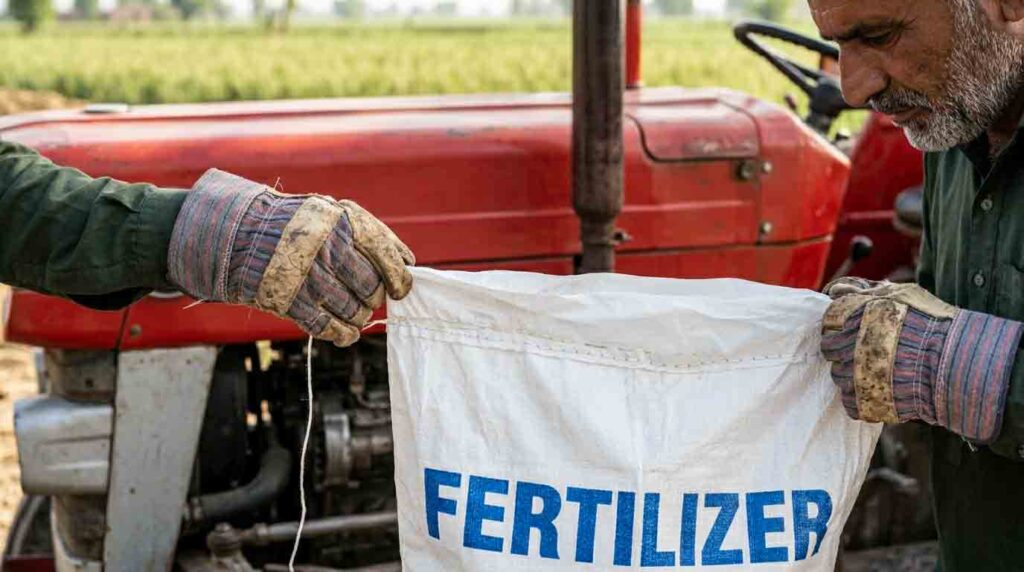
What to check when buying fertilizer
- Buy from a trusted dealer and demand a proper receipt.
- Check bag sealing and stitching (no leaks).
- Check manufacturing date/batch if available.
- Avoid bags that look wet, very hard, or re-stitched.
Transport tips (important in monsoon)
- Cover the bags with plastic sheet/tarpaulin on tractor trolley or pickup.
- Do not place bags directly on wet metal or muddy surfaces.
- If rain starts, stop and cover properly—one rain can damage many bags.
Step 2: Choose the Right Storage Place (Pakistan-Friendly Setup)
You do not need a big godown, but you need a dry, raised, and safe place.
Best storage location features
- Roof must not leak
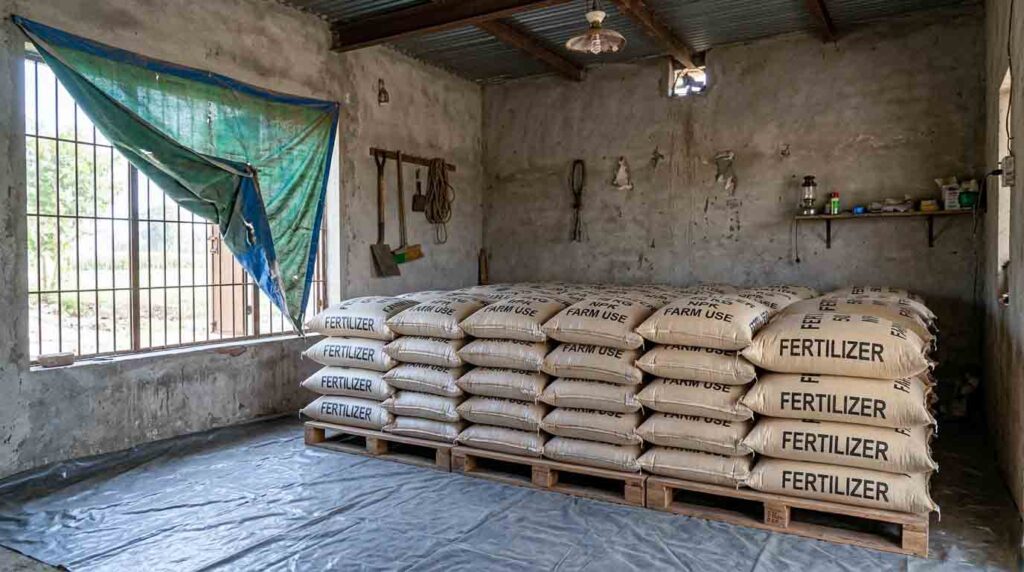
- Floor should be cemented (best) or covered with thick plastic
- Room should have air ventilation
- Place should be lockable (theft control)
- Not near animal feed, food grains, or drinking water
Simple storage room checklist
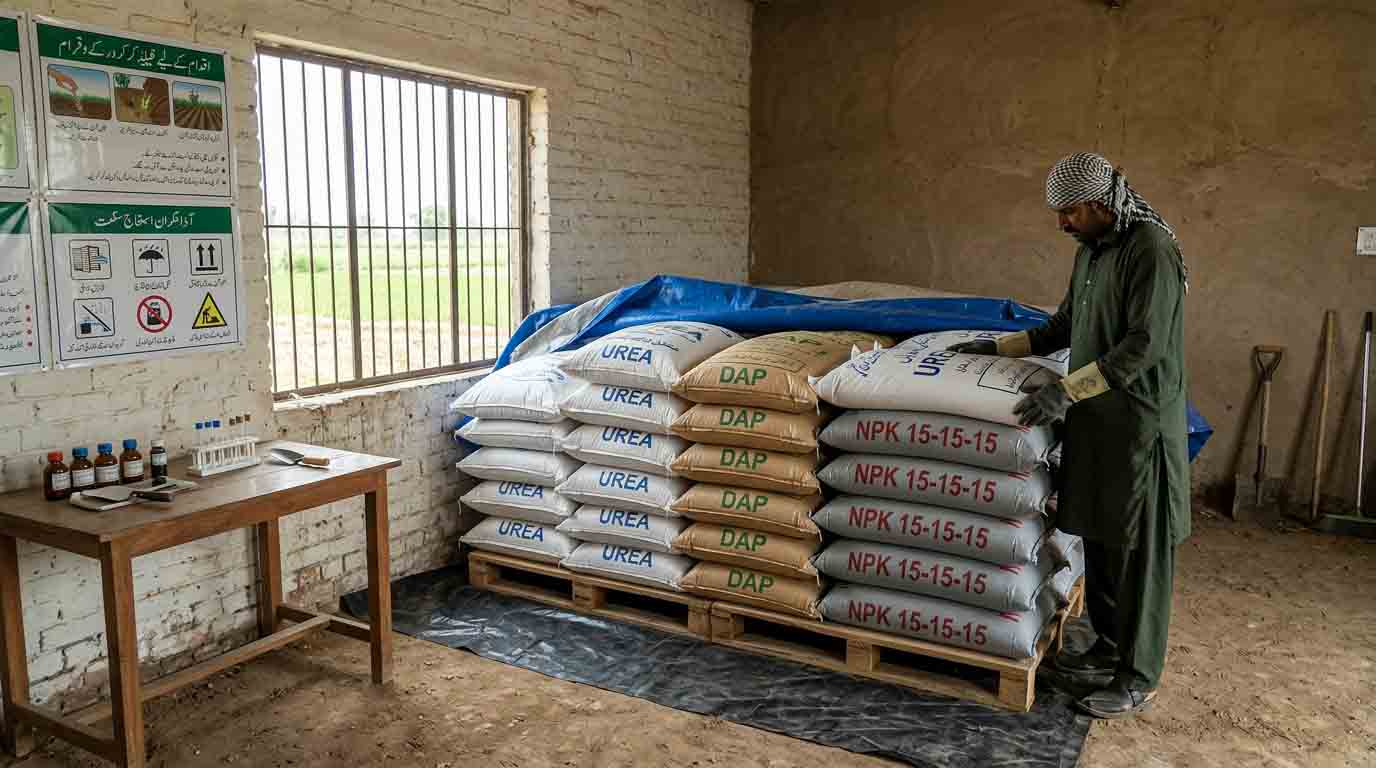
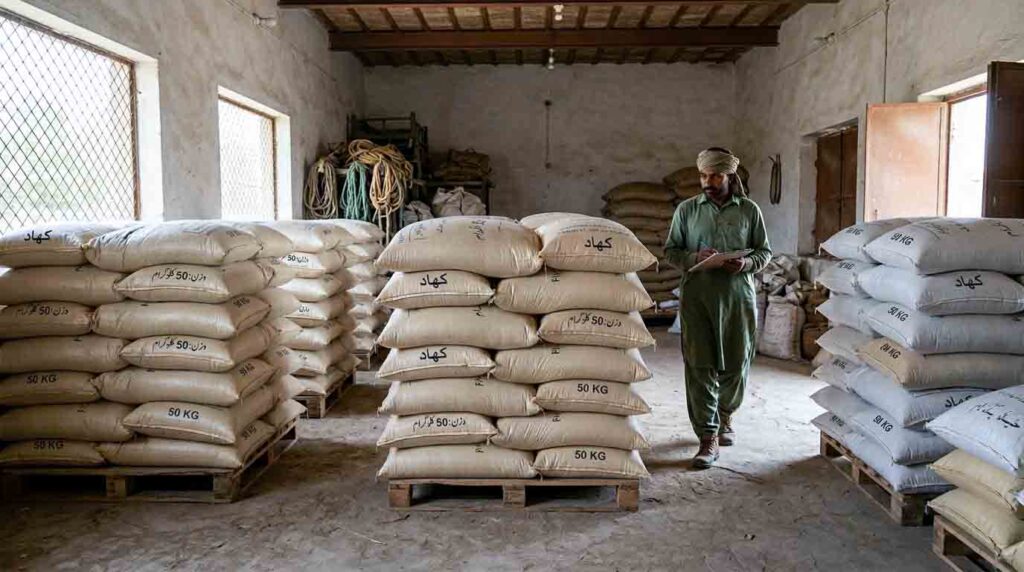
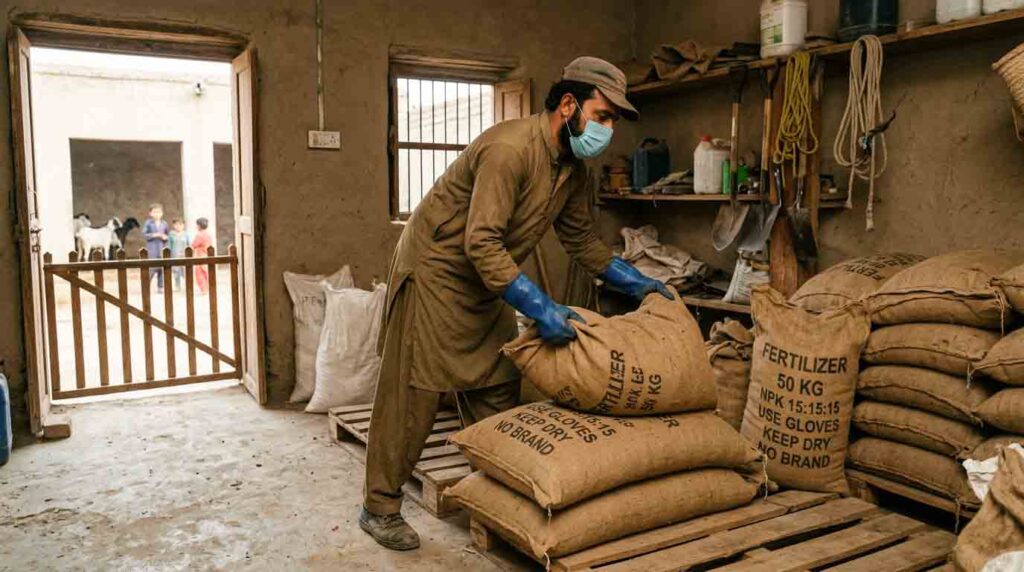
- Keep fertilizer at least 6 inches above floor (use wooden pallets or bricks)
- Keep fertilizer 1–2 feet away from walls (walls hold moisture)
- Keep windows/vents for airflow, but prevent rain entry
- Keep the room clean and dry, no standing water
Step 3: Correct Stacking Method (So Bags Don’t Tear or Get Wet)
Wrong stacking is a big reason for bag damage.
More Articles
- How to Start Farming in Pakistan Beginner’s Step-by-Step Guide 2026
- Complete Guide to Water and Fertilizer Management 2026
Safe stacking rules
- Place bags on pallets/wooden planks (never directly on the floor).
- Stack in a cross pattern (one layer horizontal, next layer vertical).
- Do not stack too high (especially in small rooms).
Good practice for small farmers:
Keep stacks 8–12 bags high maximum (depending on bag strength and room temperature). Very tall stacks press the lower bags, causing tears and lumps.
Leave space for inspection
- Leave a small walking space (aisle) to check for moisture, rats, and leaks.
- Keep a torch or light for quick inspection.
Quick Table: Storage Needs for Urea, DAP, and NPK (Easy Comparison)
| Fertilizer | Moisture sensitivity | Common storage issue in Pakistan | Best storage method |
|---|---|---|---|
| Urea | Very high (absorbs moisture fast) | Lumps, melting effect in humid weather | Keep extra dry, use pallets + plastic cover, close doors in rain |
| DAP | Medium | Caking (hardening) if damp | Keep in original bags, away from wet walls, good ventilation |
| NPK | Medium to high (depends on formula) | Lumps and uneven nutrient mix | Keep sealed, avoid long storage in humidity, follow FIFO method |
Step 4: Protect Fertilizer from Monsoon Humidity (Most Important in Pakistan)
Monsoon is the biggest enemy of fertilizer storage.
Monsoon protection steps
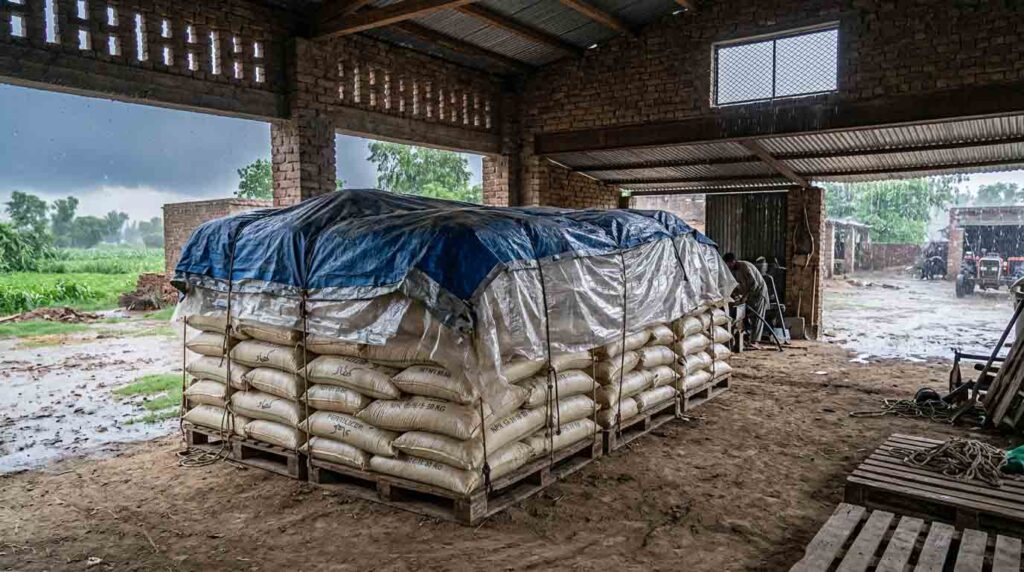
- Put a thick plastic sheet on the floor, then pallets, then bags.
- Cover stacks with a tarpaulin, but do not fully seal it like a tight wrap (some airflow is needed).
- Fix roof leaks immediately—one dripping point can ruin many bags.
- Keep doors closed during heavy rain, open them later for ventilation.
Practical tip: If your storage room is very humid, store only the amount you will use soon. Buying fertilizer in smaller lots can be safer than storing for months.
Step 5: Keep Fertilizer Separate from Pesticides, Diesel, and Seed
Never store fertilizer in the same corner with chemicals and fuels.
Keep fertilizers away from
- Pesticides and herbicides (risk of contamination)
- Diesel, petrol, and oils (safety risk)
- Seeds (fertilizer dust can reduce seed quality)
- Food grains and animal feed
Simple rule: One room is okay, but make separate areas with clear labeling.
Step 6: Worker and Family Safety Rules (Simple but Strong)
Fertilizers like urea, DAP, and NPK are commonly used, but still require safe handling.
Basic safety steps
- Wear gloves if you handle fertilizer daily.
- Use a mask/cloth if dust is high (especially during mixing and loading).
- Wash hands after work; do not touch eyes.
- Keep bags away from children and store in a locked room.
- Do not smoke inside the store.
Spill handling
- Sweep spilled fertilizer and use it in the field soon.
- Do not throw fertilizer into drains or water channels.
Step 7: Record Keeping and “First In, First Out” (FIFO)
Fertilizer quality stays better when older stock is used first.
Easy inventory method
- Write purchase date on bags with a marker.
- Use older bags first, newer bags later.
- Check bags every 1–2 weeks in monsoon.
If fertilizer becomes lumpy
- If it is clean and only hard, you can break lumps and apply.
- If it smells of chemicals, looks oily, or mixed with soil—do not use without expert advice.
Soil Testing Helps You Store Less and Use Better (Don’t Overbuy)
Many farmers buy extra fertilizer “just in case.” That increases storage time and risk. Soil testing helps you buy the right quantity and use it correctly.
Table: Soil Testing Methods in Pakistan (Steps + Benefits)
| Soil testing method | Where it is used | Simple steps | Benefits for farmers |
|---|---|---|---|
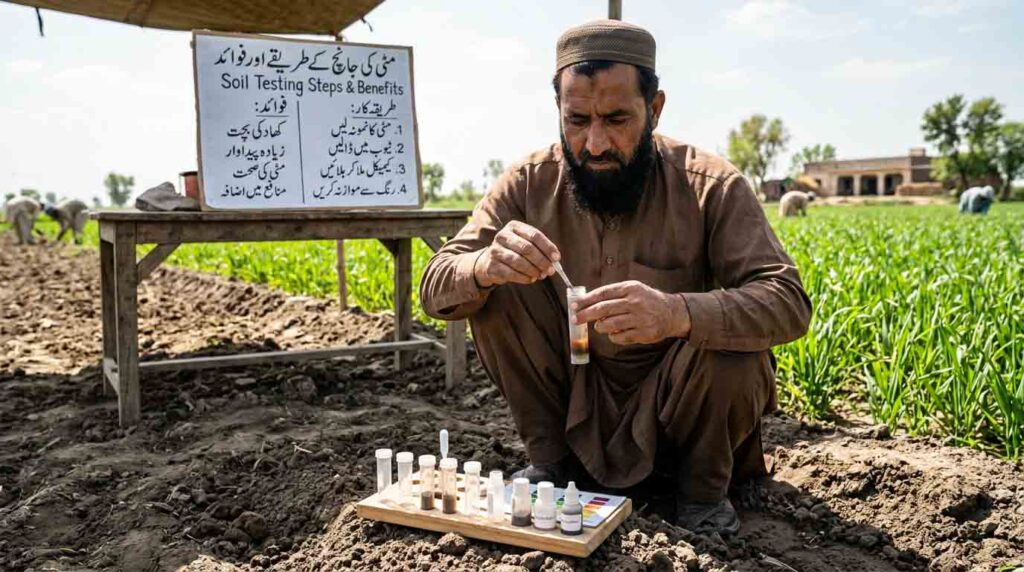
| Lab soil test (NPK, pH, EC, organic matter) | All provinces (recommended) | Take 10–15 samples → mix → send to lab → follow report | Saves fertilizer cost, improves yield, prevents salinity damage |
| Rapid soil test kit | On-farm quick checks | Take soil → use kit → match color | Fast decision for basic nutrient need |
| EC meter (salinity test) for soil/water | Saline areas (Sindh, South Punjab, Balochistan) | Check EC of tube-well water/soil paste | Helps choose suitable crops and avoid wrong fertilizer planning |
| Leaf/tissue test (orchards/vegetables) | High-value crops | Collect leaves → send to lab | Finds hidden micronutrient deficiency early |
Step-by-Step Fertilizer Usage (After Safe Storage)
Safe storage is useful only if fertilizer is applied correctly. Below is a simple step-by-step method that works for many Pakistani crops (wheat, maize, cotton, vegetables). Exact dose depends on soil test and crop.
Step 1: Start with soil test (best) or local recommendation
- Use soil report to decide how much nitrogen (N), phosphorus (P), potassium (K) you need.
Step 2: Apply DAP or NPK at sowing (basal dose)
- DAP is best for early root growth.
- NPK is helpful if soil is weak in more than one nutrient.
- Place fertilizer near the seed/root zone, but not touching seeds.
3: Apply Urea in 2–3 splits (do not apply all at once)
- 1st split: after germination / first irrigation
- 2nd split: tillering/branching stage
- 3rd split (if needed): before flowering/grain formation
Key rule in Pakistan: Apply urea when soil has moisture and irrigate soon (or apply just before irrigation). This reduces nitrogen loss and saves money.
Step 4: Irrigation timing matters
- Too much water can wash nutrients down.
- Too little water keeps fertilizer unused.
- Follow crop critical stages and avoid over-irrigation.
Step 5: Observe the crop and correct mistakes early
- Pale leaves can mean low nitrogen.
- Weak early growth can mean low phosphorus or cold stress.
- In problem fields, ask local agriculture officer before increasing fertilizer.
Practical Storage Tips for Pakistani Farmers (Quick List)
- Store fertilizer on pallets, not on mud or bare floor.
- Keep a plastic sheet under stacks and a tarpaulin on top.
- Keep fertilizer away from walls to avoid moisture.
- Do not store near diesel drums, pesticides, or animal feed.
- Keep the store locked and note stock on a register.
- Use FIFO: older bags first.
- Inspect stacks weekly in monsoon for wet spots and rats.
- Repair roof leaks immediately.
- Buy only the amount you can store safely for 1–2 months.
- Use soil test to avoid buying unnecessary bags.
Conclusion
The best way to store fertilizer safely in Pakistan is simple: keep it dry, raised, covered, and separate from chemicals. Urea needs extra care because it absorbs moisture quickly, while DAP and NPK also need proper stacking and ventilation. Good storage prevents lumps, bag damage, and money loss—especially during monsoon. Combine safe storage with soil testing and correct step-by-step fertilizer use, and you will get better results from every bag you buy.
FAQ: Fertilizer Storage in Pakistan
1) How long can I store urea in Pakistan?
If stored in a dry, raised, well-ventilated room, urea can be stored for months. But in monsoon humidity, it is better to store for a shorter time and use FIFO.
2) What should I do if urea or NPK becomes lumpy?
If the fertilizer is clean and only hardened due to moisture, you can break the lumps and apply. If it is contaminated with chemicals, oil, or soil, avoid using it without guidance.
3) Can I store fertilizer and pesticides in the same room?
It is not recommended. If you have only one room, keep them far apart, clearly labeled, and ensure no leakage or mixing. Pesticide contamination can damage crops and create health risks.
4) Is it okay to keep fertilizer bags in open air under a sheet?
Only for a very short time, and it is risky in Pakistan due to humidity, rain, and theft. A closed, dry room with pallets is much safer.
5) Does soil testing really help with fertilizer storage?
Yes. Soil testing helps you buy the correct quantity and reduces long storage periods, which lowers the risk of damage and waste.