Soil Testing Methods In this complete guide, you will learn about soil testing methods in Pakistan, why soil testing matters, how to collect soil samples, how to understand the report, and how to use fertilizers like Urea, DAP, and NPK in the right way. This article is written in simple English so farmers can easily understand and use the information in the field.
Why Soil Testing is Important in Pakistan
Pakistan has different soil types in Punjab, Sindh, Khyber Pakhtunkhwa, and Balochistan. Some areas have fertile loamy soil, while others face problems like:
- Low organic matter
- Salinity
- Sodicity
- Lack of nitrogen
- Phosphorus deficiency
- Potash shortage in some regions
- High pH in many soils
Because of these problems, one fertilizer plan does not work for every farm. Soil testing helps farmers know:
- Which nutrient is low in the soil
- Which fertilizer is needed
- How much fertilizer should be used
- Whether the soil is saline or alkaline
- How to improve crop yield and save money
What is Soil Testing?
Soil testing is the process of checking soil to find its nutrient level and condition. A soil test usually tells you about:
- Soil pH
- Electrical Conductivity (EC)
- Organic matter
- Nitrogen (N)
- Phosphorus (P)
- Potassium (K)
- Micronutrients like zinc, boron, and iron in some tests
This information helps farmers make the right fertilizer plan for wheat, rice, sugarcane, cotton, maize, vegetables, and orchards.
Common Soil Testing Methods in Pakistan
There are different soil testing methods used in Pakistan. Some are done in laboratories, while some can be done in the field.
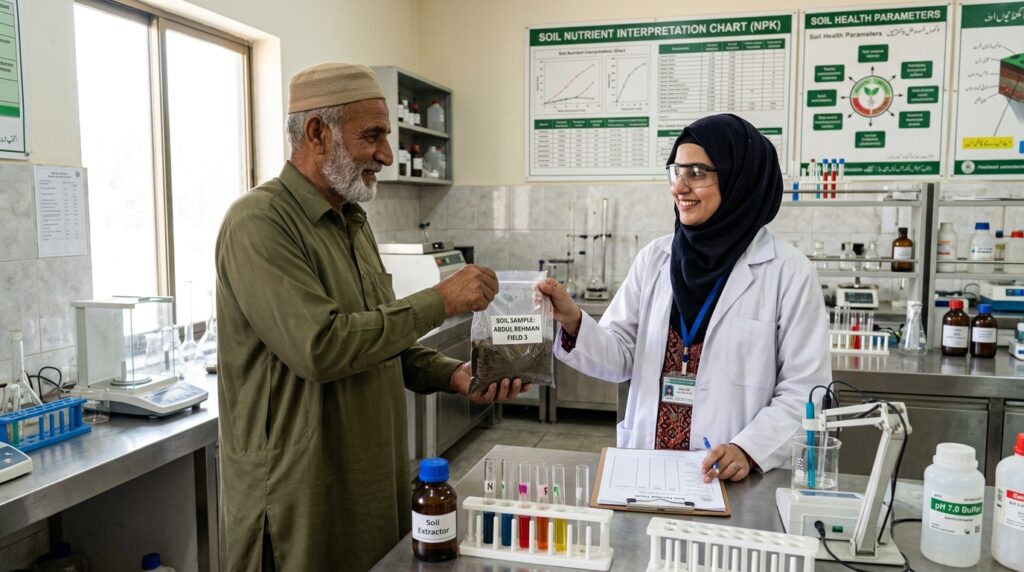
1. Laboratory Soil Testing
This is the most reliable method. Farmers collect soil samples and send them to a government or private soil testing lab.
What labs usually test:
- pH level
- Salinity (EC)
- Organic matter
- Available phosphorus
- Potassium
- Nitrogen status
- Micronutrients if needed
Benefits:
- Accurate results
- Detailed fertilizer recommendations
- Useful for all major crops
Where available in Pakistan:
- Agriculture department soil testing labs
- Universities
- Private agri labs
- Mobile soil testing services in some districts
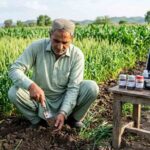
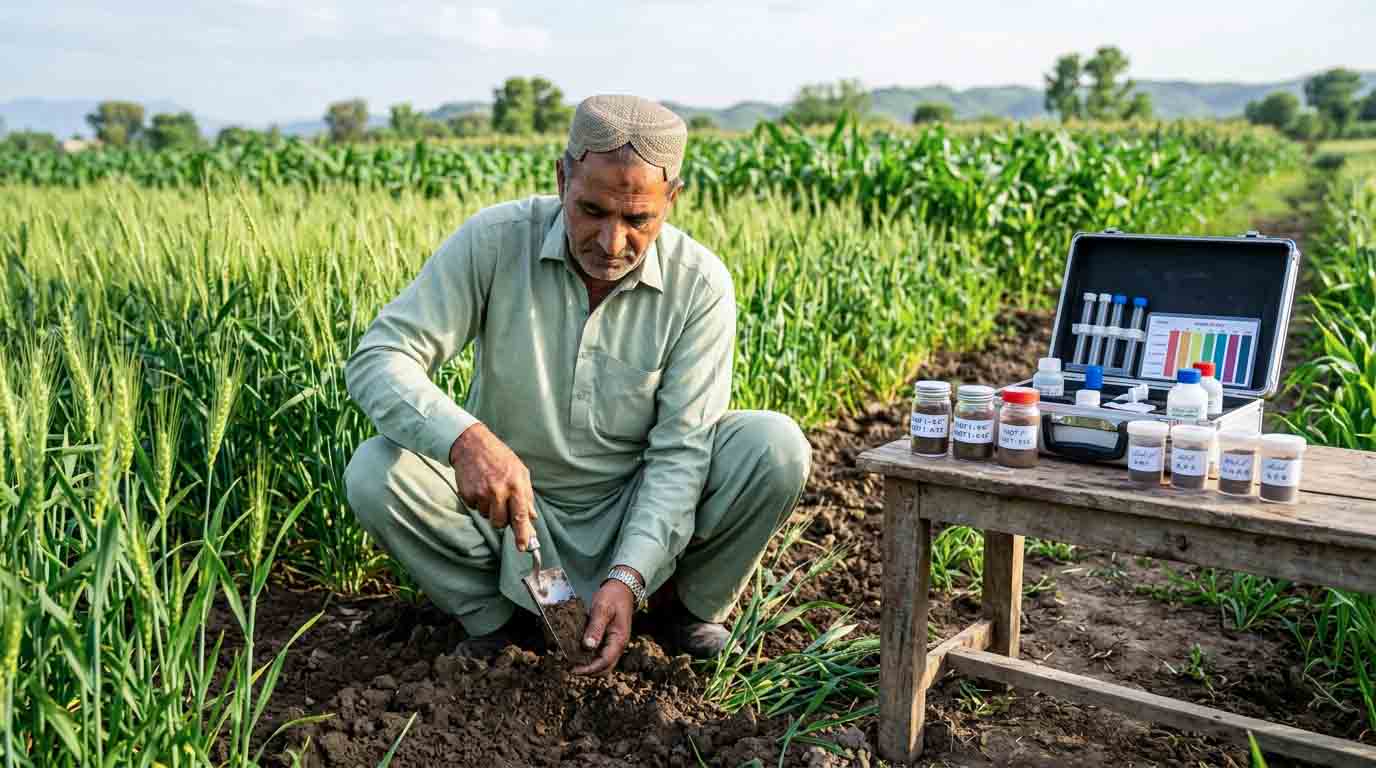
2. Rapid Field Testing Kits
These are simple kits used on the farm. They give quick results for pH, nitrogen, phosphorus, and potassium.
Benefits:
- Fast results
- Easy to use
- Good for basic checking
Limitations:
- Less accurate than lab tests
- Not enough for major fertilizer decisions in all cases
3. Mobile Soil Testing Services
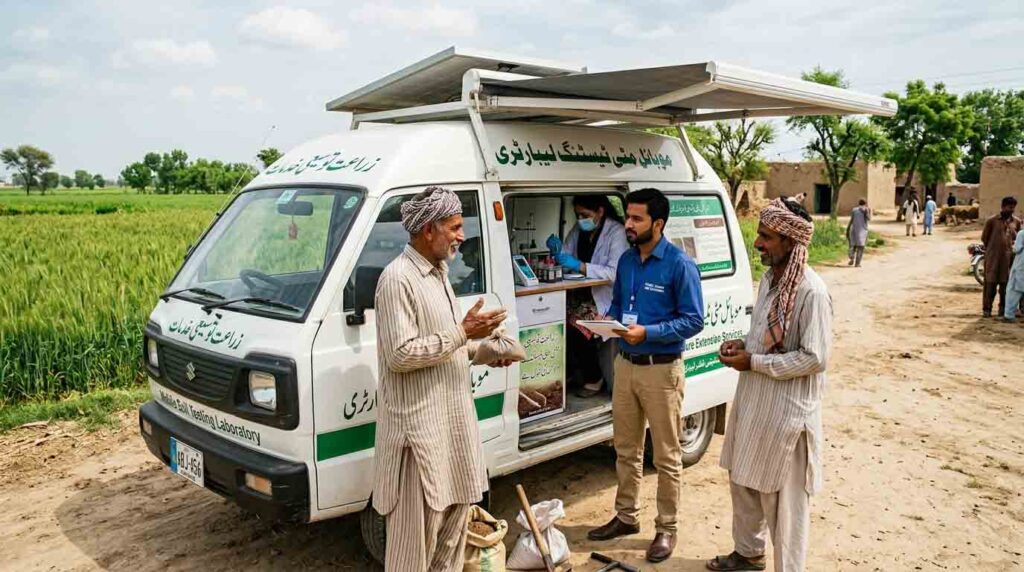
In some areas of Pakistan, mobile vans or agriculture extension teams provide soil testing services at the village level.
Benefits:
- Easy access for farmers
- Saves travel time
- Helpful in remote areas
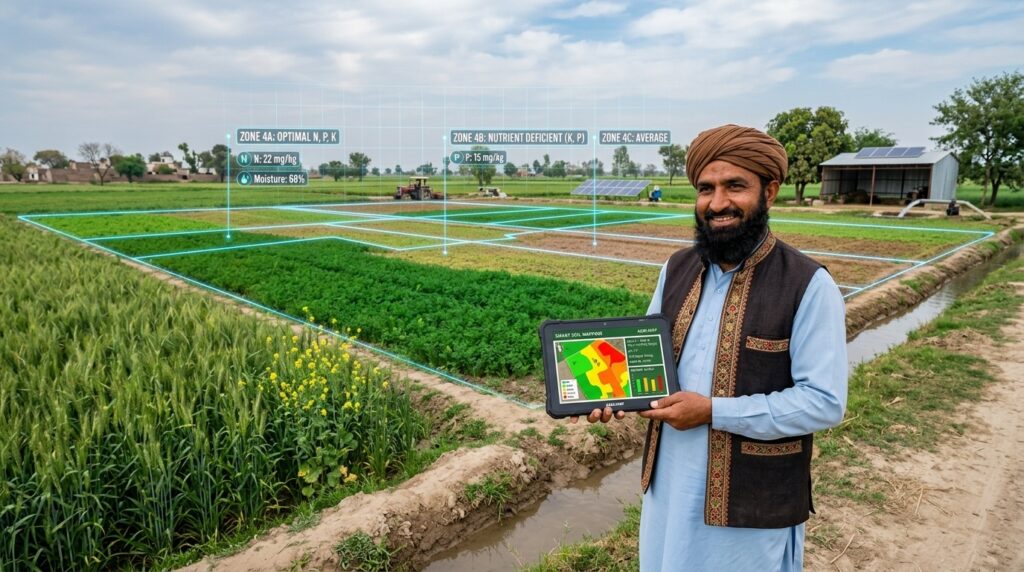
4. Digital and GPS-Based Soil Mapping
By 2026, modern farming in Pakistan is slowly improving. Some progressive farmers and agribusiness companies are using GPS-based soil mapping and digital reports.
Benefits:
- Better field planning
- Zone-wise fertilizer use
- Useful for large farms
Soil Testing Methods in Pakistan at a Glance
| Soil Testing Method | Where It Is Used | Accuracy Level | Cost | Best For |
|---|---|---|---|---|
| Laboratory Testing | Government/private labs | High | Medium | All crops, accurate fertilizer planning |
| Field Testing Kit | On-farm | Medium | Low | Quick basic testing |
| Mobile Soil Testing | Villages/farm visits | High to Medium | Low to Medium | Farmers in remote areas |
| Digital Soil Mapping | Large commercial farms | High | High | Precision farming and large land areas |
How to Collect a Soil Sample Correctly
A wrong sample gives a wrong report. So, proper sampling is very important.
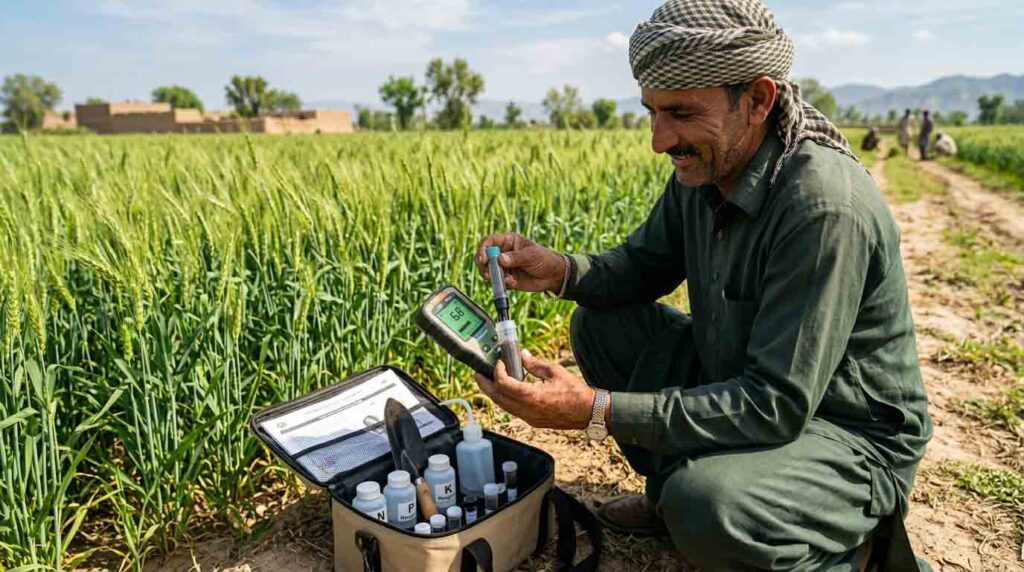
Step-by-Step Soil Sampling Method
1. Select the field
Choose one field with the same crop history and soil type. If one part is different, sample it separately.
2. Clean the tools
Use a clean spade, auger, or khurpa, and a clean plastic bucket.
3. Take soil from different spots
Collect soil from 8 to 15 places in the same field.
4. Sample depth
Use the correct depth:
- For most field crops: 0 to 6 inches
- For orchards: deeper samples may also be needed
5. Mix the soil well
Put all samples in a bucket and mix them properly.
6. Remove stones and trash
Take out leaves, roots, and stones.
7. Make a final sample
Take about half to one kilogram soil for lab testing.
8. Label the sample
Write clearly:
- Farmer name
- Village
- Field name or number
- Crop to be grown
- Date of sampling
9. Send to lab
Send it quickly to the nearest soil testing laboratory.
Best Time for Soil Testing
The best time for soil testing in Pakistan is:
- Before sowing a new crop
- After harvesting the previous crop
- Before applying fertilizer
- At least once every 1 to 2 years
For orchards and vegetables, regular testing gives better results.
More Articles
- Best Time and Method to Use Fertilizer for High Yield Crops
- Where to Buy Cheap Fertilizer in Pakistan 2026 Guide for Farmers
Understanding the Soil Test Report
Many farmers receive a soil test report but do not fully understand it. Here are the main parts in simple words.
1. Soil pH
This shows whether the soil is acidic, neutral, or alkaline.
- pH 6.5 to 7.5 is usually good
- Many soils in Pakistan are alkaline
- High pH can reduce nutrient availability
2. Electrical Conductivity (EC)
This shows salt level in the soil.
- High EC means salinity problem
- Salty soil can reduce seed germination and crop growth
3. Organic Matter
This is very important for soil health.
- Low organic matter is common in Pakistan
- It affects water holding, root growth, and nutrient supply
4. Nitrogen (N)
Nitrogen helps leaves and plant growth.
- Usually low in Pakistani soils
- Urea is commonly used to supply nitrogen
5. Phosphorus (P)
Phosphorus helps root growth and early plant strength.
- Many soils are low in phosphorus
- DAP is a common source
6. Potassium (K)
Potassium improves plant health, disease resistance, and grain quality.
- Some soils have enough, but many crops still respond well to potash or NPK fertilizers
Step-by-Step Fertilizer Usage After Soil Testing
Once you get the soil report, the next step is proper fertilizer use. Do not use fertilizer by guess. Follow a planned method.
Step 1: Read the nutrient status
Check whether nitrogen, phosphorus, and potassium are low, medium, or high.
Step 2: Match fertilizer with soil need
Use the right fertilizer:
- Urea for nitrogen
- DAP for phosphorus and some nitrogen
- NPK for balanced nutrition
- Add zinc, boron, or other micronutrients if the report recommends
Step 3: Decide the crop
Fertilizer need changes by crop:
- Wheat
- Rice
- Cotton
- Sugarcane
- Maize
- Vegetables
Step 4: Apply basal fertilizer at sowing
Basal fertilizer means fertilizer applied before or at sowing.
Usually:
- DAP is applied at sowing
- Some NPK formulas are also applied at sowing
Step 5: Split nitrogen application
Do not apply all Urea at one time.
For example:
- First dose at sowing or first irrigation
- Second dose at tillering/vegetative stage
- Third dose if crop needs more and moisture is available
Step 6: Use irrigation properly
Apply fertilizer when soil has enough moisture. Dry soil can reduce fertilizer efficiency.
Step 7: Monitor the crop
Check leaf color, growth, and crop health. If the crop still shows deficiency, consult the agriculture officer.
Best Fertilizers Used in Pakistan
Urea
Urea is the most common nitrogen fertilizer in Pakistan.
Benefits:
- Promotes green growth
- Improves leaf formation
- Gives quick nitrogen supply
Important tip:
Do not apply Urea on completely dry soil. Use it before irrigation or on moist soil.
DAP
DAP stands for Diammonium Phosphate. It gives phosphorus and some nitrogen.
Benefits:
- Strong root growth
- Better early crop development
- Helpful at sowing stage
Important tip:
Place DAP near the seed but not in direct contact with it.
NPK Fertilizer
NPK contains nitrogen, phosphorus, and potassium in balanced form.
Benefits:
- Balanced crop nutrition
- Useful for vegetables, orchards, and field crops
- Good where more than one nutrient is low
Important tip:
Choose the NPK grade according to soil test and crop need.
Simple Fertilizer Guide for Farmers
| Fertilizer | Main Nutrient | Best Time to Use | Main Benefit | Farmer Tip |
|---|---|---|---|---|
| Urea | Nitrogen (N) | Split doses after sowing | Fast vegetative growth | Apply with moisture or before irrigation |
| DAP | Phosphorus (P) + some N | At sowing | Better roots and early growth | Do not place directly on seed |
| NPK | Balanced N, P, K | At sowing or as recommended | Complete nutrition | Use soil test report to choose the right grade |
Practical Tips for Farmers in Pakistan
Improve soil health naturally
Along with chemical fertilizer, also use:
- Farmyard manure
- Compost
- Green manure
- Crop residue management
Avoid overuse of fertilizer
Too much fertilizer can:
- Waste money
- Burn plants
- Increase salinity risk
- Damage soil over time
Test water if needed
In tube well areas, irrigation water may also affect soil health.
Manage saline soils carefully
If the soil report shows salinity:
- Improve drainage
- Use quality irrigation water
- Consult local agriculture experts
- Consider gypsum if sodicity is present and recommended
Keep records
Write down:
- Soil test date
- Fertilizer used
- Crop yield
- Field problems
This helps improve decisions every season.
Conclusion
Soil testing is one of the best ways to improve farming in Pakistan in 2026 and beyond. It helps farmers know the true condition of their land, use the right fertilizer, save money, and grow better crops. Whether you grow wheat in Punjab, rice in Sindh, maize in KPK, or orchards in Balochistan, soil testing gives you a strong base for successful farming.
Instead of using fertilizer by guess, follow a proper plan based on soil test results. Use Urea, DAP, and NPK carefully and in the right amount. Also improve soil with organic matter and good water management. A small soil test today can give a big profit tomorrow.
FAQ About Soil Testing Methods in Pakistan
1. How often should farmers test their soil in Pakistan?
Farmers should test soil at least once every 1 to 2 years. For vegetables, orchards, and high-value crops, more frequent testing is better.
2. Which is the best soil testing method in Pakistan?
Laboratory soil testing is the best and most accurate method. Field kits are useful for quick checking, but lab tests are better for fertilizer planning.
3. Can soil testing reduce fertilizer cost?
Yes. Soil testing helps farmers apply only the needed fertilizer. This reduces waste and saves money.
4. Which fertilizers are commonly recommended after soil testing?
The most common fertilizers in Pakistan are Urea, DAP, and NPK. The final choice depends on the soil test report and crop requirement.