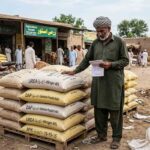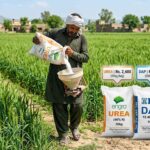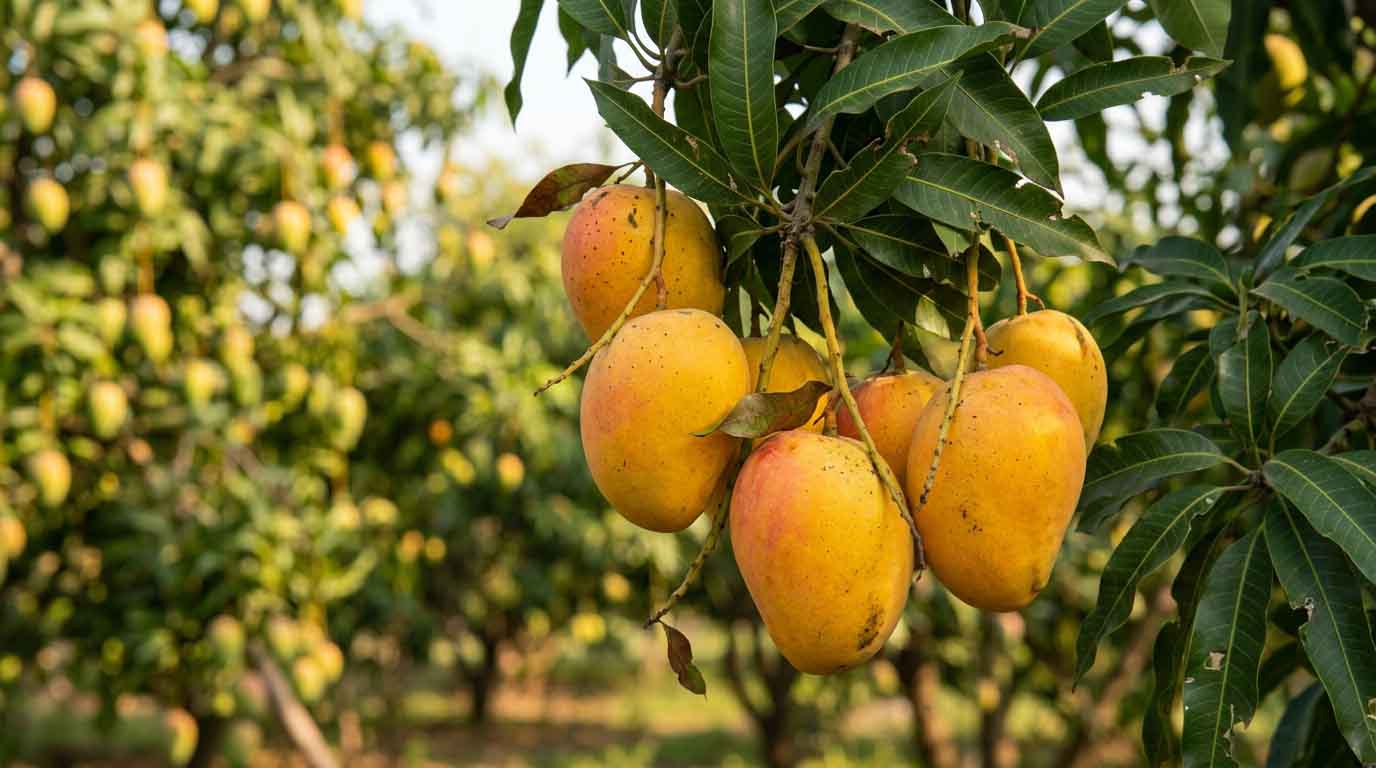
Mango Tree Nutrition Guide Mango is one of the most important fruit crops in Pakistan. It is loved by farmers, traders, and consumers. Punjab and Sindh are the main mango-growing areas, and good tree nutrition plays a big role in getting healthy trees, better flowering, high fruit set, and quality mangoes.
Many farmers focus only on irrigation and sprays, but fertilizer management is just as important. A mango tree needs balanced nutrition at every stage of growth. If the tree does not get the right nutrients at the right time, the result can be weak growth, low fruit production, fruit drop, and poor quality mangoes.
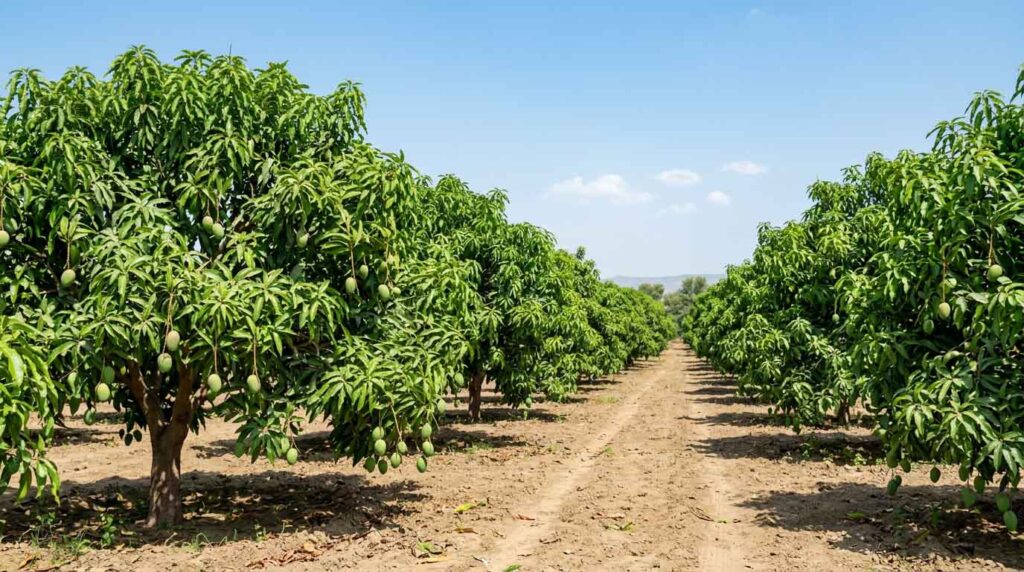
In this guide, we will explain mango tree nutrition in simple English for Pakistani farmers. You will learn which fertilizers are commonly used in Pakistan, how to apply them step by step, and what practical points can help you get better yield.
Why Mango Tree Nutrition Is Important
A mango tree needs food just like any other crop. Proper nutrition helps the tree in many ways:
- Strong root development
- Healthy leaves and branches
- Better flowering
- Improved fruit setting
- Bigger fruit size
- Good fruit color and taste
- Better resistance against stress and disease
If nutrition is poor, the tree may show weak growth, yellow leaves, less flowering, and fruit shedding. That is why balanced fertilizer use is necessary.
Main Nutrients Needed by Mango Trees
Mango trees need both major and minor nutrients. The most important nutrients are:
Nitrogen (N)
Nitrogen helps in vegetative growth. It makes leaves green and supports branch development. In Pakistan, Urea is the most common source of nitrogen.
Benefits of nitrogen:
- Improves leaf growth
- Makes trees stronger
- Supports new shoots after harvest
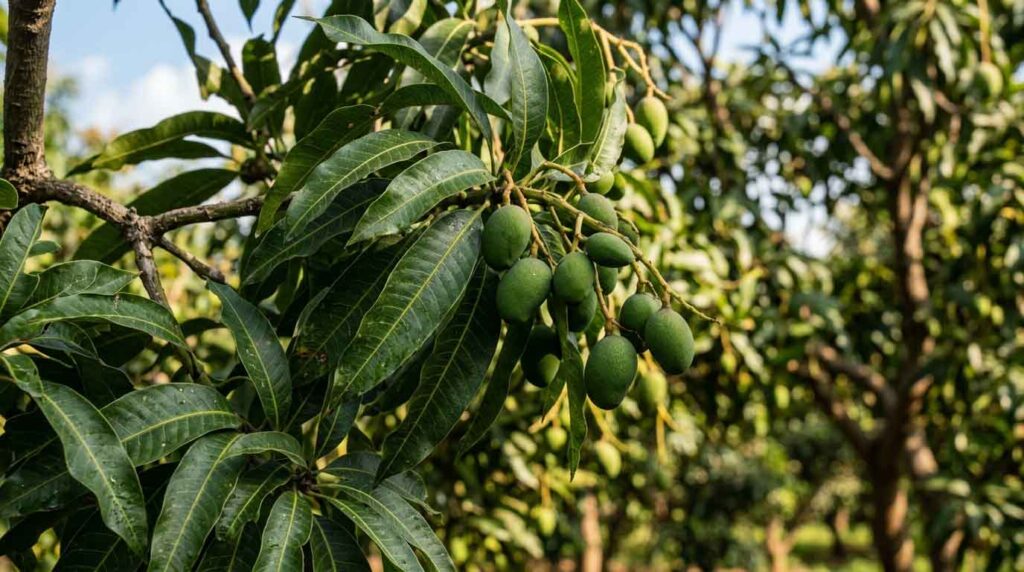
But too much nitrogen can cause excessive vegetative growth and reduce flowering. So farmers should use it carefully.
Phosphorus (P)
Phosphorus helps in root development and flowering. DAP is a common source of phosphorus used in Pakistan.
Benefits of phosphorus:
- Better root growth
- Strong flowering
- Improved fruit setting
Potash or Potassium (K)
Potassium improves fruit quality, size, color, and disease resistance. It is often supplied through NPK fertilizers or muriate of potash.
Benefits of potassium:
- Improves fruit size
- Increases sweetness and quality
- Helps trees tolerate stress
Secondary and Micronutrients
Mango trees also need:
- Calcium
- Magnesium
- Sulfur
- Zinc
- Boron
- Iron
These nutrients are needed in small amounts but are very important. Zinc and boron deficiency is common in Pakistani orchards.
Best Fertilizers for Mango Trees in Pakistan
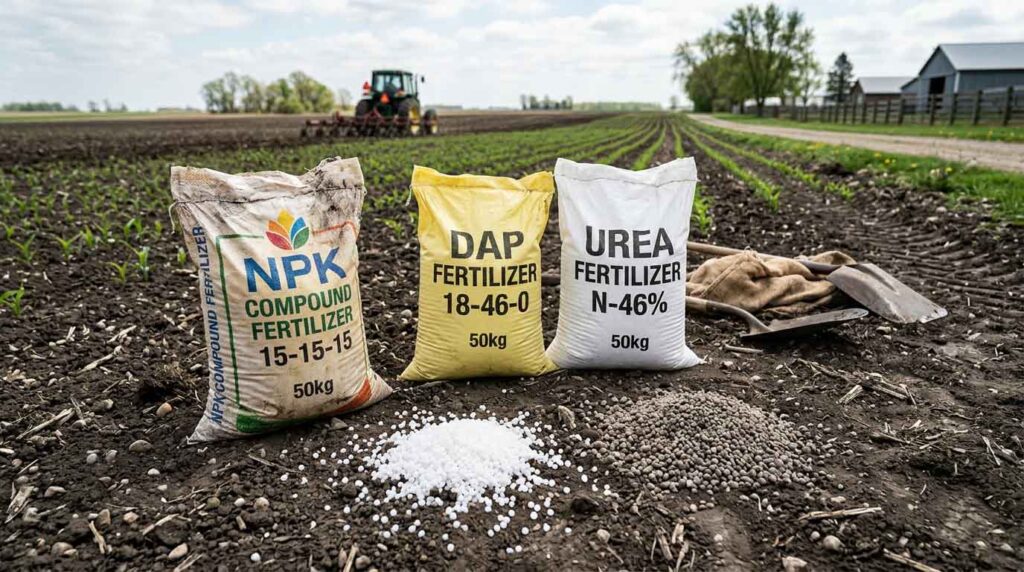
Pakistani farmers commonly use the following fertilizers for mango orchards:
Urea
Urea is the most widely used nitrogen fertilizer in Pakistan. It helps in leaf and shoot growth.
Use:
- For vegetative growth
- After fruit harvest
- In split doses for better results
DAP
DAP gives phosphorus and some nitrogen. It is useful for root growth and flowering support.
Use:
- At the start of the season
- Mixed in the soil around the tree basin
NPK Fertilizer
NPK fertilizers provide balanced nutrients. Different grades are available in the market, such as 15:15:15 or 20:20:20.
Use:
- For balanced nutrition
- Especially useful when trees need all three major nutrients
Mango Tree Fertilizer Requirement by Age
Fertilizer requirement depends on the age and size of the tree. New trees need less fertilizer, while mature fruiting trees need more.
Young Mango Trees (1-3 years)
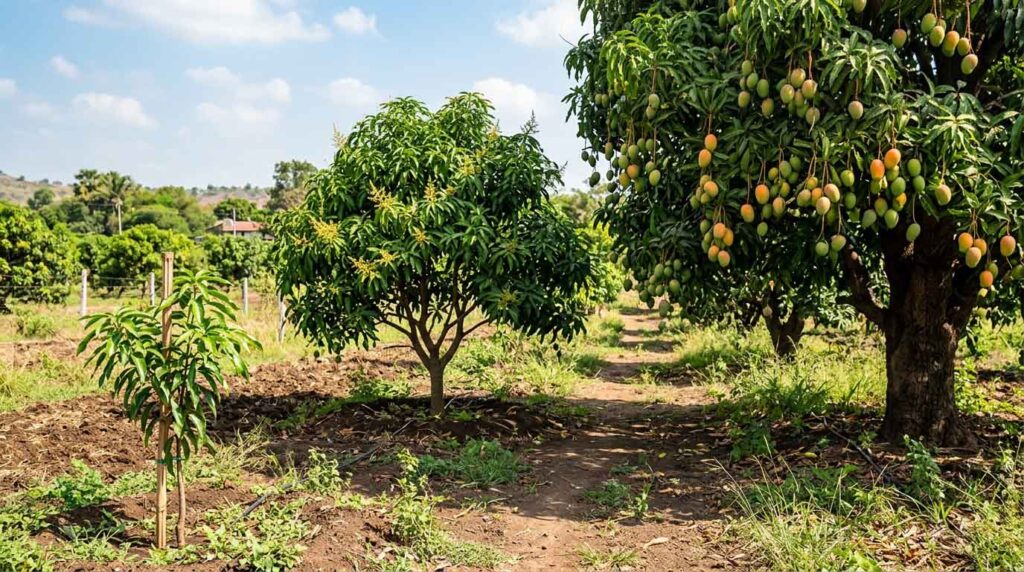
Young plants need nutrition for root and canopy development.
General recommendation:
- Small dose of Urea
- Small dose of DAP
- Organic manure like farmyard manure
Apply in 2 to 3 splits during the year.
Medium Age Trees (4-7 years)
These trees are entering production stage.
General recommendation:
- Increased Urea
- DAP before flowering
- Potash or NPK for balanced growth
Mature Fruiting Trees (8 years and above)
These trees need full nutrition for flowering and fruiting.
General recommendation:
- Farmyard manure once a year
- Urea in split doses
- DAP at the right time
- Potash or NPK for fruit quality
More Related Articles
- Potato Crop Fertilizer Guide Types Quantity and Timing
- Tips for Improving Onion Yield with Fertilizers in Pakistan
- Tomato Fertilizer Guide for Better Yield in Pakistan
For exact fertilizer quantity, farmers should consult local agriculture experts or get a soil test. Soil type in Punjab and Sindh may vary, so fertilizer needs also change.
Step-by-Step Fertilizer Usage for Mango Trees
This section is very important for farmers. Below is a simple step-by-step method for fertilizer application in mango orchards.
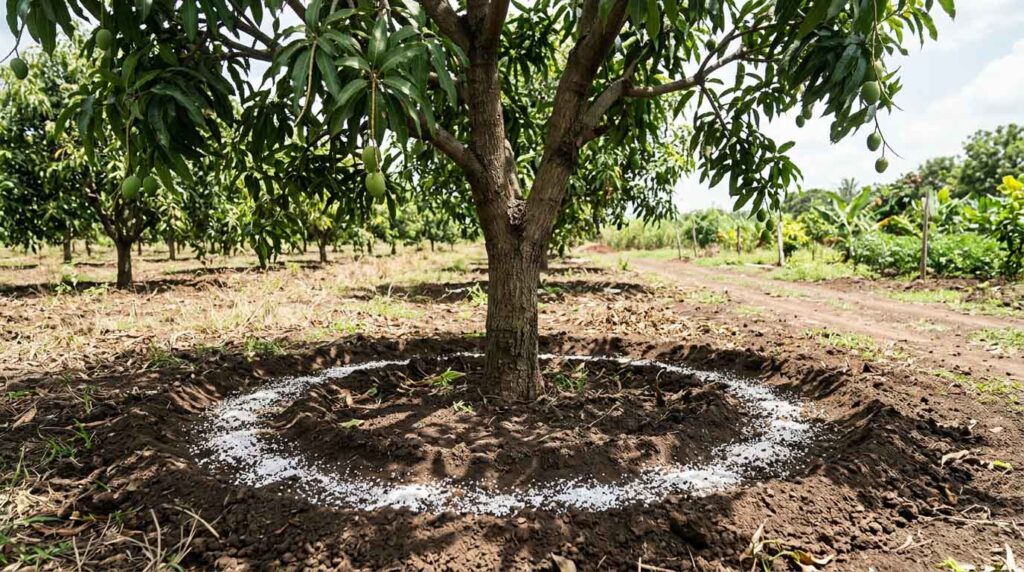
Step 1: Apply Organic Manure
Before the season starts, apply well-rotted farmyard manure around the tree.
How to apply:
- Remove weeds from around the tree basin
- Spread organic manure under the tree canopy
- Keep some distance from the trunk
- Mix lightly with soil
- Irrigate after application
Benefits:
- Improves soil fertility
- Increases water holding capacity
- Supports beneficial soil activity
Step 2: Apply DAP Before Flowering
DAP should be applied before flowering because phosphorus helps roots and flower formation.
How to apply:
- Make a circular band under the tree canopy
- Apply DAP evenly in the ring
- Cover lightly with soil
- Irrigate the orchard after application
Important tip:
- Do not place fertilizer too close to the trunk
- Apply where feeder roots are active, usually under the canopy edge
Step 3: Apply Urea in Split Doses
Urea should not be applied all at once. Split application gives better results and reduces nutrient loss.
A simple method:
- First dose after harvest for tree recovery
- Second dose before new vegetative flush
- Third dose if needed, according to tree condition
How to apply:
- Spread Urea evenly around the basin
- Mix lightly with soil
- Water immediately
Important point:
- Avoid applying Urea in very dry soil
- Avoid too much Urea at flowering stage
Step 4: Apply NPK or Potash for Fruit Development
When fruits start developing, potassium becomes important. It improves fruit size and quality.
How to apply:
- Use balanced NPK fertilizer or potash source
- Apply around the tree basin
- Irrigate after use
This is especially useful in orchards where fruit quality is weak.
Step 5: Use Micronutrient Sprays If Needed
If leaves show deficiency signs, foliar sprays of zinc and boron can help.
Common signs:
- Small leaves
- Yellowing
- Poor flowering
- Fruit drop
Farmers should use recommended doses and consult local extension staff before spraying.
Best Time to Fertilize Mango Trees in Pakistan
Timing is very important. Wrong timing can reduce fertilizer efficiency.
After Harvest
This is one of the best times to feed mango trees. The tree needs nutrients to recover and make strong new growth.
Before Flowering
Phosphorus and balanced nutrition at this stage support flowering and fruit setting.
During Fruit Development
Potassium and balanced NPK are useful for fruit size and quality.
During Monsoon With Care
Rain can help fertilizer dissolve, but too much rain can also wash nutrients away. Farmers should avoid fertilizer application just before heavy rain.
Practical Tips for Pakistani Farmers
Here are some easy and useful tips for better mango tree nutrition:
- Always apply fertilizer according to tree age and condition
- Use soil testing if possible
- Apply fertilizer under the canopy, not near the trunk
- Irrigate after fertilizer application
- Use split doses of Urea for better results
- Add farmyard manure every year
- Keep orchard free from weeds around the basin
- Do not overuse nitrogen, as it can reduce flowering
- Use zinc and boron sprays if deficiency appears
- In saline or weak soils, balanced fertilizer is more important
Common Signs of Nutrient Deficiency in Mango Trees
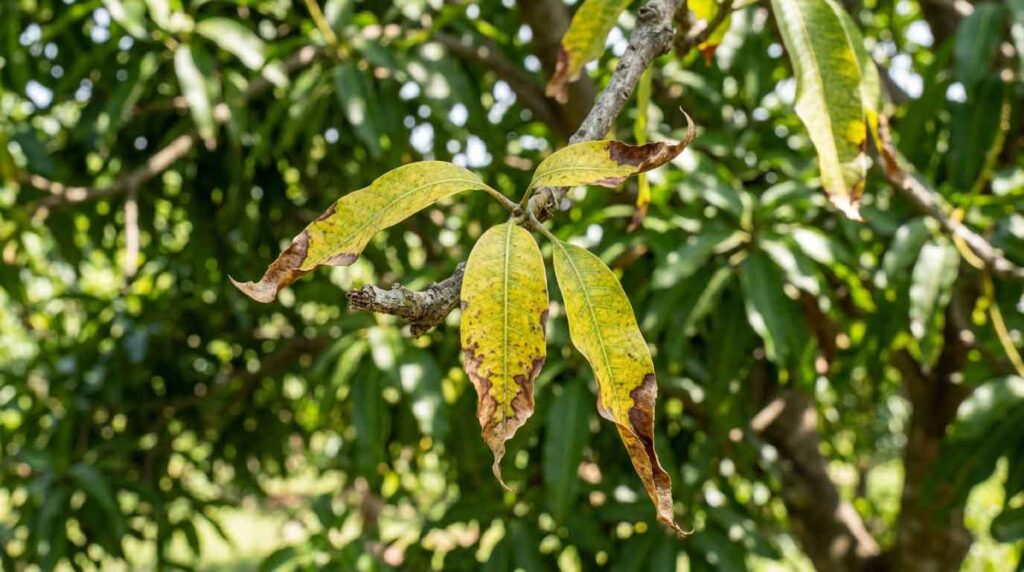
Farmers should watch the trees carefully. Common deficiency signs include:
Nitrogen Deficiency
- Pale green or yellow leaves
- Weak shoot growth
- Poor canopy development
Phosphorus Deficiency
- Weak roots
- Low flowering
- Poor growth
Potassium Deficiency
- Weak fruit quality
- Leaf edge burning
- Small fruits
Zinc Deficiency
- Small leaves
- Short internodes
- Poor flowering
Boron Deficiency
- Fruit drop
- Poor fruit set
- Deformed fruit
If these problems are seen, fertilizer planning should be improved quickly.
Importance of Soil Testing in Mango Orchards
Many Pakistani farmers use fertilizer based on guesswork. This can waste money and reduce yield. Soil testing is the best way to know what your orchard needs.
Benefits of soil testing:
- Saves fertilizer cost
- Prevents overuse
- Improves yield
- Helps choose the right fertilizer
If soil testing is not available, then farmers should at least observe tree growth, leaf color, and production pattern.
Conclusion
Healthy mango trees need balanced nutrition for strong growth, better flowering, and good fruit production. In Pakistan, the most common and useful fertilizers for mango orchards are Urea, DAP, and NPK. These fertilizers should be used at the right time and in the right quantity. Organic manure also plays a very important role in improving soil health.
Farmers should avoid random fertilizer use. Instead, they should follow a proper plan based on tree age, season, and orchard condition. Split use of Urea, timely application of DAP, and balanced NPK for fruit development can greatly improve mango yield and quality.
With proper nutrition management, Pakistani mango farmers can grow stronger orchards, reduce fruit loss, and get better profit from their crop.
FAQs About Mango Tree Nutrition
1. Which fertilizer is best for mango trees in Pakistan?
The most commonly used and effective fertilizers are Urea, DAP, and NPK. Urea provides nitrogen, DAP gives phosphorus, and NPK provides balanced nutrition.
2. When should I apply fertilizer to mango trees?
The best times are:
- After harvest
- Before flowering
- During fruit development
These stages are important for tree recovery, flowering, and fruit quality.
3. Can I use only Urea for mango trees?
No, using only Urea is not enough. Mango trees also need phosphorus, potassium, and micronutrients. Balanced fertilizer use gives better results.
4. Why are my mango tree leaves turning yellow?
Yellow leaves may be caused by nitrogen deficiency, zinc deficiency, poor irrigation, or weak roots. Farmers should inspect the orchard and improve fertilizer management accordingly.