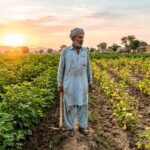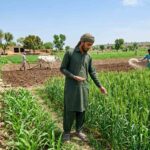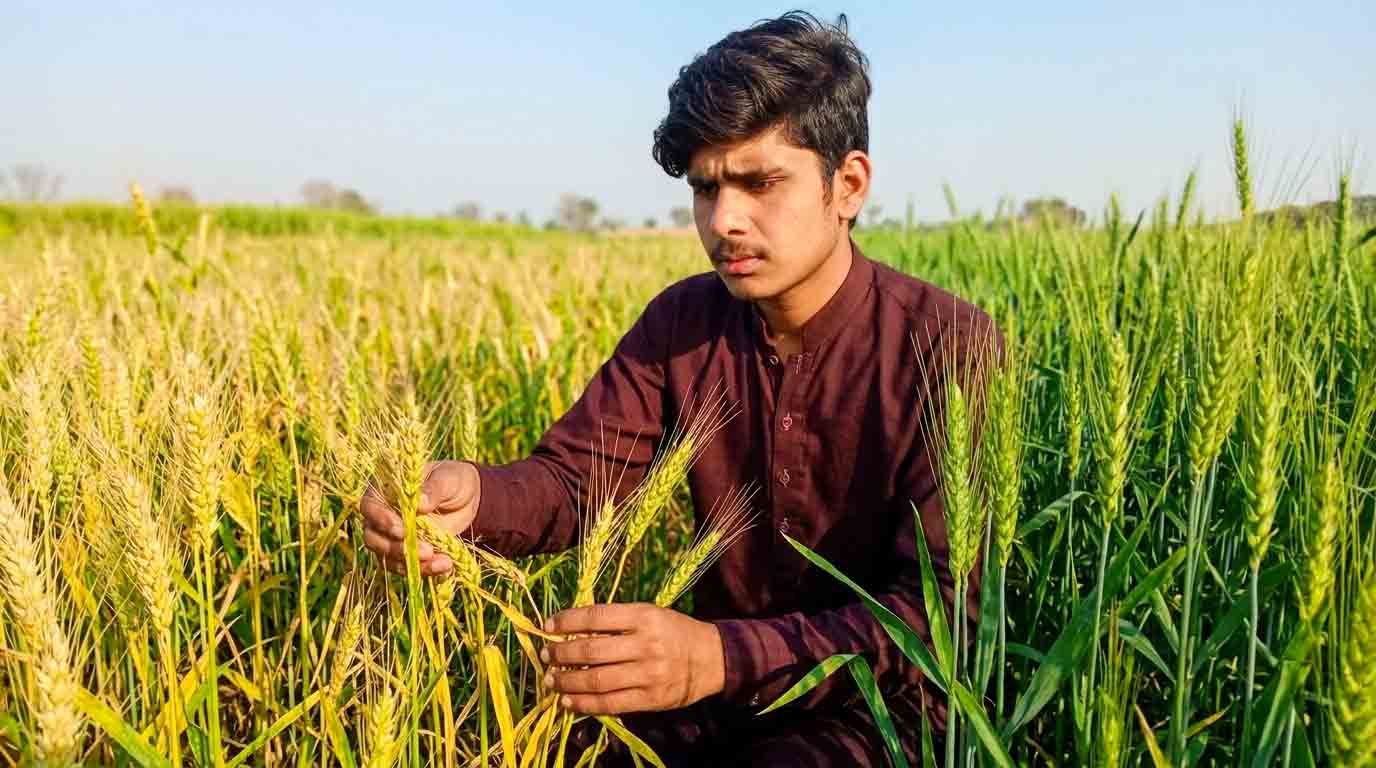
Crop is Turning Yellow For a Pakistani farmer, there is no better sight than a vast, lush green wheat field swaying in the winter breeze. Wheat (Gandum) is the backbone of our agriculture and the main source of food for our nation. However, many farmers get worried when they see their green fields starting to look pale or yellow.
If your wheat crop is turning yellow, you are not alone. Every year, thousands of farmers in Punjab, Sindh, and Khyber Pakhtunkhwa face this issue. Yellowing is a signal from the plant that it is under stress. If you catch the problem early, you can save your yield. If you ignore it, your harvest will decrease significantly.
In this guide, we will discuss exactly why the wheat crop is turning yellow and provide practical, easy-to-follow solutions to get your fields back to a healthy green color.
1. Lack of Nitrogen (The Most Common Cause)
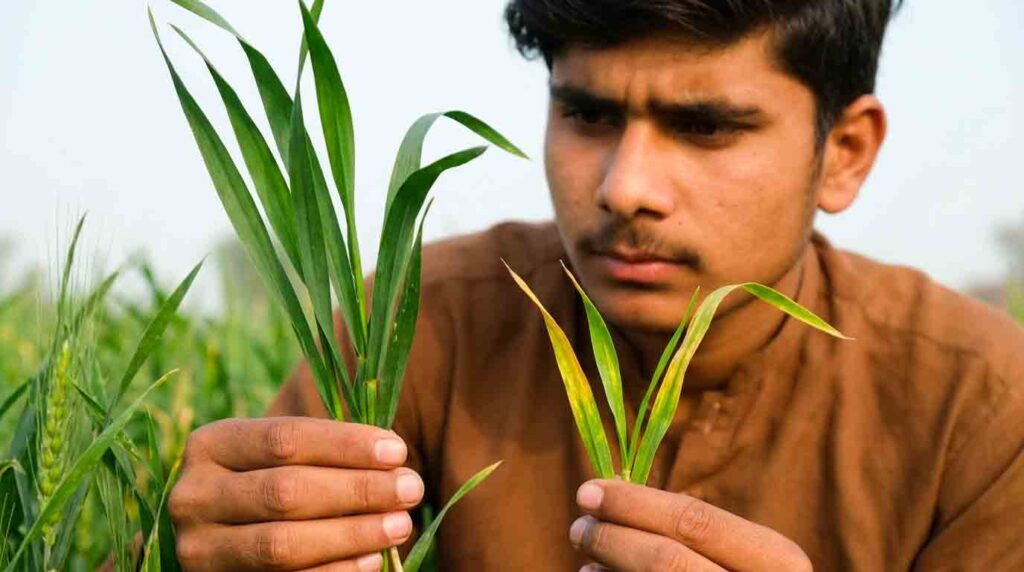
In Pakistan, the most frequent reason why the wheat crop is turning yellow is a deficiency of Nitrogen. Nitrogen is what gives the plant its deep green color and helps it grow tall and strong.
How to identify it?
If your wheat is lacking nitrogen, the yellowing will usually start from the older, bottom leaves. The tips of the leaves turn yellow first, and then the color fades toward the stem in a “V” shape. The whole field might look pale green instead of dark green.
The Solution:
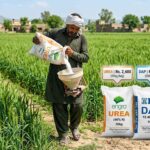
You need to apply Urea fertilizer. Urea is the best source of Nitrogen. In Pakistan, we usually apply Urea during the first and second irrigation (Kor Pani). If you missed this or the soil is very sandy, you may need an extra dose.
2. Over-Watering and Waterlogging
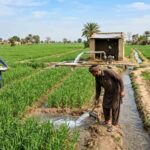
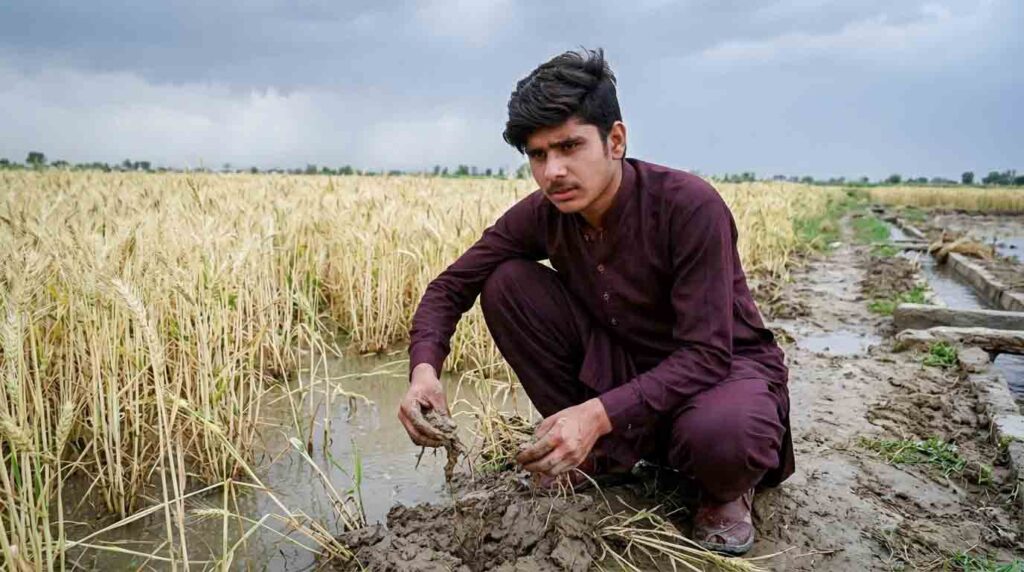
Sometimes, farmers think more water means more growth. This is a mistake. If water stands in the field for more than 24 hours, the roots of the wheat plant cannot breathe (lack of oxygen).
How to identify it?
When the field is waterlogged, the entire plant turns yellow, and growth stops (stunting). This often happens in heavy clay soils or low-lying areas of the field after heavy rain or excessive irrigation.
The Solution:
- Ensure proper drainage. If water is standing, dig a small channel to let it out.
- Always use “light irrigation” (Rauni) instead of flooding the field too deep.
- If the crop has already turned yellow due to water, apply a foliar spray of Urea (2kg Urea in 100 liters of water) to give the plant an instant boost.
3. The “Kor Pani” (First Irrigation) Mistake
In Pakistan, the first irrigation after sowing is called “Kor Pani,” usually done 20-25 days after sowing. This is a critical time. If you apply too much water during Kor Pani, the young roots get choked, and the wheat crop is turning yellow within days.
The Solution:
Apply the first irrigation very carefully. It should be just enough to moisten the soil, not drown it. Always apply Urea right before or along with this irrigation.
4. Phosphorus and Potassium Deficiency
While Nitrogen is important, the wheat crop also needs DAP (Diammonium Phosphate) and Potash (MOP/SOP).
- DAP Deficiency: If you didn’t apply enough DAP at the time of sowing, the roots will be weak. The leaves might show a purple or dark red tint before turning yellow.
- Potassium Deficiency: The edges of the leaves will look burnt or yellow, while the center stays green.
The Solution:
Ideally, DAP should be used at sowing. However, if you missed it, you can use liquid Phosphorus fertilizers or NPK sprays to help the plant recover.
5. Zinc and Micronutrient Deficiency
Modern Pakistani soils are becoming weak in micronutrients like Zinc, Boron, and Iron.
How to identify it?
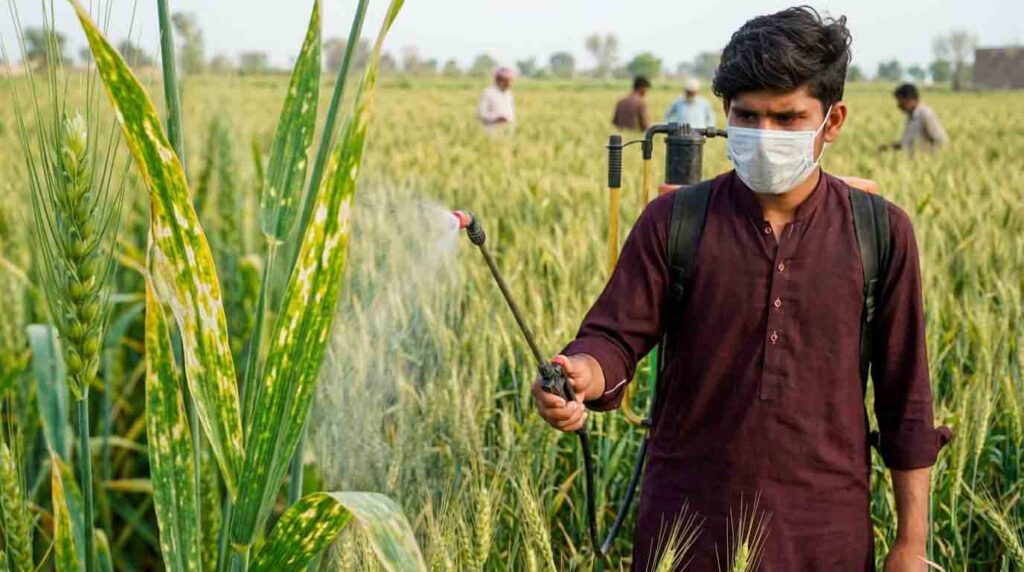
If you see yellow or white oily patches on the middle of the leaves, it is likely a Zinc deficiency. This is very common in rice-growing areas (Kalar belt) where wheat is planted after rice.
The Solution:
Use Zinc Sulphate (33% or 21%) at the time of the first or second irrigation. You can also use a chelated Zinc spray for faster results.
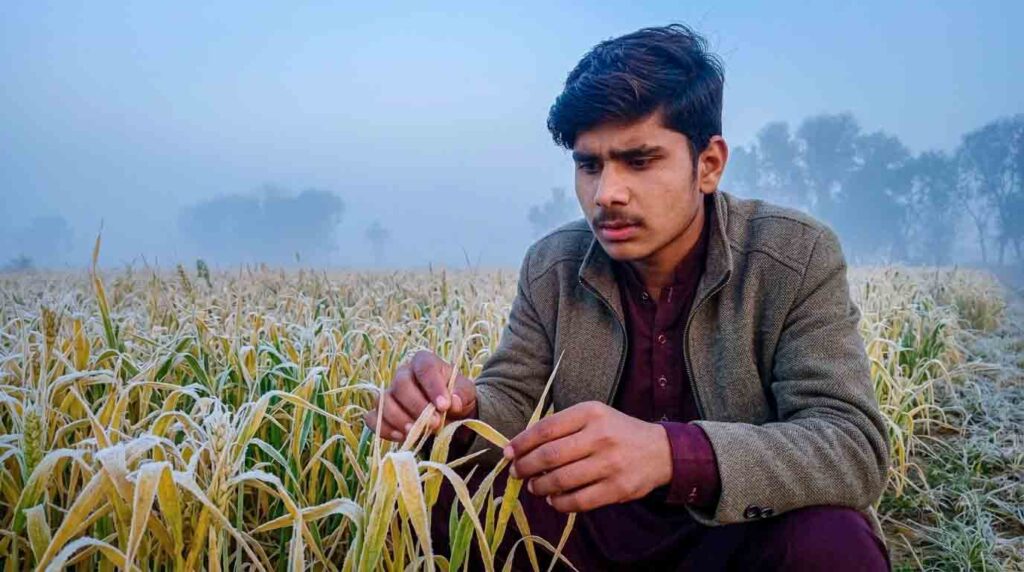
6. Cold Weather and Frost (Kora)
During December and January, the temperature in Punjab and KPK can drop significantly. Intense cold and frost can freeze the water inside the leaf cells, causing them to burst.
How to identify it?
The tips of the wheat leaves will look white or yellow-brown after a very cold night.
The Solution:
- Give a very light irrigation if a frost warning is issued. Wet soil stays warmer than dry soil.
- Sulfur-based sprays can also help the plant tolerate the cold better.
7. Herbicide Injury (Zehriley Asraat)
To kill weeds like “Dumbi Ghash” or “Jungli Jai,” farmers use sprays. If the spray is poor quality, used in the wrong quantity, or applied when the crop is already stressed, it can turn the wheat yellow.
The Solution:
- Only use recommended brands.
- Do not spray when the wind is high or when the soil is too dry.
- Use a “T-Jet” nozzle for even distribution.
- If your crop is yellowing after a spray, use an Amino Acid or NPK spray to help the plant recover.
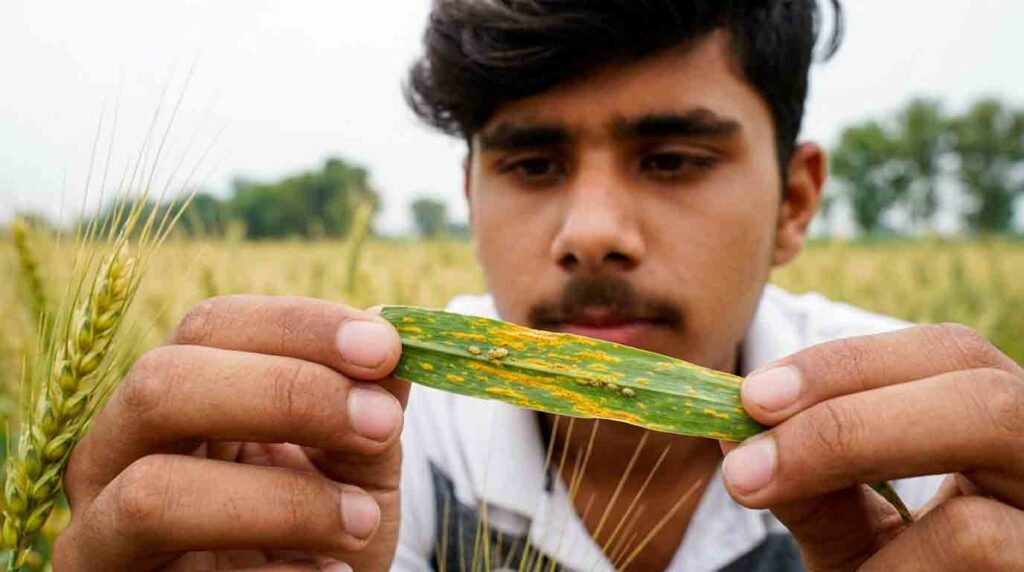
8. Diseases and Pests (Rust and Aphids)
Yellow Rust (Kungi) is a dangerous fungus. It looks like yellow powder on the leaves. If you touch the leaf, the yellow dust will stick to your fingers. Aphids (Teela) are small green insects that suck the juice from the leaves, making them turn yellow and sticky.
The Solution:
- For Rust: Use a fungicide like Tilt or Nativo immediately.
- For Aphids: Use a recommended insecticide if the population is high.
Proper Fertilizer Schedule for Wheat in Pakistan
To prevent your wheat crop from turning yellow, follow this general fertilizer plan. Note: This may vary based on your soil test report.
| Stage | Fertilizer Type | Quantity (per Acre) |
|---|---|---|
| At Sowing | DAP + SOP (Potash) | 1 to 1.5 Bag DAP + 1/2 Bag Potash |
| 1st Irrigation (20-25 days) | Urea | 1 Bag Urea |
| 2nd Irrigation (45-50 days) | Urea + Zinc | 1/2 to 1 Bag Urea + 5kg Zinc |
| 3rd Irrigation (Booting Stage) | NPK Spray / Urea | Light Urea or NPK Foliar Spray |
Real Practical Tips for Pakistani Farmers
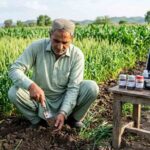
- Check the Roots: If your wheat is yellow, pull out one plant and check the roots. If they are brown or mushy, you have a water/fungus problem. If they are white and healthy, the problem is likely a nutrient deficiency.
- The “Urea Spray” Trick: If you can’t afford a full bag of Urea or need a quick fix, mix 2kg of Urea in 100 liters of water and spray it on one acre. You will see the crop turn green in 3-4 days.
- Don’t ignore Sulfur: Using Sulfur (around 5-8kg per acre) not only helps with greening but also protects the crop from some fungal diseases and helps the soil absorb other fertilizers better.
- Evening Spray: Always spray your micronutrients or weedicides in the afternoon when there is no dew (Shabnam) on the leaves.
- Soil Testing: Once every two years, get your soil tested from a government lab. It costs very little and saves thousands of rupees on the wrong fertilizers.
Understanding NPK: What Does Your Crop Need?
When you go to the market, you will see bags labeled NPK. This stands for:
- N (Nitrogen): For green leaves and height. (Found in Urea).
- P (Phosphorus): For strong roots and more grains. (Found in DAP).
- K (Potassium): For disease resistance and heavy grains. (Found in Potash).
If your wheat crop is turning yellow, it usually means the “N” (Nitrogen) is low, but you must ensure “P” and “K” are also present for the Nitrogen to work effectively.
Conclusion
Seeing your wheat crop turning yellow can be stressful, but in most cases in Pakistan, it is easily fixable. The key is to act fast. Start by checking your water levels. If the soil is not too wet, the problem is most likely a lack of Nitrogen or Zinc.
By following a proper fertilizer schedule—using DAP at sowing and Urea at the right irrigation stages—you can ensure your crop remains healthy and green. Remember, a green crop is the first step toward a “Bumper Crop.” Keep an eye on your fields, avoid over-watering, and use quality fertilizers.
Happy farming!
Frequently Asked Questions (FAQs)
1. Why is my wheat turning yellow after the first irrigation?
This usually happens due to “over-irrigation” or waterlogging. If the water stays too long, the roots stop taking up nutrients. It can also happen if you didn’t apply Urea with the first water.
2. Can I use Urea spray to fix yellowing?
Yes! A foliar spray of 2% Urea (2kg in 100 liters of water) is very effective for immediate greening. However, this is a temporary fix and does not replace the need for soil-applied fertilizer.
3. How do I know if the yellowing is caused by Rust (Kungi)?
Touch the yellow part of the leaf with your fingers. If a yellow or orange powdery substance sticks to your finger, it is Yellow Rust. You must use a fungicide immediately to stop it from spreading.
4. Will cold weather kill my wheat if it turns yellow?
Normally, wheat is a hardy crop. Yellowing due to cold (frost) usually only affects the tips of the leaves. Once the temperature rises in February, the crop often recovers on its own, but a light irrigation can help protect it during peak cold.
5. Does the use of weedicides make wheat yellow?
Yes, some weedicides can cause “shocks” to the wheat plant, especially if the dose is too high or the weather is very dry. This is called herbicide stress. The plant usually turns green again after 7-10 days, but an Amino Acid spray can speed up recovery.