Best Fertilizer Combinations Fertilizer is one of the most important parts of successful farming in Pakistan. Good seed, proper irrigation, and pest control are all important, but without the right fertilizer combination, crops cannot give their full yield. Many farmers use only Urea again and again, but crops also need phosphorus, potassium, sulfur, zinc, and other nutrients.
In Pakistan, soil fertility is becoming weaker in many areas because of continuous cropping, less use of farmyard manure, and unbalanced fertilizer use. That is why farmers need to understand the best fertilizer combinations for major crops in Pakistan.
In this article, we will explain simple and practical fertilizer combinations for major crops like wheat, rice, maize, cotton, sugarcane, and vegetables. We will also discuss the role of Urea, DAP, and NPK, step-by-step fertilizer use, and practical tips for farmers.
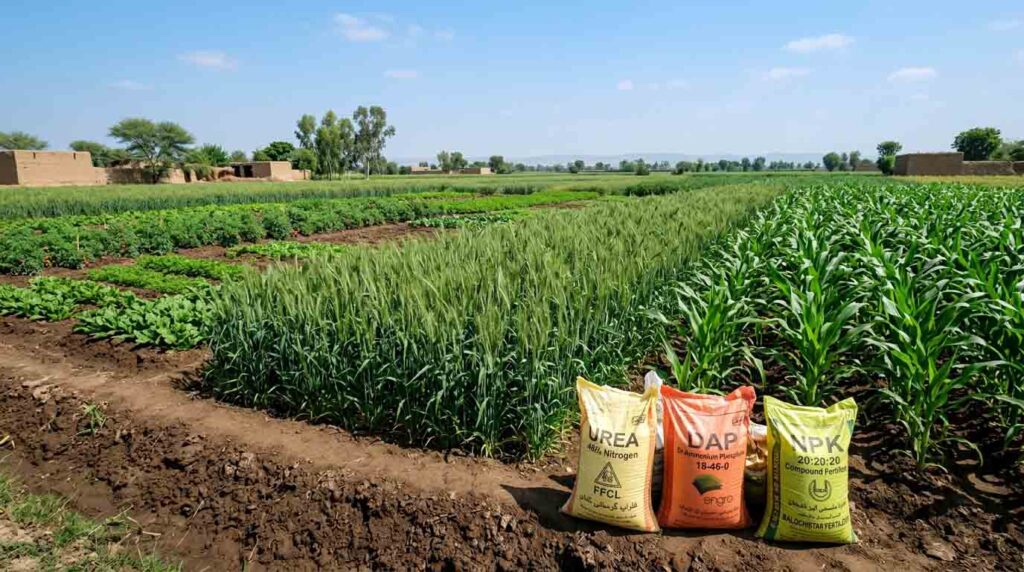
Why Fertilizer Combination Is Important
A crop needs more than one nutrient. If you give only one fertilizer, the crop may grow for some time, but it will not perform at its best.
Main nutrients needed by crops
- Nitrogen (N) – for green leaves and fast growth
- Phosphorus (P) – for root growth and early plant strength
- Potassium (K) – for strong stems, grain filling, and disease resistance
Crops also need:
- Sulfur
- Zinc
- Boron
- Calcium
- Magnesium
When farmers use the right combination of fertilizers, they get:
- Better germination
- Strong roots
- Healthy leaves
- Better flowering and grain formation
- Higher yield
- Better quality
- More profit
Best Fertilizers Used in Pakistan
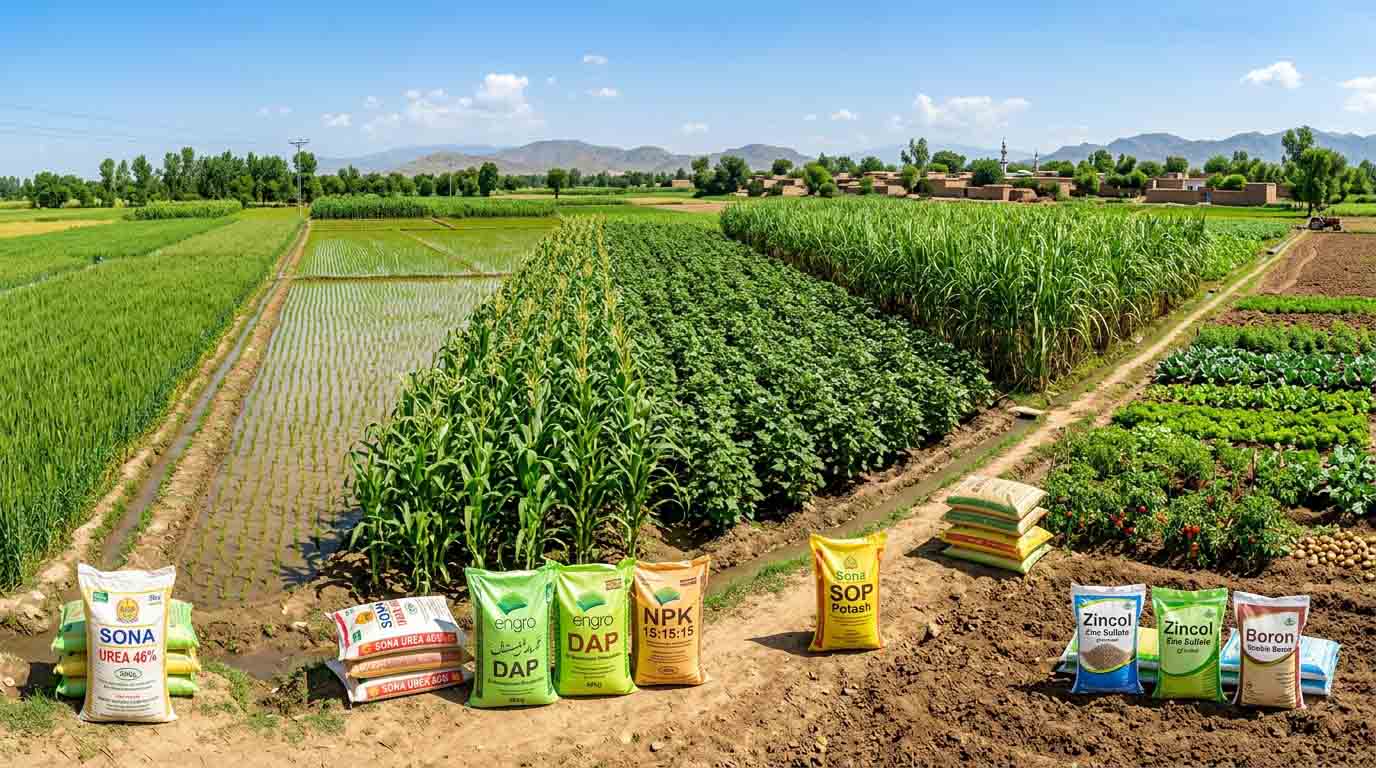
Before discussing crop-wise combinations, let us understand the most common fertilizers used in Pakistan.
Urea
Urea is the most widely used fertilizer in Pakistan.
Benefits:
- Rich source of nitrogen
- Helps green growth
- Useful in wheat, rice, maize, sugarcane, vegetables, and fodder
Important point:
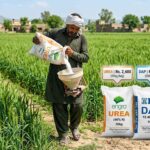
Urea should be applied in split doses, not all at once.
DAP
DAP stands for Diammonium Phosphate.
Benefits:
- Gives phosphorus and nitrogen
- Best for root growth
- Useful at sowing time
Common use:
- Wheat
- Maize
- Rice nursery
- Cotton
- Vegetables
NPK
NPK fertilizer contains nitrogen, phosphorus, and potassium together.
Benefits:
- Balanced fertilizer
- Good for vegetables, orchards, and high-value crops
- Improves overall crop growth
Other important fertilizers
- SOP or MOP for potash
- Zinc sulphate
- Boron
- Ammonium sulphate
- Farmyard manure or compost
More Related Articles
Step-by-Step Guide for Fertilizer Use
Before choosing any fertilizer combination, follow this simple process.
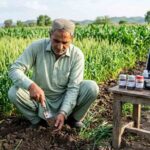
Step 1: Test Your Soil
Soil testing is very helpful. It tells you:
- Which nutrient is lacking
- How much fertilizer is needed
- If your soil is saline, alkaline, or low in organic matter
This saves money and helps avoid overuse.
Step 2: Add Organic Matter
If possible, apply:
- Farmyard manure
- Compost
- Poultry manure
Benefits:
- Improves soil structure
- Increases water-holding capacity
- Helps fertilizers work better
- Improves soil health in the long term
Step 3: Use Basal Fertilizer at Sowing
Basal fertilizer means fertilizer applied at sowing or planting.
Usually this includes:
- DAP
- NPK
- Potash
- Zinc if needed
This supports roots and early growth.
Step 4: Apply Nitrogen in Split Doses
Nitrogen from Urea should be given in parts.
Why split doses?
- Reduces nutrient loss
- Improves fertilizer use
- Gives better crop growth
- Saves money
Step 5: Watch the Crop and Adjust
Observe your field:
- Yellow leaves may mean nitrogen deficiency
- Poor roots may mean phosphorus deficiency
- Dry leaf edges may mean potash deficiency
- Small leaves and patchy growth may mean zinc deficiency
Correcting deficiency on time improves yield.
Best Fertilizer Combinations for Major Crops in Pakistan
Now let us look at the best fertilizer combinations for major crops under Pakistan farming conditions.
Wheat Fertilizer Combination
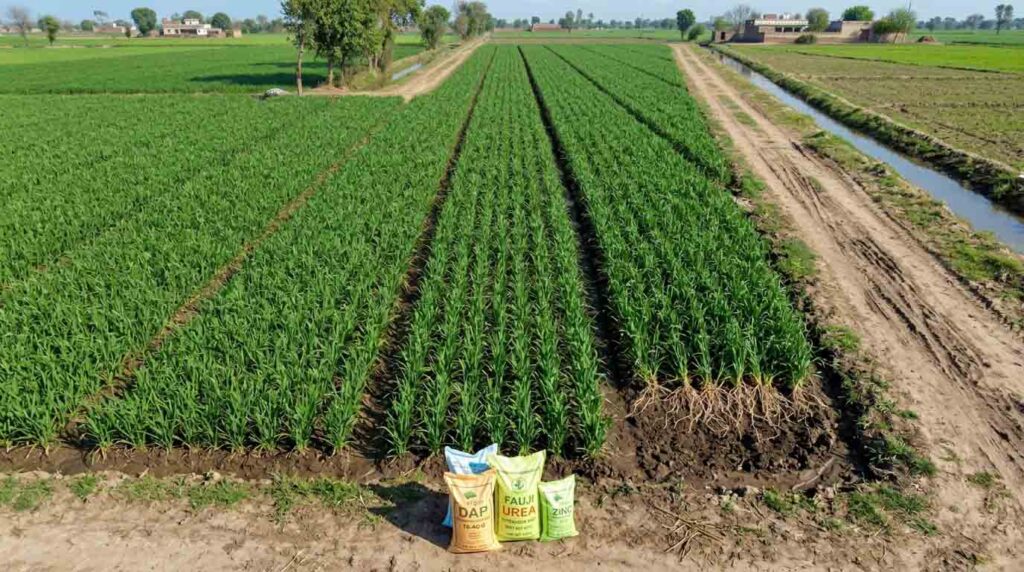
Wheat is one of the main crops of Pakistan. It needs balanced nutrition for tillering, grain filling, and strong stems.
Best fertilizer combination for wheat
- DAP at sowing
- Urea in 2 split doses
- Potash if soil is low in potassium
- Zinc if deficiency is present
Step-by-step for wheat
At land preparation or sowing:
- Apply DAP
- Add potash if needed
- Apply zinc sulphate if soil test suggests deficiency
First irrigation:
- Apply first dose of Urea
Second irrigation:
- Apply second dose of Urea
Benefits
- Better tillers
- Strong roots
- Better grain filling
- Higher yield
Rice Fertilizer Combination
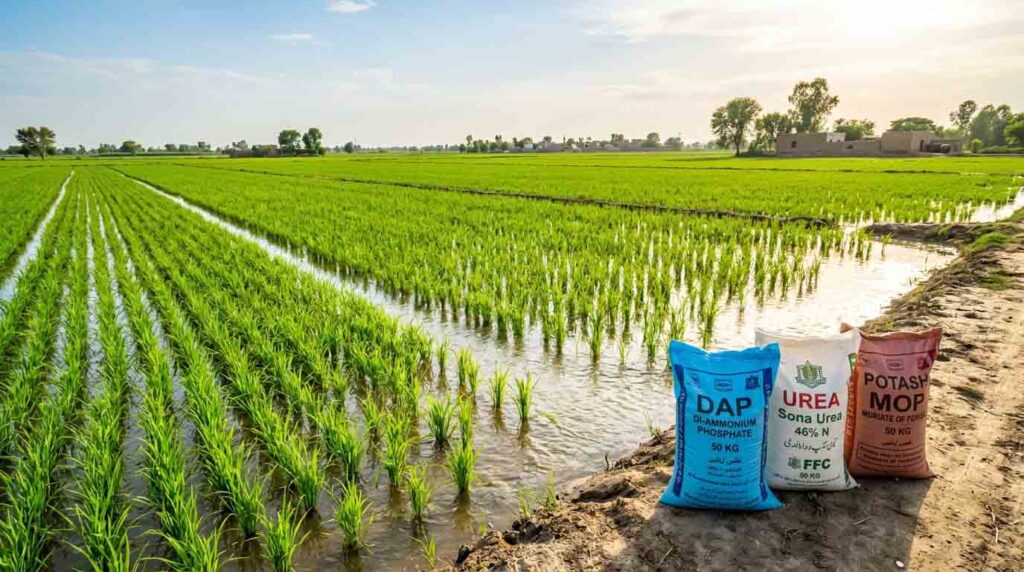
Rice is a major crop in Punjab and Sindh. It needs good nutrient management, especially in transplanted fields.
Best fertilizer combination for rice
- DAP at nursery or transplanting stage
- Urea in 2 to 3 split doses
- Potash for plant strength
- Zinc sulphate in zinc-deficient soils
Step-by-step for rice
Before transplanting:
- Apply DAP
- Apply potash if needed
- Use zinc sulphate in deficient fields
After transplanting:
- Apply first Urea dose after crop establishment
- Apply second Urea dose at tillering
- Apply third dose if needed at panicle stage
Benefits
- Better tillering
- Improved plant strength
- Better grain formation
- Reduced lodging
Maize Fertilizer Combination
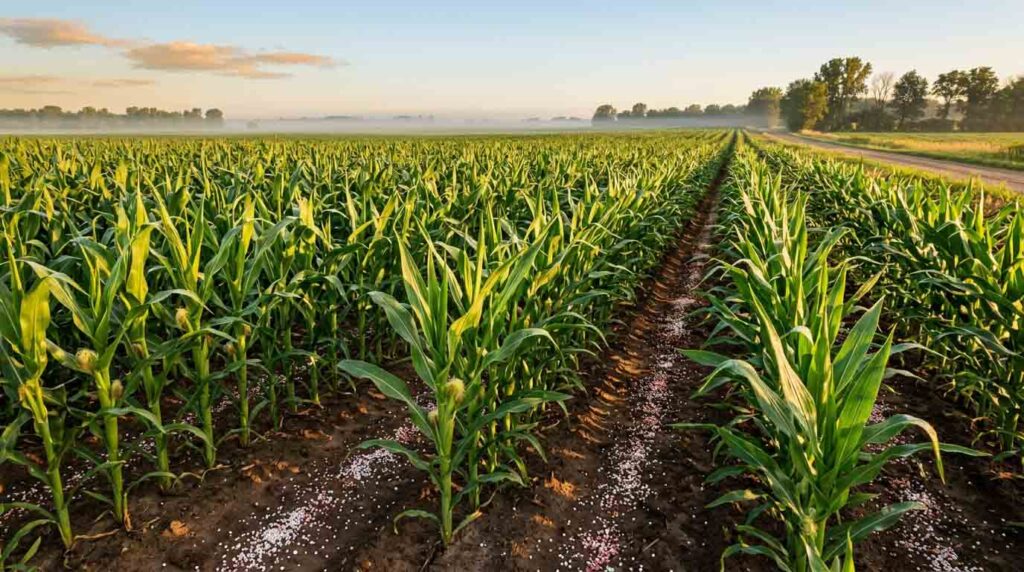
Maize is a heavy feeder and needs balanced fertilizer for better cob development and grain yield.
Best fertilizer combination for maize
- DAP at sowing
- Urea in split doses
- Potash for strong stems and cob growth
- Zinc for better early growth
Step-by-step for maize
At sowing:
- Apply DAP
- Apply potash
- Add zinc if needed
Early growth stage:
- Apply first Urea dose
Before tasseling:
- Apply second Urea dose
Benefits
- Better root growth
- Strong stems
- Better cob size
- More grain yield
Cotton Fertilizer Combination
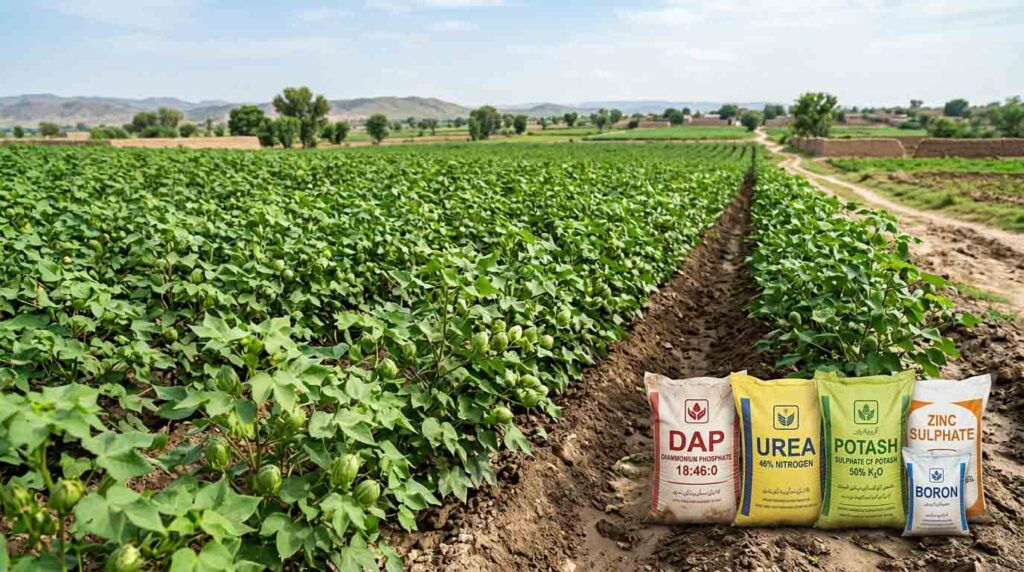
Cotton is an important cash crop in Pakistan and needs proper nutrition for vegetative growth, flowering, and boll development.
Best fertilizer combination for cotton
- DAP at sowing
- Urea in split doses
- Potash for boll development
- Zinc and boron where needed
Step-by-step for cotton
At sowing:
- Apply DAP
- Add potash
- Add zinc if soil is deficient
Vegetative stage:
- Apply first Urea dose
Before flowering and boll formation:
- Apply second Urea dose
- Add boron or foliar nutrients if advised
Benefits
- Better boll setting
- Improved fiber quality
- Better plant health
- More cotton production
Sugarcane Fertilizer Combination
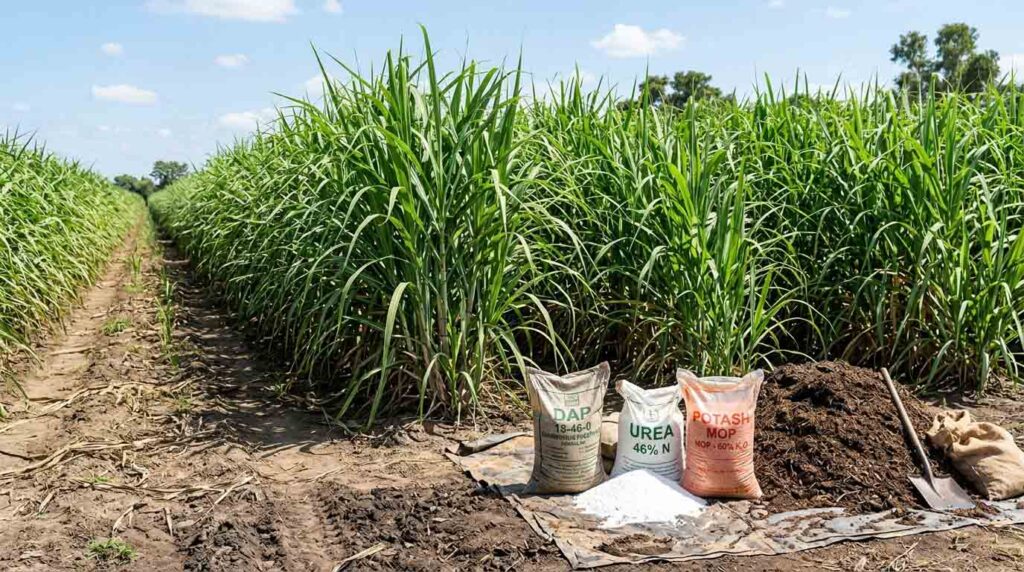
Sugarcane is a long-duration crop and needs regular nutrient supply.
Best fertilizer combination for sugarcane
- DAP at planting
- Urea in multiple split doses
- Potash for cane thickness and sweetness
- Organic manure if available
Step-by-step for sugarcane
At planting:
- Apply DAP
- Apply potash
- Mix farmyard manure into the soil
During growth:
- Apply Urea in 2 to 3 split doses
Benefits
- Better cane growth
- Higher cane weight
- Better juice quality
- More profit
Vegetable Fertilizer Combination
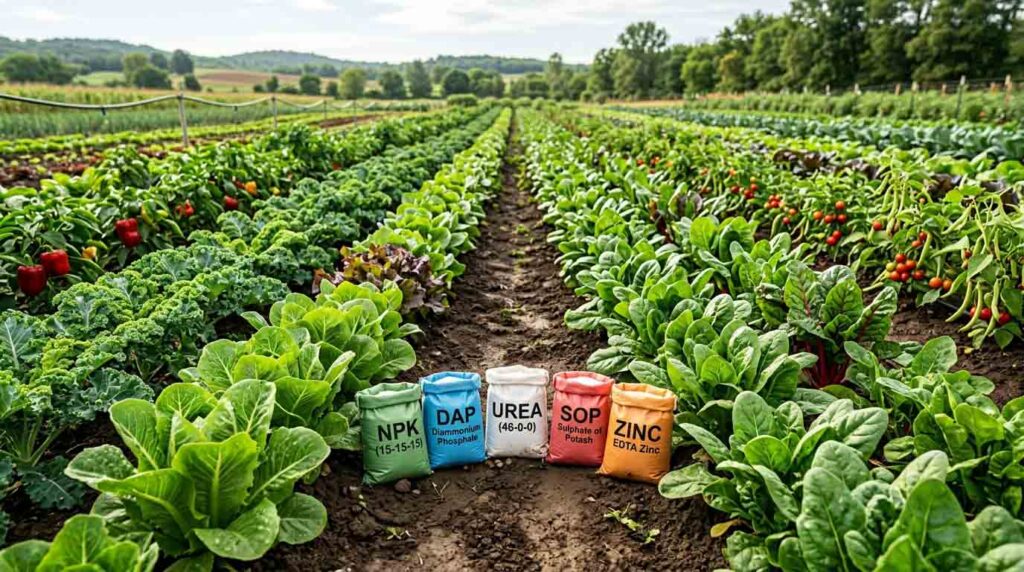
Vegetables need balanced and timely fertilization because they are high-value crops.
Best fertilizer combination for vegetables
- NPK at planting
- DAP in some crops
- Urea in small split doses
- SOP for better quality
- Zinc and boron where needed
Step-by-step for vegetables
Before transplanting or sowing:
- Apply farmyard manure
- Apply NPK or DAP according to crop need
- Add SOP for quality crops
- Apply zinc if deficiency is common
During crop growth:
- Apply Urea in small split doses
- Use foliar spray if deficiency symptoms appear
Benefits
- Better growth
- Better fruit size
- Better color and quality
- Higher market value
Role of Organic Matter with Chemical Fertilizers
Many Pakistani soils are low in organic matter. This makes fertilizer less effective over time.
Good practice:
Use:
- Farmyard manure
- Compost
- Poultry manure
together with: - Urea
- DAP
- NPK
- Potash
- Zinc
This improves:
- Soil fertility
- Moisture retention
- Root growth
- Fertilizer efficiency
Practical Tips for Farmers in Pakistan
Here are some useful tips for better fertilizer management:
- Do not use only Urea every season
- Always try to apply DAP at sowing
- Use NPK for balanced crop nutrition where needed
- Apply Urea in split doses
- Add potash for better quality and strength
- Use zinc sulphate in zinc-deficient soils
- Get soil tested if possible
- Apply organic manure regularly
- Irrigate after fertilizer application if needed
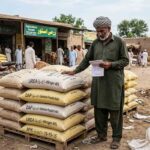
- Buy fertilizers from trusted dealers only
- Follow crop-specific recommendations
- Watch your crop for deficiency symptoms
Common Mistakes to Avoid
Many farmers lose yield because of unbalanced fertilizer use.
Avoid these mistakes:
- Using only Urea
- Ignoring phosphorus and potash
- Applying all Urea at once
- Not using zinc where needed
- Applying fertilizer in dry soil without moisture
- Buying fake fertilizer
- Ignoring organic matter
- Applying wrong fertilizer at the wrong time
Conclusion
The best fertilizer combinations for major crops in Pakistan depend on crop type, soil condition, water availability, and local climate. But one thing is clear: balanced fertilizer use gives better results than using only one fertilizer.
For most crops in Pakistan, the best plan includes:
- DAP at sowing
- Urea in split doses
- NPK where balanced nutrition is needed
- Potash for crop strength and quality
- Zinc or other micronutrients if required
- Organic manure for better soil health
Whether you grow wheat, rice, maize, cotton, sugarcane, or vegetables, smart fertilizer management can help you get better yield, better quality, and better income.
The key is simple: use the right fertilizer, in the right amount, at the right time.
FAQs
1. What is the best fertilizer combination for wheat in Pakistan?
For wheat, a common and useful combination is DAP at sowing and Urea in split doses. Potash and zinc can also be added if the soil needs them.
2. Can I use only Urea for my crop?
No, using only Urea is not a good practice. Crops also need phosphorus, potassium, and micronutrients for proper growth and better yield.
3. Why is DAP important at sowing time?
DAP gives phosphorus, which is very important for root growth and early crop establishment. It helps plants grow stronger from the start.
4. When should Urea be applied?
Urea should be applied in split doses during crop growth, usually after germination, at tillering, or at vegetative stages depending on the crop.
5. Is NPK better than Urea?
NPK and Urea have different roles. Urea gives only nitrogen, while NPK gives balanced nutrients. NPK is useful when crops need all three major nutrients together.
6. Should farmers use zinc fertilizer in Pakistan?
Yes, in many Pakistani soils zinc deficiency is common. Zinc fertilizer can improve crop growth, tillering, and yield, especially in rice, wheat, maize, and vegetables.