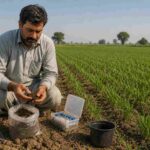
Sugarcane Fertilizer Guide is one of the most important cash crops in Pakistan. It plays a big role in the country’s economy and supports millions of farming families. Pakistan is among the top sugarcane-producing countries in the world. Provinces like Punjab and Sindh grow the largest share of this valuable crop.
However, many farmers in Pakistan do not get the best yield from their sugarcane fields. One major reason is the improper use of fertilizers. Using the right fertilizer, at the right time, and in the right amount can make a huge difference. It can increase your yield per acre significantly and also improve the sugar content in the cane.
This complete sugarcane fertilizer guide is written especially for Pakistani farmers. It covers everything you need to know about fertilizer selection, timing, dosage, and application methods. Whether you are a new farmer or an experienced one, this guide will help you grow healthier and more profitable sugarcane.
Why Is Fertilizer Important for Sugarcane?
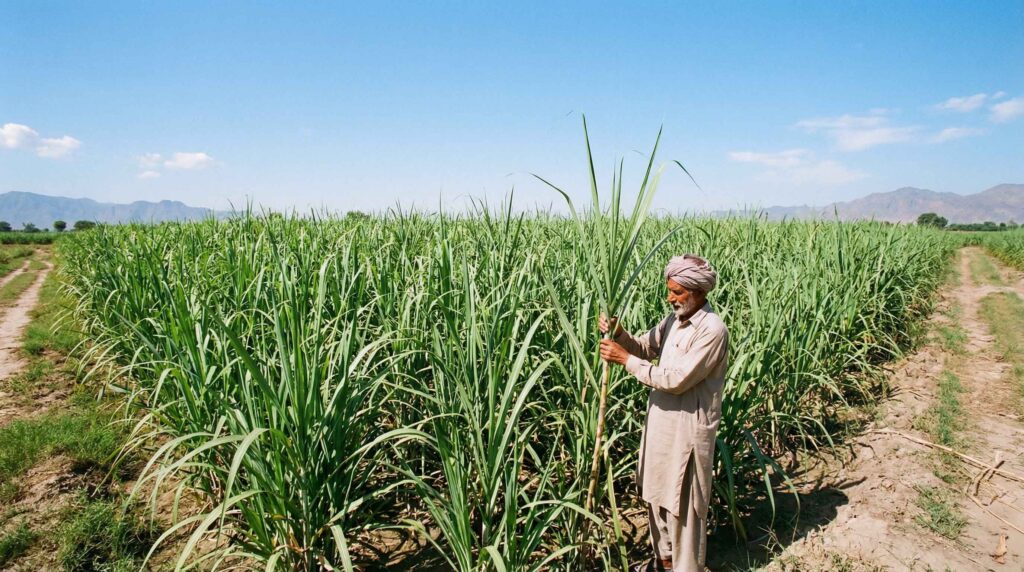
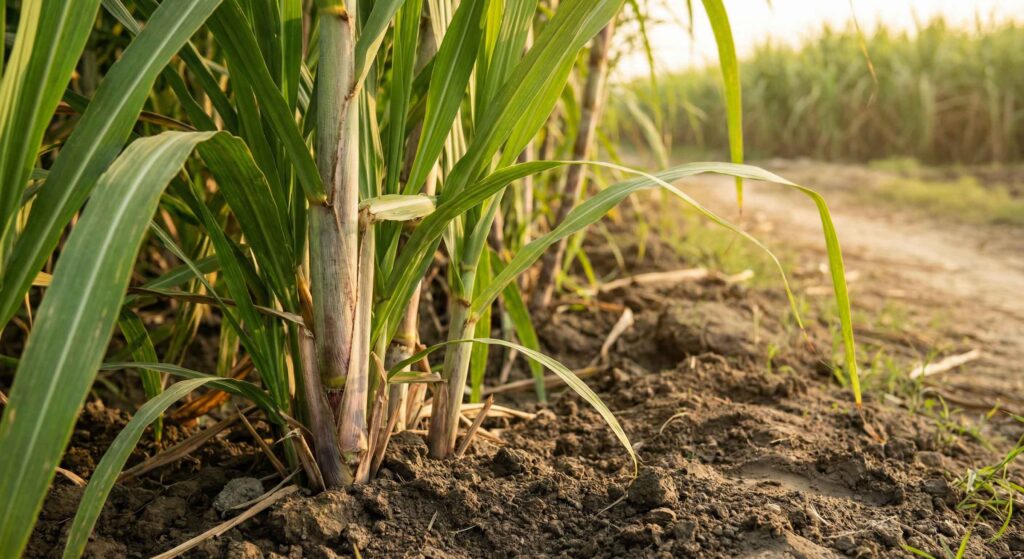
Sugarcane is a heavy feeder crop. This means it takes a large amount of nutrients from the soil during its long growing season, which can last 10 to 14 months in Pakistan. If the soil does not have enough nutrients, the plants will grow weak, thin, and short. The final yield and sugar recovery will also drop.
Fertilizers replace the nutrients that sugarcane takes from the soil. The three most important nutrients for sugarcane are:
- Nitrogen (N): Promotes strong leaf and stalk growth.
- Phosphorus (P): Helps in strong root development and early growth.
- Potassium (K): Improves sugar content, stalk strength, and disease resistance.
Without a balanced supply of these nutrients, your sugarcane crop cannot reach its full potential.
Best Fertilizers for Sugarcane in Pakistan
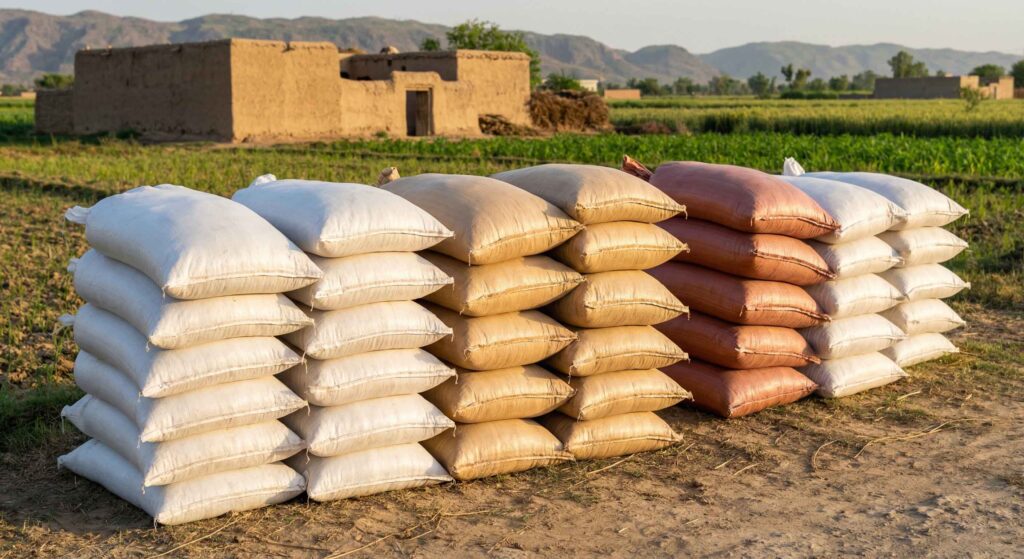
Pakistani farmers commonly use the following fertilizers for sugarcane. These are widely available in local markets across Punjab, Sindh, and KPK.
1. Urea (46-0-0)
Urea is the most popular nitrogen fertilizer in Pakistan. It contains 46% nitrogen and is affordable. It promotes fast vegetative growth and helps sugarcane stalks grow tall and thick.
2. DAP (Diammonium Phosphate) (18-46-0)
DAP provides both nitrogen and phosphorus. It is very important during the early stages of sugarcane growth. It helps in root establishment and gives the crop a strong start.
3. NPK Fertilizers
NPK fertilizers contain all three major nutrients — nitrogen, phosphorus, and potassium — in one bag. Common NPK ratios used for sugarcane in Pakistan include NPK 15-15-15 and NPK 20-20-0. These are useful for providing balanced nutrition.
4. SOP (Sulphate of Potash) (0-0-50)
SOP is a potassium fertilizer. It is very important for improving sugar recovery in sugarcane. Many farmers in Pakistan skip potassium, which is a big mistake.
5. Zinc Sulphate
Zinc deficiency is common in Pakistani soils, especially in Punjab. Applying zinc sulphate helps improve overall plant health and nutrient absorption.
Related Articles
- Best Fertilizers for Rice Crop in Pakistan
- Best Fertilizer for Wheat in Pakistan A Complete Guide for Farmers
- Recommended Fertilizer Quantity per Acre for Maize in Pakistan
- Fertilizer Application Schedule for Different Vegetables and Wheat in Pakistan
Step-by-Step Fertilizer Application Plan for Sugarcane
Follow this simple step-by-step fertilizer schedule for sugarcane in Pakistan. This plan is based on recommendations from agricultural experts and research institutes in the country.
Step 1: At the Time of Planting (Sowing)
Apply the following fertilizers per acre when you plant sugarcane setts in the field:
- DAP: 1.5 bags (75 kg)
- SOP: 1 bag (50 kg)
- Zinc Sulphate: 5 kg
Mix these fertilizers and apply them in the furrows near the setts before covering with soil. This gives the young crop the phosphorus, potassium, and zinc it needs for strong root growth.
Step 2: First Dose of Urea (30-45 Days After Planting)
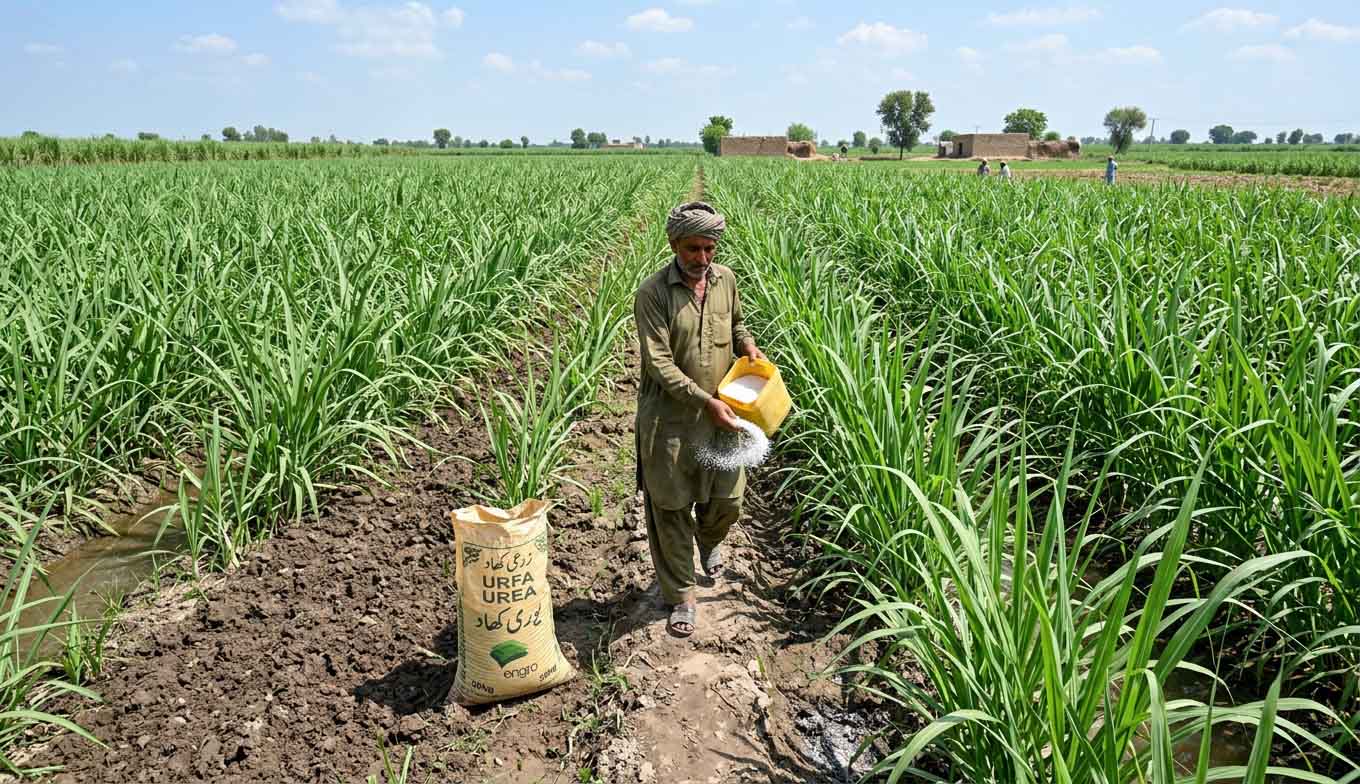
When the sugarcane plants are about one month old and have started sprouting well, apply the first dose of nitrogen.
- Urea: 1 bag (50 kg) per acre
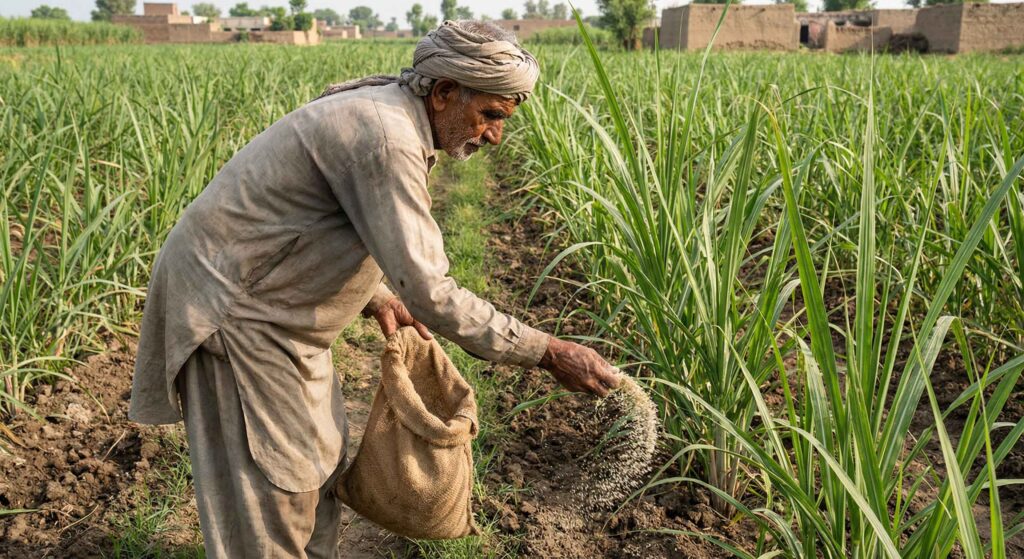
Spread the urea near the base of the plants and irrigate the field immediately after application. This helps the nitrogen reach the root zone quickly.
Step 3: Second Dose of Urea (60-90 Days After Planting)
At this stage, the crop is growing actively and needs more nitrogen for tillering and stalk elongation.
- Urea: 1.5 bags (75 kg) per acre
Apply the urea along the rows and follow it with irrigation. Avoid applying urea on dry soil without watering, as the nitrogen can be lost to the air.
Step 4: Third Dose of Urea (At Earthing Up Stage — 90-120 Days)
Before earthing up (mitti chadana), apply the final dose of urea.
- Urea: 1 bag (50 kg) per acre
After applying, perform earthing up to cover the fertilizer with soil. This prevents nitrogen loss and also supports the stalks.
- Total Urea per acre for the full season: 3.5 bags (175 kg)
- Total DAP per acre: 1.5 bags (75 kg)
- Total SOP per acre: 1 bag (50 kg)
Note: These quantities may vary slightly depending on your soil type and previous crop. Always get your soil tested if possible.
Practical Tips for Sugarcane Fertilizer Use in Pakistan
Here are some useful tips that every Pakistani sugarcane farmer should follow for the best results:
- Get a soil test done before planting. Many government labs in Pakistan offer free or low-cost soil testing. This tells you exactly which nutrients your soil lacks.
- Never apply urea on dry soil. Always irrigate the field within 24 hours after applying urea. Otherwise, a large amount of nitrogen will escape into the air as gas.
- Do not apply all fertilizer at once. Sugarcane grows for a long time and needs nutrients at different stages. Split application gives much better results.
- Use farmyard manure (FYM) along with chemical fertilizers. Applying 8 to 10 trolleys of well-rotted FYM per acre before planting improves soil health and water-holding capacity.
- Avoid excessive urea use. Some farmers think that more urea means more yield. This is wrong. Too much nitrogen can cause lodging, pest attacks, and lower sugar recovery.
- Apply potassium fertilizer. Many Pakistani farmers ignore potassium. However, potassium is essential for improving sugar content and making the crop resistant to diseases and drought.
- Buy fertilizers from trusted dealers to avoid fake or low-quality products.
- Keep records of your fertilizer use and yield each season. This helps you improve your plan over time.
Common Mistakes Farmers Make
Many sugarcane farmers in Pakistan make these common fertilizer mistakes that reduce their profits:
- Skipping phosphorus and potassium and relying only on urea.
- Applying fertilizer too late in the season when the crop cannot use it effectively.
- Not irrigating after fertilizer application.
- Using the same fertilizer plan every year without considering soil condition.
- Ignoring micronutrients like zinc and boron.
Avoiding these mistakes can help you increase your yield by 15% to 25% without spending much extra money.
Conclusion
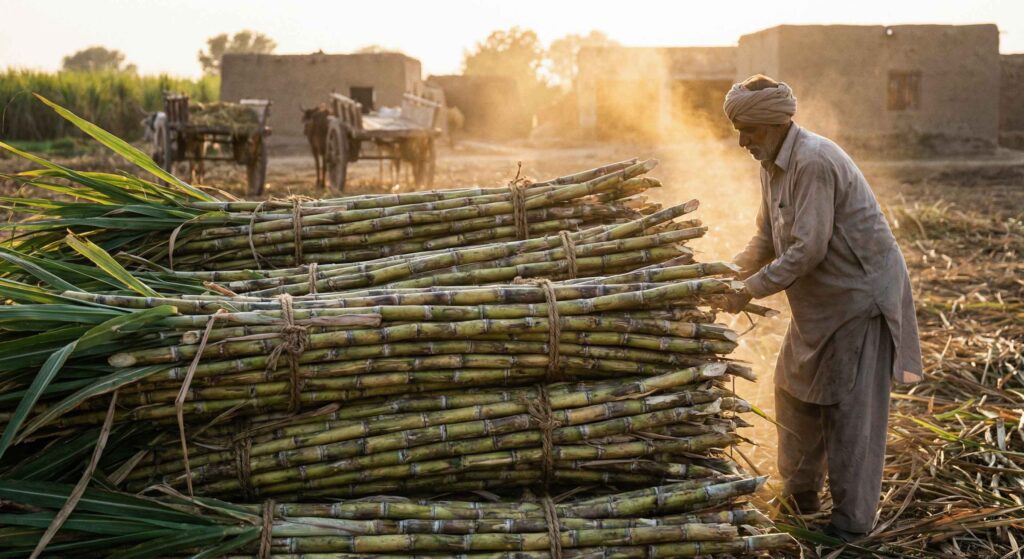
Sugarcane farming in Pakistan can be highly profitable if you manage your fertilizer use wisely. The key is to use the right combination of fertilizers like Urea, DAP, SOP, and Zinc Sulphate at the right stages of crop growth. Always follow a split application method and irrigate your field after every fertilizer dose.
By following the step-by-step fertilizer guide shared in this article, Pakistani farmers can achieve better sugarcane yields, higher sugar recovery, and improved profits. Remember, smart fertilizer use is not about spending more money — it is about spending wisely.
We hope this sugarcane fertilizer guide helps you in your next growing season. Happy farming!
Frequently Asked Questions (FAQs)
Q1: How much urea is needed for sugarcane per acre in Pakistan?
For a full sugarcane season, approximately 3 to 3.5 bags (150-175 kg) of urea per acre is recommended. It should be applied in three split doses during the first four months of growth.
Q2: When is the best time to apply DAP to sugarcane?
DAP should be applied at the time of planting (sowing). It should be placed in the furrows close to the sugarcane setts so that the roots can absorb phosphorus during the early growth stage.
Q3: Can I use NPK fertilizer instead of DAP and SOP separately?
Yes, you can use NPK fertilizer as a substitute. However, make sure the NPK ratio meets the nutrient needs of sugarcane. You may still need to add extra urea for nitrogen and SOP for potassium depending on your soil condition.
Q4: Why is my sugarcane thin and short even after using fertilizer?
This can happen due to several reasons: wrong fertilizer timing, lack of potassium, poor irrigation after fertilizer application, low-quality seed cane, or pest and disease problems. A soil test can help identify if any specific nutrient is missing from your field.