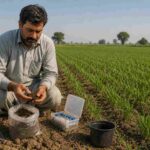
Complete Fertilizer Management System Farming is not only hard work, it is also smart work. Many farmers in Pakistan use fertilizers, but still do not get the best yield. Why? Because they do not follow a Complete fertilizer management system.
Using fertilizer is not just about spreading urea in the field. It is about giving the right nutrient, in the right amount, at the right time, and in the right way.
In this article, we will explain everything in very simple English so every farmer can understand and apply it easily.
What is a Complete Fertilizer Management System?
A Complete fertilizer management system means planning and managing fertilizers properly to:
- Increase crop yield
- Improve soil health
- Reduce fertilizer waste
- Save money
- Protect the environment
It includes:
- Soil testing
- Choosing the right fertilizer
- Correct timing
- Correct method of application
- Balanced use of nutrients
Why Fertilizer Management is Important in Pakistan

In Pakistan, most soils are:
- Low in Nitrogen
- Deficient in Phosphorus
- Sometimes short of Potassium
- Low in organic matter
Because of this, crops like:
- Wheat
- Rice
- Sugarcane
- Cotton
- Maize
need proper fertilizer management.
If you use too much fertilizer:
- Cost increases
- Crop may lodge (fall down)
- Pests and diseases increase
- Soil becomes weak
If you use less fertilizer:
- Yield decreases
- Plants remain weak
- Grain size becomes small
That is why a Complete fertilizer management system is necessary.
Main Nutrients Required by Crops
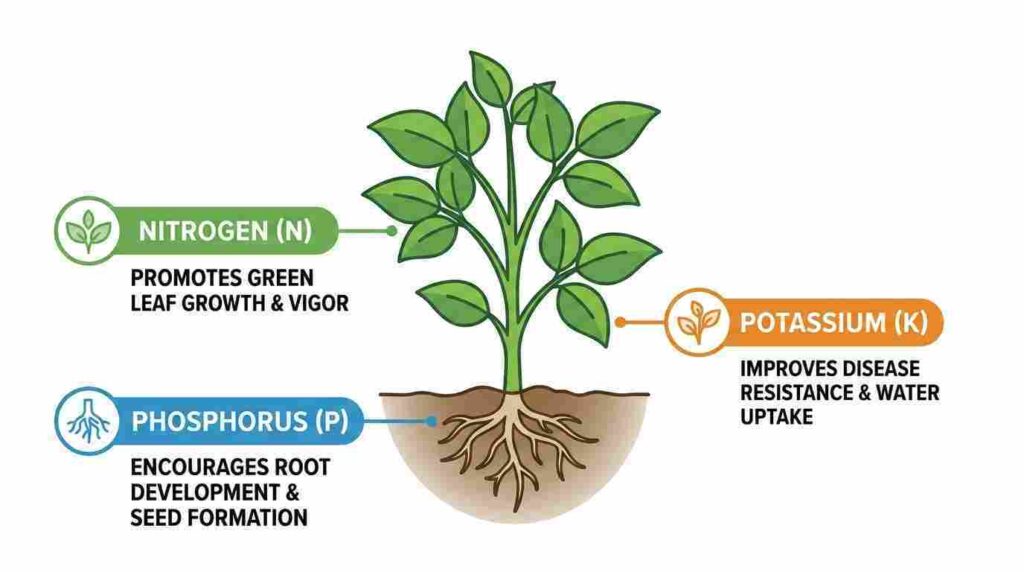
Plants need many nutrients, but the three main nutrients are:
1. Nitrogen (N)
- Makes plants green
- Increases leaf growth
- Important for wheat, rice, maize
Main source: Urea
2. Phosphorus (P)
- Helps root development
- Improves flowering and grain formation
- Makes plants strong
Main source: DAP
3. Potassium (K)
- Improves disease resistance
- Increases grain quality
- Helps in water control
Main source: NPK fertilizers
More Articles
- Rabi Crop Fertilizer Plan Simple Guide for Better Yield and Strong Crop
- NPK vs Organic Fertilizer Which One is Better for Pakistani Farmers
Types of Fertilizers Used in Pakistan
1. Urea Fertilizer
- Contains 46% Nitrogen
- Most commonly used fertilizer
- White granules
How to Use Urea Properly
- Apply in split doses (2–3 times)
- Do not apply before heavy rain
- Mix in soil or irrigate after application
- Avoid applying on dry soil without water
✅ Practical Tip:
For wheat, apply half urea at sowing and half at first irrigation.
2. DAP (Diammonium Phosphate)
- Contains Nitrogen and Phosphorus
- Best for root growth
- Used at sowing time
How to Use DAP
- Apply at time of seed sowing
- Place 2-3 cm below seed
- Do not mix directly with seed
✅ Practical Tip:
Always apply DAP at sowing stage. Late application reduces benefit.
3. NPK Fertilizer
- Contains Nitrogen, Phosphorus, and Potassium
- Available in different ratios like 15-15-15, 20-20-0, etc.
When to Use NPK
- For vegetables
- For orchards
- For soils low in potassium
✅ Practical Tip:
Use NPK after soil test to know exact requirement.
Steps in a Complete Fertilizer Management System
Now let’s understand the full system step by step.
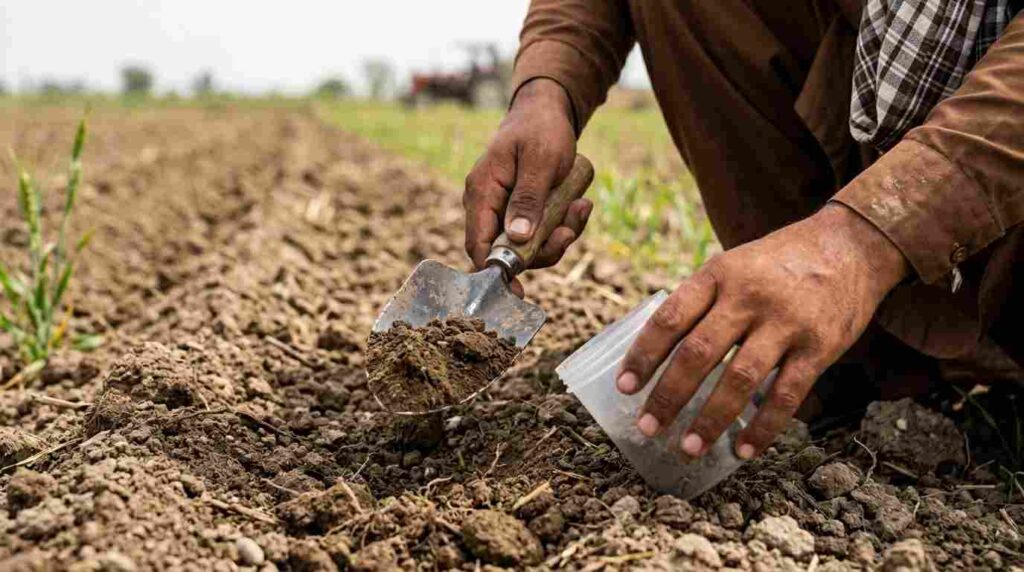
Step 1: Soil Testing
Soil testing is the first and most important step.
Why?
- Tells nutrient level in soil
- Prevents extra fertilizer use
- Saves money
In Pakistan, soil testing labs are available at:
- Agriculture offices
- Private labs
- Universities
✅ Tip: Test soil every 2–3 years.
Step 2: Balanced Fertilizer Use
Do not depend only on urea.
Many farmers use only urea because it gives quick green color. But this is wrong.
Always use:
- Nitrogen (Urea)
- Phosphorus (DAP)
- Potassium (if required)
A balanced approach is part of a Complete fertilizer management system.
Step 3: Right Time of Application
Timing is very important.
For Wheat:
- DAP at sowing
- First urea at first irrigation
- Second urea at second irrigation
For Rice:
- DAP before transplanting
- Urea in 2–3 splits
Late fertilizer application reduces yield.
Step 4: Right Method of Application
There are different methods:
1. Broadcasting
- Spreading fertilizer by hand
- Common but less efficient
2. Placement Method
- Place fertilizer near root zone
- More effective
3. Fertigation
- Applying fertilizer with irrigation water
- Used in drip irrigation
✅ Tip: Always irrigate after applying urea.
Step 5: Use of Organic Matter
A Complete fertilizer management system also includes organic fertilizers.
Examples:
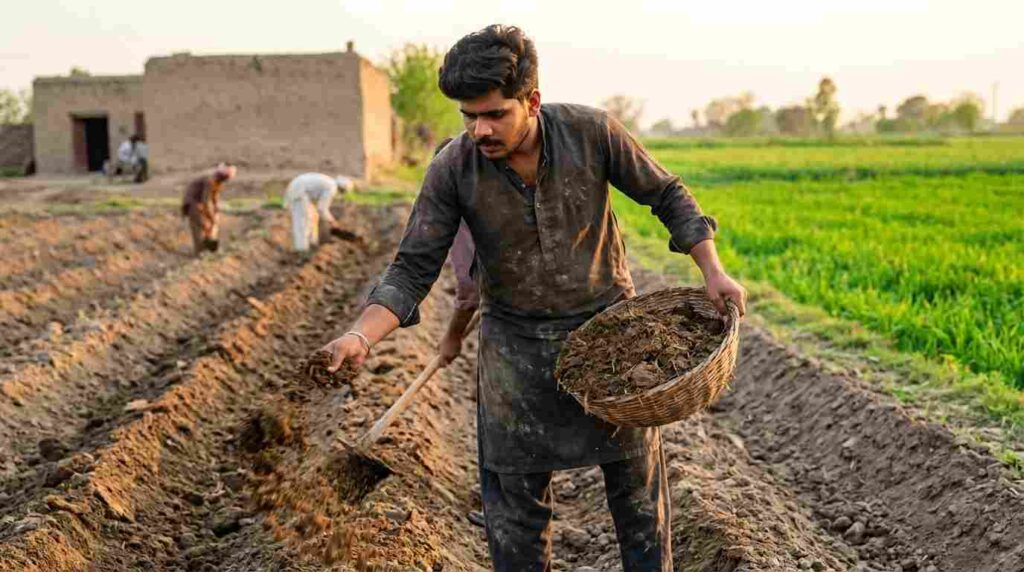
- Farmyard manure (FYM)
- Poultry manure
- Compost
- Green manure
Benefits:
- Improves soil structure
- Increases water holding capacity
- Improves fertilizer efficiency
✅ Tip: Apply 1–2 trolley FYM per acre before ploughing.
Common Fertilizer Mistakes Farmers Make
Avoid these common mistakes:
- Using only urea
- Applying fertilizer on dry soil
- Applying before heavy rain
- No soil testing
- Overuse of fertilizer
- Mixing DAP directly with seed
Correcting these mistakes can increase yield by 10–25%.
Fertilizer Management for Major Crops in Pakistan
Wheat
- DAP: 1 bag per acre at sowing
- Urea: 2 bags per acre in splits
Rice
- DAP: 1 bag per acre
- Urea: 2–3 bags in 3 splits
Sugarcane
- NPK at planting
- Urea in 3–4 splits
⚠ Always adjust according to soil test.
How to Save Money on Fertilizers
Fertilizers are expensive. Here are smart tips:
- Use soil testing
- Apply in split doses
- Use organic manure
- Avoid wastage during broadcasting
- Buy from authentic dealers
- Store fertilizer in dry place
Proper management can reduce cost by 15–20%.
Environmental Benefits of Complete Fertilizer Management System
Proper fertilizer use:
- Reduces water pollution
- Protects underground water
- Reduces soil salinity
- Improves long-term soil fertility
Remember, soil is our future. If soil is healthy, farming will continue for generations.
Signs of Nutrient Deficiency in Crops
Nitrogen Deficiency
- Yellow leaves
- Slow growth
Phosphorus Deficiency
- Purple color on leaves
- Weak roots
Potassium Deficiency
- Leaf edges become brown
- Weak plants
If you see these signs, consult agriculture officer immediately.
Modern Techniques in Fertilizer Management
Modern farming is improving in Pakistan.
New techniques include:
- Precision farming
- Controlled release fertilizers
- Drip irrigation with fertigation
- Leaf testing
These methods are part of an advanced Complete fertilizer management system.
Conclusion
A Complete fertilizer management system is not difficult. It only needs planning and awareness.
Remember these golden rules:
- Test your soil
- Use balanced fertilizers (Urea, DAP, NPK)
- Apply at right time
- Apply in right amount
- Use organic manure
- Avoid overuse
If you follow these simple steps, you will:
- Increase yield
- Reduce cost
- Improve soil health
- Earn more profit
Smart farming is the future of Pakistan. Start managing your fertilizers properly today.
Frequently Asked Questions (FAQs)
1. What is a Complete fertilizer management system?
It is a proper plan to use fertilizers in correct amount, time, and method to increase crop yield and protect soil health.
2. How many bags of urea should I use per acre?
It depends on crop and soil test. For wheat, usually 2 bags per acre are used in split doses.
3. Is soil testing really necessary?
Yes. Soil testing saves money and prevents overuse of fertilizers. It should be done every 2–3 years.
4. Can I use only urea for good yield?
No. Using only urea is harmful in long term. Always use balanced fertilizers like DAP and NPK with urea.
5. When is the best time to apply DAP?
DAP should be applied at sowing time for best root development and maximum benefit.