Precision Farming in Pakistan Agriculture is the backbone of Pakistan. Our farmers work day and night to grow wheat, rice, cotton, sugarcane, maize, and vegetables. But today, farming is becoming more expensive. Fertilizers cost more. Water is limited. Weather is changing.
So how can farmers grow more crops with less cost?
The answer is Precision farming in Pakistan.
This modern method helps farmers use the right amount of water, fertilizer, and pesticides at the right time and in the right place. It saves money and increases crop production.
In this article, we will explain everything in very simple words so every farmer can understand and apply it in the field.
What is precision farming in Pakistan?
Precision farming means:
👉 Using modern tools and information
👉 To manage crops more accurately
👉 And reduce waste
Instead of spreading fertilizer or water equally on the whole field, farmers apply it only where needed.
For example:
- Some parts of the field may need more Urea
- Some areas may need more DAP
- Some areas may need a balanced NPK
- Some areas may need less water
Precision farming helps identify these differences.
Why Precision Farming is Important for Pakistani Farmers
In Pakistan:
- Water is becoming scarce
- Fertilizers are expensive
- Diesel prices are high
- Weather is unpredictable
- Soil fertility is decreasing
Using traditional methods, farmers often:
- Overuse Urea
- Apply DAP without soil testing
- Waste water through flood irrigation
- Spray pesticides without checking pest level
This increases cost and reduces profit.
Precision farming in Pakistan helps solve these problems.
Main Tools Used in Precision Farming in Pakistan
You do not need very expensive machines to start. Some simple tools can help.
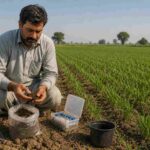
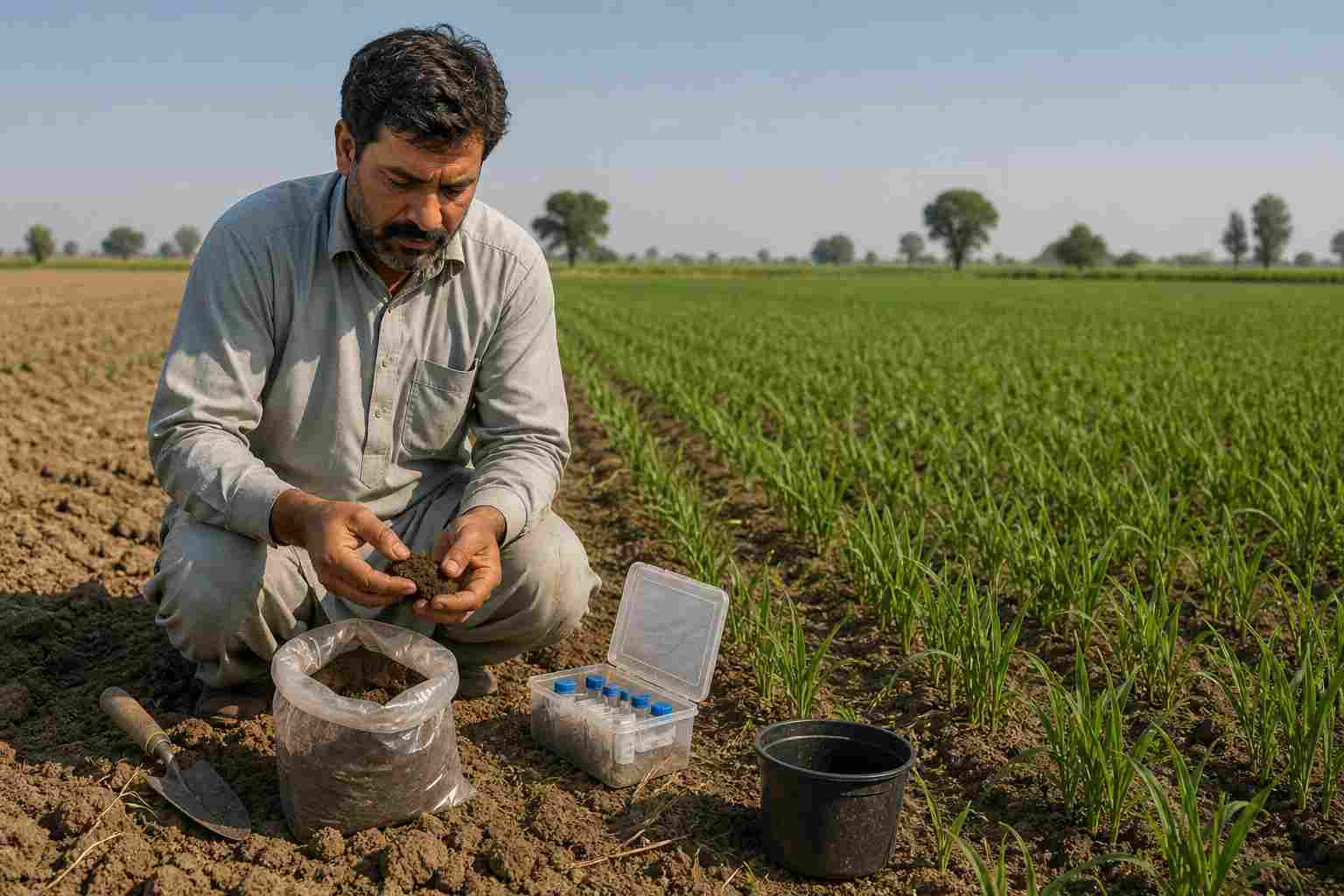
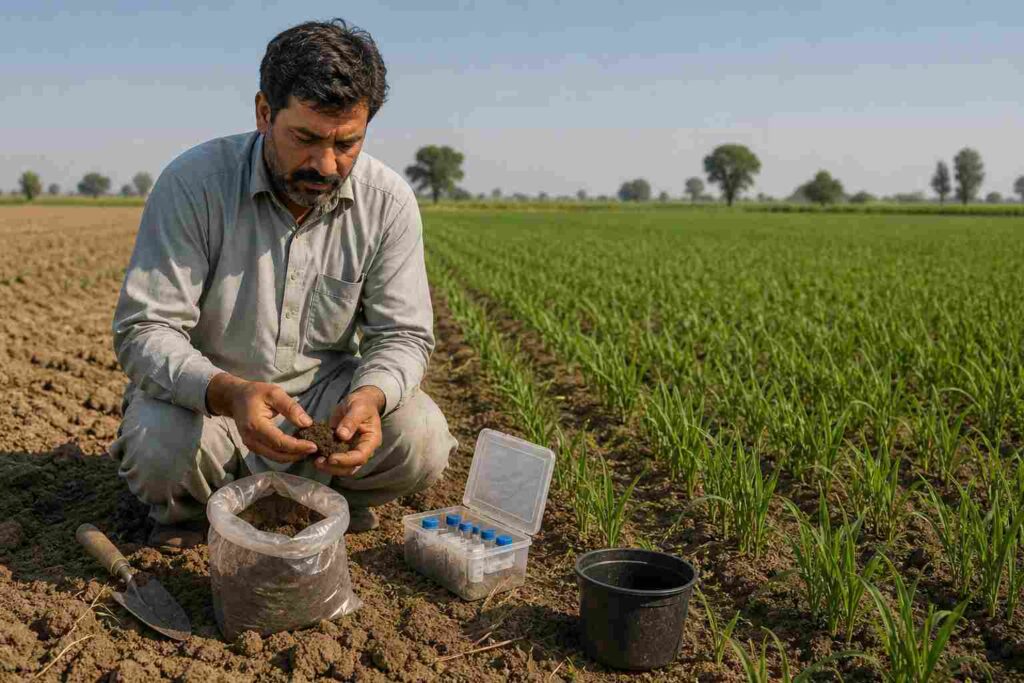
1. Soil Testing
This is the most important step.
Before applying Urea, DAP, or NPK, test your soil.
Soil testing tells:
- Nitrogen level
- Phosphorus level
- Potassium level
- pH level
- Organic matter
Many farmers apply 2-3 bags of Urea per acre without knowing soil condition. This wastes money.
✅ Tip:
Get soil tested once every 2 years from the nearest agriculture office.
2. GPS and Mobile Apps
Now many farmers use smartphones.
Mobile apps can help with:
- Weather updates
- Pest alerts
- Fertilizer recommendations
- Market prices
GPS helps in:
- Accurate field mapping
- Even seed drilling
- Better fertilizer spreading
Even small farmers can benefit from simple mobile tools.
3. Drip and Sprinkler Irrigation
Flood irrigation wastes water.
Drip irrigation:
- Saves 30-50% water
- Reduces weed growth
- Increases yield
Sprinkler irrigation:
- Good for vegetables and fodder
- Distributes water evenly
In areas like Punjab and Sindh where water is limited, this system is very helpful.
Smart Use of Fertilizers in Precision Farming
Fertilizers are expensive. Using them wisely increases profit.
Let’s understand how to use Urea, DAP, and NPK in precision farming.
More Articles
- Kharif Crop Fertilizer Guide – Complete Fertilizer Schedule for Pakistani Farmers
- Complete Fertilizer Management System A Complete Guide for Pakistani Farmers
Urea (Nitrogen Fertilizer)
Urea gives nitrogen to crops. It makes plants green and helps in growth.
Common mistake:
- Applying all Urea at once.
Better method:
- Apply Urea in splits.
- First dose at sowing.
- Second dose at early growth stage.
- Third dose (if needed) before flowering.
✅ Practical Tip:
Apply Urea before irrigation, not after. This reduces nitrogen loss.
DAP (Diammonium Phosphate)
DAP provides nitrogen and phosphorus.
It is important at:
- Root development stage
- Early crop growth
Best practice:
- Apply DAP at the time of sowing.
- Mix well in soil.
- Do not apply on dry surface.
If soil test shows high phosphorus, reduce DAP use.
NPK (Balanced Fertilizer)
NPK contains:
- Nitrogen (N)
- Phosphorus (P)
- Potassium (K)
It is useful when soil lacks multiple nutrients.
Precision farming helps farmers:
- Apply NPK only where needed
- Use correct ratio like 15-15-15 or 20-20-0 based on crop need
✅ Example:
Vegetables often require balanced NPK.
Wheat may require more nitrogen.
How Precision Farming Increases Crop Yield
When farmers use precision farming in Pakistan, they see:
- Better plant growth
- Strong roots
- Uniform crop
- Less pest attack
- Higher yield per acre
Why?
Because:
- Plants get nutrients according to need.
- No over-fertilization.
- Water is properly managed.
- Soil health improves.
Practical Steps to Start Precision Farming in Pakistan
You do not need big investment. Start small.
Step 1: Test Your Soil
This is the first and most important step.
Step 2: Divide Your Field
Notice:
- Which area is weak?
- Which area grows better?
- Where water collects?
Manage each part differently.
Step 3: Apply Fertilizer According to Need
Instead of spreading 3 bags of Urea on full acre:
- Apply 2 bags in good area
- Apply extra only in weak area (if needed)
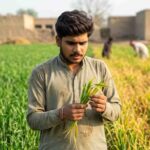
Step 4: Observe Crop Regularly
Walk in your field every 3-4 days.
Check:
- Leaf color
- Pest attack
- Plant height
- Soil moisture
Early detection saves money.
Step 5: Keep Records
Write down:
- Date of fertilizer use
- Quantity of Urea, DAP, NPK used
- Irrigation date
- Spray date
- Yield per acre
Next season, improve your planning.
Benefits of Precision Farming in Pakistan
Here are major benefits:
- ✅ Lower fertilizer cost
- ✅ Less water usage
- ✅ Higher crop yield
- ✅ Better soil health
- ✅ Reduced pesticide use
- ✅ More profit per acre
It also protects environment by reducing chemical runoff.
Challenges of Precision Farming in Pakistan
Some problems farmers face:
- Lack of awareness
- Limited training
- High cost of advanced machines
- Small land holdings
But remember:
You do not need expensive drones to practice precision farming.
Even simple soil testing and smart fertilizer use is precision farming.
Government Support for Precision Farming in Pakistan
Government and agriculture departments are promoting:
- Soil testing labs
- Subsidy on drip irrigation
- Farmer training programs
- Mobile advisory services
Farmers should stay connected with:
- Local agriculture officer
- Extension services
- Farmer cooperatives
Future of Precision Farming in Pakistan
The future is bright.
With:
- Better technology
- Cheaper sensors
- More awareness
- Youth involvement in agriculture
Precision farming in Pakistan will become common in next 10 years.
Farmers who adopt it early will earn more profit.
Conclusion
Precision farming in Pakistan is not only for big farmers. Small farmers can also benefit.
By:
- Testing soil
- Using Urea, DAP, and NPK wisely
- Saving water
- Observing crops carefully
- Keeping records
You can reduce cost and increase yield.
Farming is changing. If we use smart methods, we can grow more food and earn better income.
Start small. Learn slowly. Improve every season.
Your field will reward you.
FAQs About Precision Farming in Pakistan
1. What is precision farming in Pakistan in simple words?
It means using the right amount of water, fertilizer, and pesticides at the right time and place to increase crop yield and reduce waste.
2. Is precision farming expensive?
Not always. Soil testing and better fertilizer management are low-cost methods. Advanced machines are costly, but small steps can be started easily.
3. How does precision farming help in fertilizer use?
It helps farmers apply correct amounts of Urea, DAP, and NPK based on soil need, reducing waste and saving money.
4. Which crops benefit most from precision farming in Pakistan?
Wheat, rice, cotton, sugarcane, maize, and vegetables all benefit from better nutrient and water management.
5. Can small farmers adopt precision farming?
Yes. Even small farmers can start with soil testing, proper fertilizer timing, and better irrigation methods.
If you want to increase yield and reduce cost, now is the time to adopt Precision farming in Pakistan. The future of farming is smart farming.