
Kharif Crop Fertilizer Guide Kharif season is very important for Pakistani farmers. Crops like rice, maize, cotton, sugarcane, and sorghum are grown in this season. These crops need proper food (fertilizer) to give high yield and good profit.
Many farmers apply fertilizer without planning. Some apply too much, some apply at the wrong time. This wastes money and reduces production.
In this Kharif crop fertilizer guide, we will explain in very simple English:
- Which fertilizers to use
- When to apply them
- How much to apply
- Practical tips for better results
This guide is specially written for farmers of Pakistan.
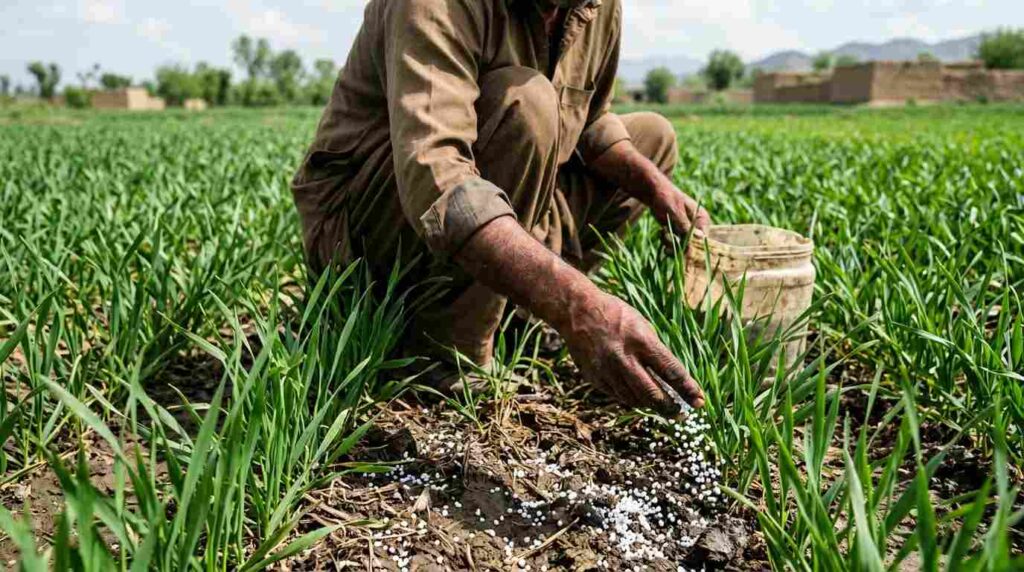
Why Fertilizer is Important for Kharif Crops
Kharif crops grow in hot weather and rainy season. Because of heat and irrigation, nutrients quickly wash away from the soil.
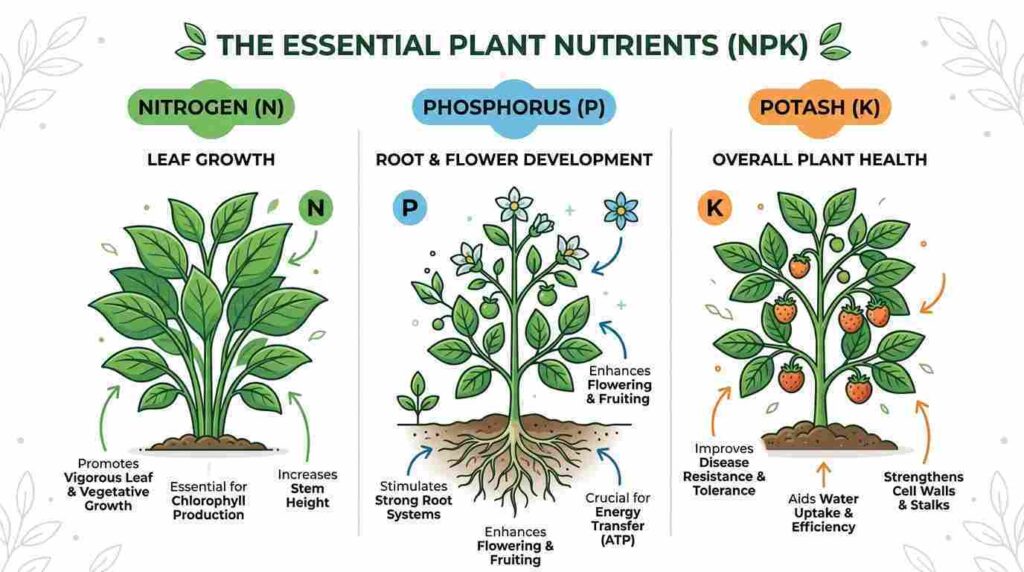
Plants need three main nutrients:
- Nitrogen (N) – For green leaves and fast growth
- Phosphorus (P) – For strong roots
- Potash (K) – For healthy plants and better resistance
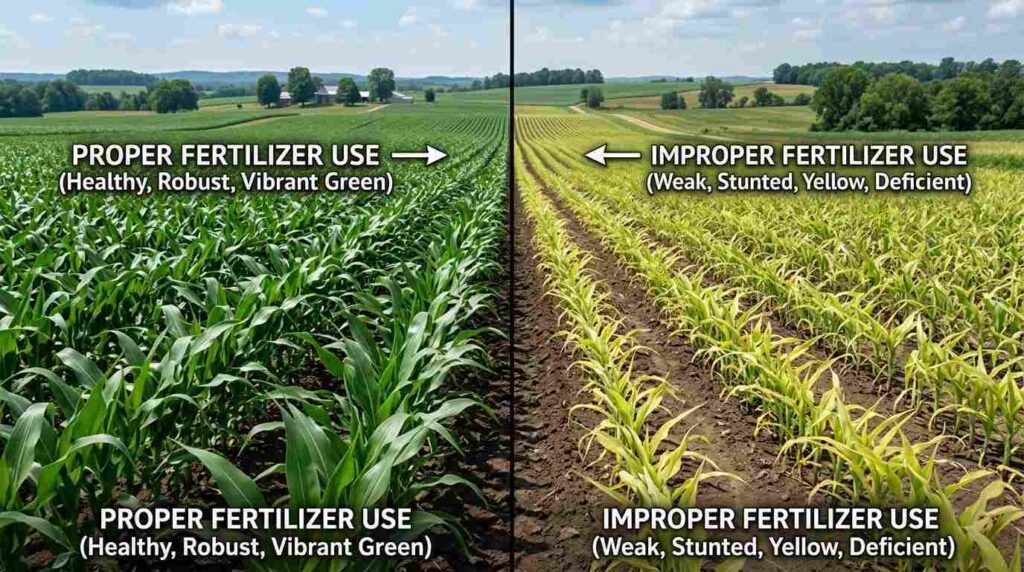
If plants do not get these nutrients, they become weak and yield becomes low.
That is why a proper Kharif crop fertilizer guide is necessary for every farmer.
Main Fertilizers Used in Kharif Season
1. Urea (Nitrogen Fertilizer)
- Contains 46% Nitrogen
- Makes crop green and healthy
- Increases plant height and leaf growth
Important:
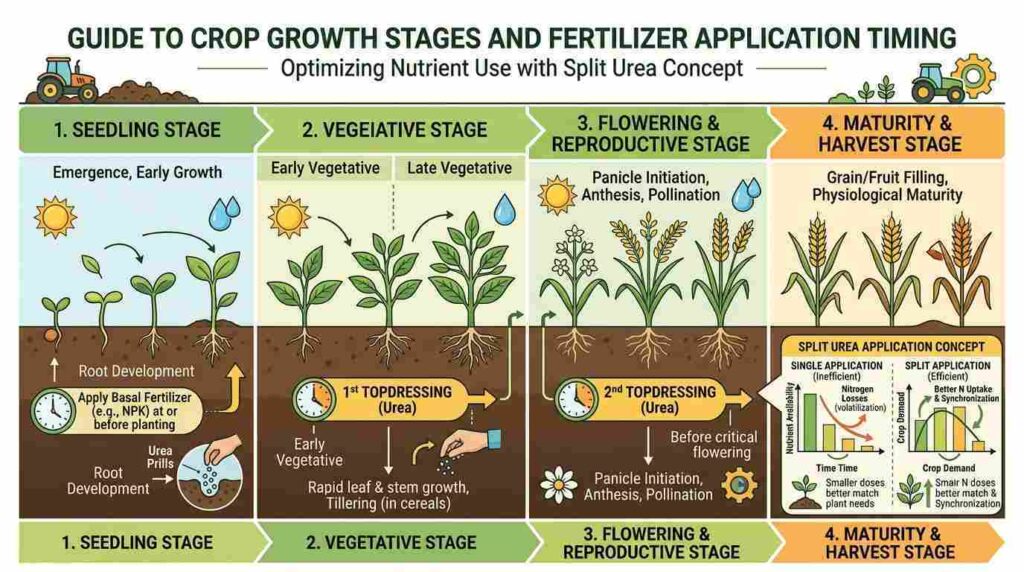
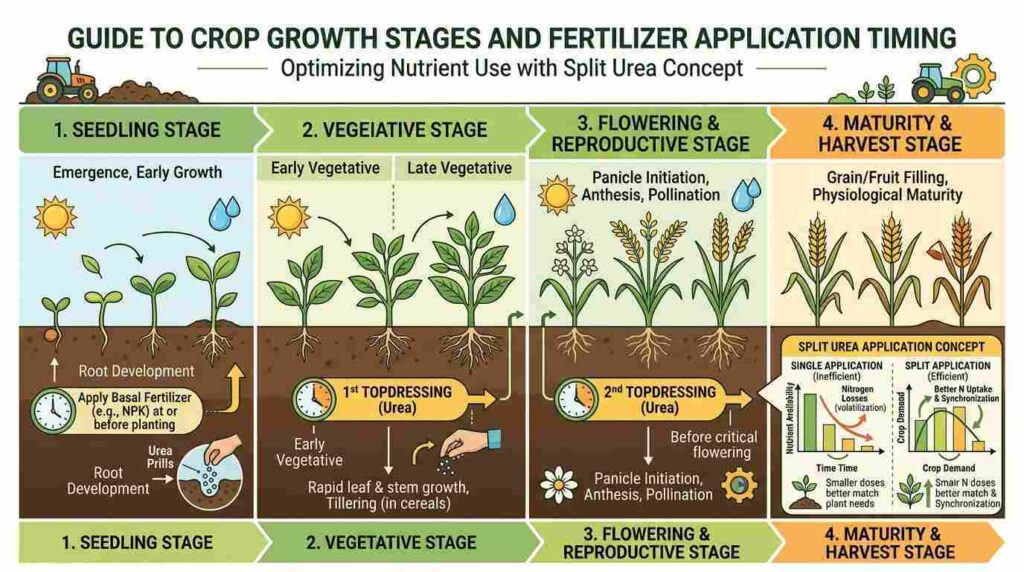
Do not apply all urea at once. Always apply in 2-3 parts.
2. DAP (Diammonium Phosphate)
- Contains Nitrogen and Phosphorus
- Very important at time of sowing
- Helps in strong root development
DAP should be applied at land preparation or at sowing time.
3. NPK Fertilizer
- Contains Nitrogen, Phosphorus, and Potash
- Available in different ratios (like 15-15-15, 20-20-0, etc.)
- Good for balanced growth
NPK is helpful when soil fertility is low.
General Fertilizer Schedule for Kharif Crops
Below is a general fertilizer schedule. Always adjust according to your soil test and crop type.
🌾 1. Fertilizer Schedule for Rice (Paddy)
At Land Preparation:
- 1 bag DAP per acre
- ½ bag Urea per acre
Mix into soil before transplanting.
20–25 Days After Transplanting:
- 1 bag Urea per acre
40–45 Days After Transplanting:
- ½ to 1 bag Urea per acre
✅ Apply urea in moist soil.
✅ Do not apply before heavy rain.
🌽 2. Fertilizer Schedule for Maize
At Sowing:
- 1 bag DAP per acre
- ½ bag Urea per acre
25–30 Days After Germination:
- 1 bag Urea per acre
Before Tasseling:
- ½ bag Urea per acre
✅ Apply fertilizer near plant roots, not too far.
✅ Irrigate immediately after fertilizer application.
🌿 3. Fertilizer Schedule for Cotton
At Sowing:
- 1 bag DAP per acre
30 Days After Sowing:
- 1 bag Urea per acre
At Flowering Stage:
- 1 bag Urea per acre
If soil is weak:
- Add ½ bag Potash (SOP or MOP)
✅ Do not apply too much nitrogen. It increases leaves but reduces bolls.
🌱 4. Fertilizer Schedule for Sugarcane
At Planting:
- 2 bags DAP per acre
- 1 bag Potash per acre
30–45 Days After Germination:
- 1 bag Urea per acre
60–90 Days After Germination:
- 1–2 bags Urea per acre
✅ Divide nitrogen into 3 parts for best results.
Best Time to Apply Fertilizer in Kharif Season
Correct timing is very important in this Kharif crop fertilizer guide.
Follow These Rules:
- Apply DAP at sowing time
- Apply Urea in split doses
- Do not apply before heavy rain
- Apply in moist soil
- Irrigate after fertilizer application
If fertilizer is applied in dry soil, it can burn the plants.
Practical Tips for Better Fertilizer Results
Here are some real field-based tips for farmers:
✅ 1. Always Do Soil Testing
- Soil test tells you exact nutrient need
- Saves money
- Increases yield
✅ 2. Do Not Apply All Urea at Once
- Nitrogen can wash away
- Split application gives better result
✅ 3. Use Proper Method
- Place fertilizer near roots
- Do not spread randomly
✅ 4. Avoid Waterlogging
- Too much water reduces fertilizer effect
- Roots cannot absorb nutrients properly
✅ 5. Mix Organic Matter
- Use farmyard manure (FYM)
- Improves soil fertility
- Reduces fertilizer requirement
✅ 6. Use Balanced Fertilizer
Only nitrogen makes crop green but weak.
Always use DAP or NPK for balanced growth.
Common Fertilizer Mistakes Farmers Make
Avoid these common mistakes:
- ❌ Applying fertilizer in dry soil
- ❌ Using too much urea
- ❌ Not using phosphorus
- ❌ Ignoring potash
- ❌ No soil testing
These mistakes reduce yield and waste money.
More Articles
- Complete Fertilizer Management System A Complete Guide for Pakistani Farmers
- Rabi Crop Fertilizer Plan Simple Guide for Better Yield and Strong Crop
Signs of Nutrient Deficiency in Kharif Crops
Knowing symptoms can help you act quickly.
Nitrogen Deficiency:
- Yellow leaves
- Slow growth
Phosphorus Deficiency:
- Weak roots
- Purple color on leaves
Potash Deficiency:
- Leaf burning at edges
- Weak stems
If you see these signs, apply proper fertilizer immediately.
How to Save Money on Fertilizer
Fertilizer prices are high in Pakistan. Follow these tips:
- Buy fertilizer before peak season
- Store in dry place
- Use recommended dose only
- Combine organic manure with chemical fertilizer
- Avoid overuse
Balanced fertilizer use increases profit.
Importance of Balanced Nutrition in Kharif Season
In hot weather, crops grow fast. Fast growth means higher nutrient requirement.
If fertilizer is not balanced:
- Plants become weak
- Disease attack increases
- Yield decreases
A proper Kharif crop fertilizer guide helps farmers produce:
- More grain
- Better quality
- Higher income
Conclusion
Kharif crops are the backbone of Pakistani agriculture. Proper fertilizer use is the key to high yield and better profit.
Remember these main points:
- Use DAP at sowing time
- Apply Urea in 2-3 splits
- Use NPK for balanced nutrition
- Do soil testing
- Avoid overuse
This Kharif crop fertilizer guide is designed to help farmers make better decisions. With proper planning and correct fertilizer schedule, you can increase production and reduce cost.
Healthy soil means healthy crop.
Healthy crop means better income.
FAQs – Kharif Crop Fertilizer Guide
1. What is the best fertilizer for Kharif crops?
There is no single best fertilizer. Use DAP at sowing and Urea in split doses. NPK is good for balanced growth.
2. How many bags of urea per acre are required for Kharif crops?
It depends on the crop. Usually 2–3 bags per acre are used in split doses for crops like rice, maize, and cotton.
3. Can I apply all fertilizer at once?
No. Especially urea should be applied in 2–3 parts. Applying at once reduces efficiency and wastes money.
4. Is soil testing necessary before fertilizer use?
Yes. Soil testing tells you exact nutrient requirement and saves money.
5. What happens if I use too much urea?
Too much urea makes plants very leafy but weak. It can reduce yield and increase pest attack.