Rabi Crop Fertilizer Plan Rabi season is the main season for many Pakistani farmers. Wheat, gram (chana), canola (sarson), peas, and winter vegetables are grown in this time. But one problem is common in many fields: weak growth, yellow leaves, low tillers, and low yield. In most cases, the reason is not only seed or water—it is wrong fertilizer time, wrong dose, or wrong method.
This article gives a simple, practical Rabi crop fertilizer plan for Pakistani conditions. It is written in easy English and focuses on what farmers can do in the field, not only theory.
Why a Rabi Crop Fertilizer Plan is Important
Fertilizer is like food for the crop. If we feed at the right time and in the right way, the plant becomes strong and gives more grain.
A good Rabi crop fertilizer plan helps you:
- Get more tillers in wheat
- Improve root growth and plant strength
- Increase grain filling (bold and heavy grains)
- Save money by avoiding unnecessary fertilizer
- Reduce lodging (crop falling down)
- Manage nutrient deficiency like yellowing and weak growth
Step 1: Start With Soil and Field Preparation
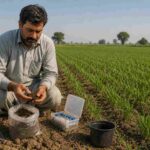
Do a Soil Test (Best Option)
If possible, do a soil test once every 2–3 years. It tells you about:
- Organic matter
- Nitrogen (N)
- Phosphorus (P)
- Potash (K)
- Salinity / pH problems
If soil test is not possible, follow general recommendations but observe your field carefully.
Good Land Preparation Saves Fertilizer
Before sowing:
- Make fine seedbed for wheat and small seeds
- Level the field (laser leveling is best if available)
- Ensure proper moisture at sowing time (wattar condition)
A well-prepared field improves fertilizer use and reduces loss.
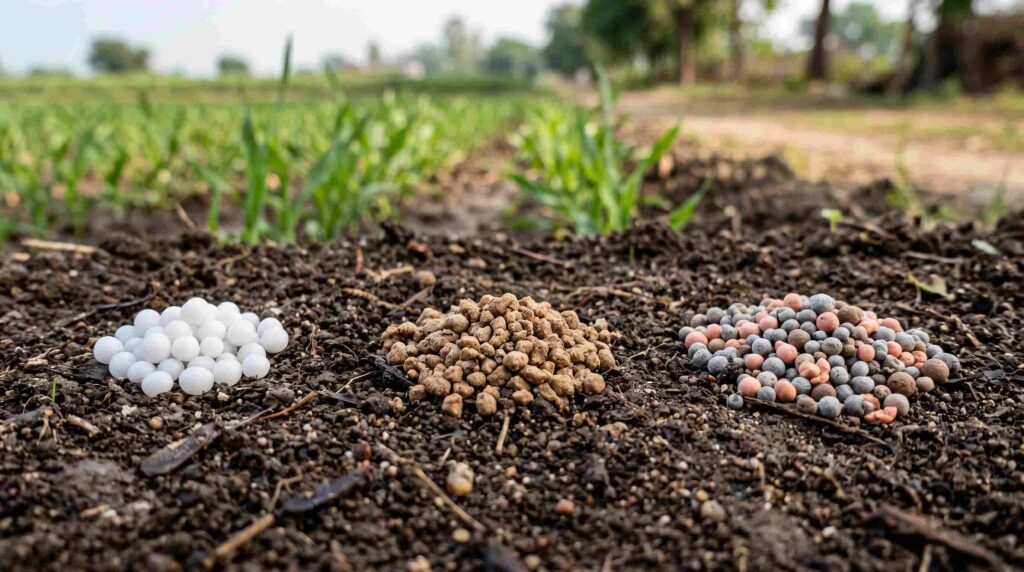
Step 2: Know Your Main Fertilizer Types (Urea, DAP, NPK)
1) Urea (Nitrogen Fertilizer)
- Urea gives Nitrogen (N)
- Nitrogen makes crop green and increases tillers and growth
Best use: Split application (not all at once), mostly after first irrigation.
2) DAP (Phosphorus Fertilizer)
- DAP gives Phosphorus (P) and some Nitrogen
- Phosphorus improves root development, early growth, and crop strength
Best use: Apply at sowing (basal dose), placed near seed but not touching seed.
3) NPK (Balanced Fertilizer)
- NPK contains Nitrogen, Phosphorus, Potash
- Good for soils low in potash (K) or for balanced nutrition
Best use: Often applied at sowing, especially where potassium is needed.
Step 3: General Rabi Crop Fertilizer Plan (Simple Rule)
A good plan is based on three timings:
1) Basal Dose (At Sowing)
This is very important for early root and plant growth.
- Use: DAP or NPK
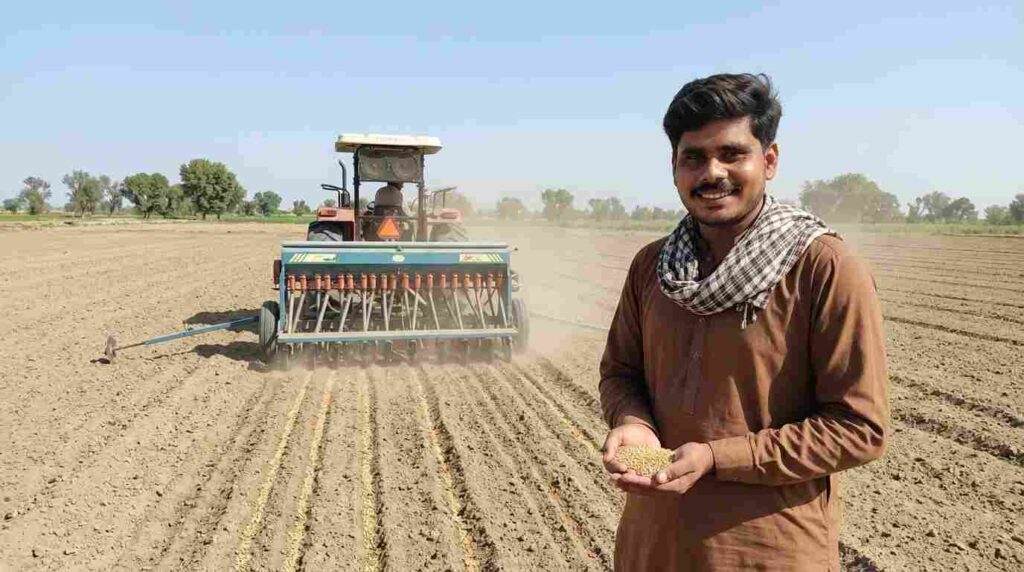
- Apply: At sowing, preferably with seed drill or placed in soil
2) First Top Dressing (After First Irrigation)
This stage builds tillers and strong plants.
- Use: Urea
- Apply: After first irrigation when soil has moisture (not in standing water)
3) Second Top Dressing (Before Booting / Early Stem Stage in Wheat)
This helps grain formation and filling.
- Use: Urea (sometimes small dose only, depending on crop condition)
Wheat Fertilizer Plan (Most Common Rabi Crop)
Wheat is the backbone of Rabi season. Many yield problems come from late or improper urea application.
Recommended Wheat Fertilizer Plan (Common Farmer Practice + Practical Improvement)
Basal (At sowing)
- DAP: commonly 1 bag per acre
OR - NPK: if your soil needs potassium too (ask local dealer/extension)
Tip: If you use DAP, do not place seed directly on fertilizer. Keep a small distance.
First irrigation (top dressing)
- Urea: commonly 1 bag per acre (or as per soil condition)
Second irrigation / early stem stage
- Urea: commonly 1 bag per acre (depending on crop color and growth)
Important: Exact dose depends on soil type, previous crop, and water availability. If you can, confirm from local agriculture extension or soil test for your tehsil.
Practical Tips for Wheat Farmers
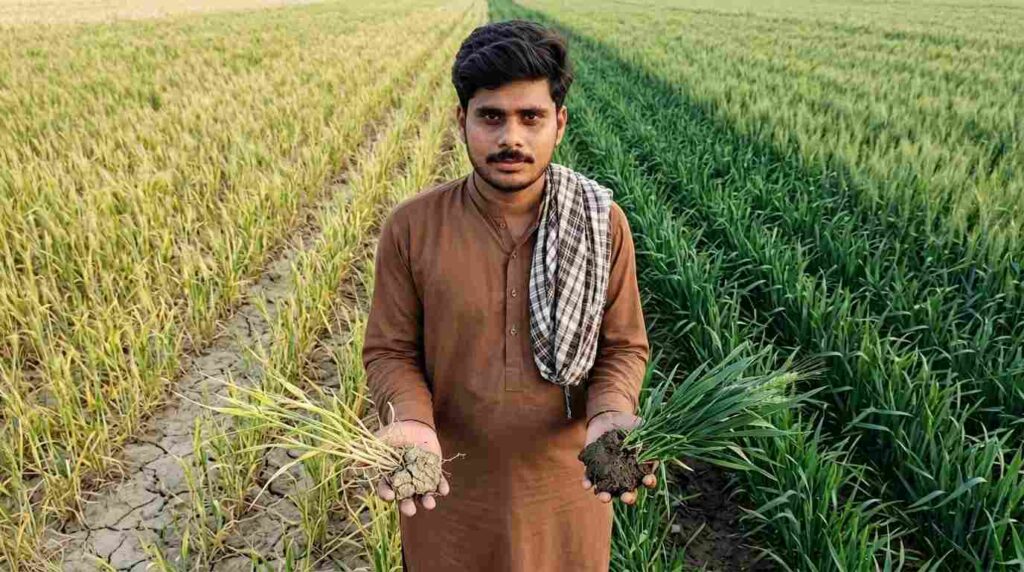
- If wheat leaves are light green/yellow, nitrogen is usually low → urea may be needed.
- If crop is very green and lush, avoid extra urea → it can increase lodging and disease.
- Apply urea when soil is moist, not dry and not flooded.
More Articles
- NPK vs Organic Fertilizer Which One is Better for Pakistani Farmers
- Cheap vs Expensive Fertilizer Comparison Which One is Better for Pakistani Farmers?
Gram (Chana) Fertilizer Plan (Legume Crop)
Gram needs less nitrogen because it makes its own nitrogen with root nodules. Too much urea can reduce nodules and harm yield.
Basal at sowing
- Use DAP in small quantity to support roots and early growth
- If available, use Rhizobium inoculation (seed treatment) for better nodules
Avoid Heavy Urea
- In most cases, gram does not need heavy urea.
- Only use small nitrogen if soil is very poor and plants are pale.
Tip: Gram performs better in fields with good phosphorus and proper moisture at sowing.
Canola (Sarson) Fertilizer Plan (Oilseed Crop)
Canola needs balanced nutrition. Nitrogen improves growth, but too much nitrogen without balance can cause weak stems.
Basal dose (sowing)
- DAP or NPK at sowing for strong roots and early growth
Top dressing
- Urea in 1–2 splits depending on irrigation schedule
Extra tip: Canola also responds to sulphur (many soils are deficient). If your crop shows slow growth and pale color, ask about sulphur fertilizer options in your area.
How to Apply Fertilizer Correctly (This Saves Money)
Many farmers lose fertilizer because of wrong method. Follow these simple rules:
Placement Tips
- Best: Apply with seed drill (proper placement)
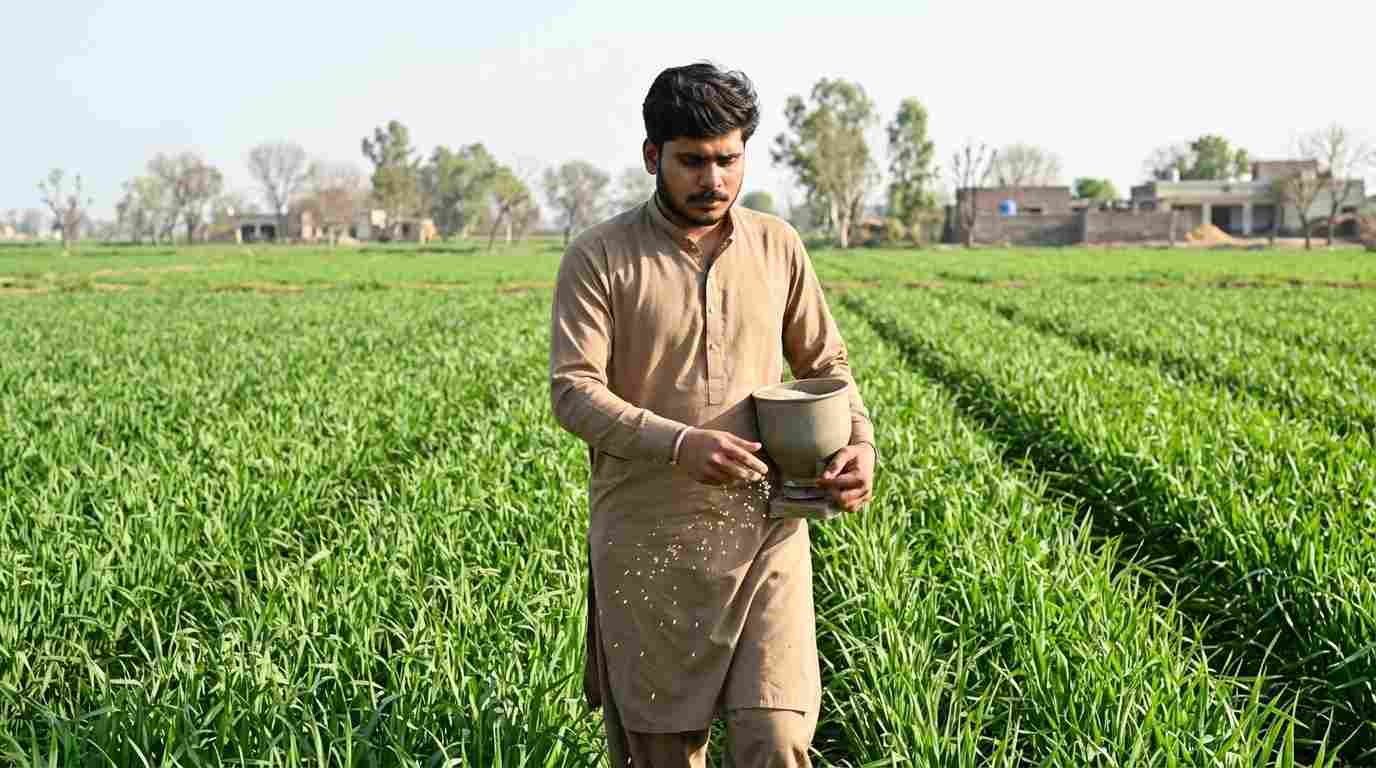
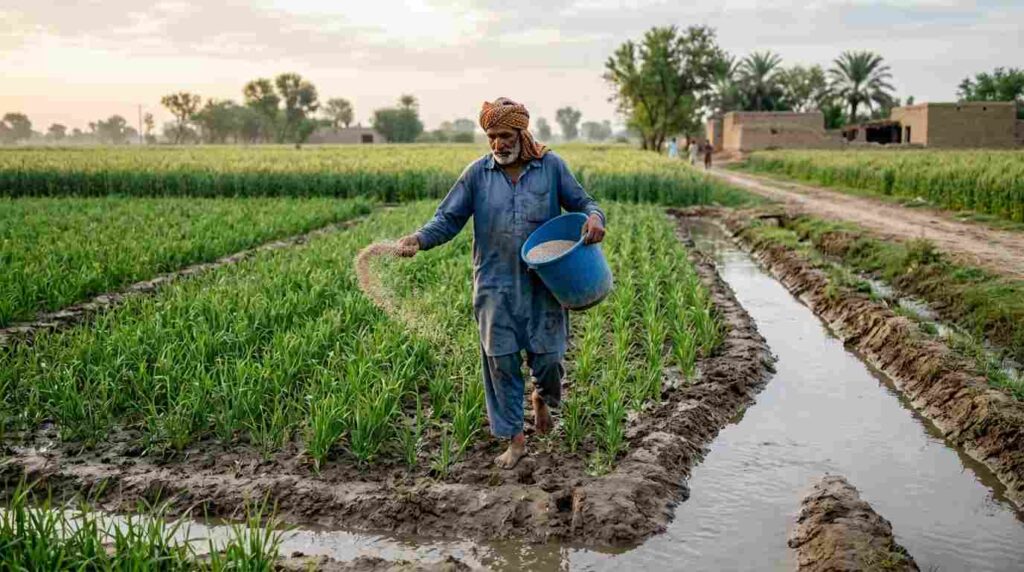
- If broadcasting: Mix lightly in soil or apply before irrigation with correct timing
Urea Timing Tips (Very Important)
- Do not apply urea in strong wind (loss increases)
- Do not apply urea on dry soil and leave it for many days
- Best time is when soil is moist and you can irrigate soon (or just after irrigation when water has soaked in)
Water Management
- Fertilizer works best when irrigation is proper.
- Over-irrigation can leach nutrients; under-irrigation reduces uptake.
Practical Field Signs (Easy Nutrient Clues)
You can learn a lot by looking at your crop:
Nitrogen (N) deficiency
- Pale green or yellow leaves
- Slow growth
- Fewer tillers in wheat
Phosphorus (P) deficiency
- Weak roots
- Slow early growth
- Sometimes purple tint on older leaves (in cold)
Potash (K) deficiency
- Weak stems
- Leaf edge burning (in some crops)
- Poor grain quality
If you see these signs again and again, improve your Rabi crop fertilizer plan and consider a soil test.
Common Mistakes Farmers Should Avoid
- Applying all urea at sowing (waste and weak timing)
- Putting DAP in direct contact with seed
- Applying urea in standing water
- Using only urea and ignoring phosphorus/potash
- Copying neighbor’s fertilizer dose without seeing your soil condition
- Late sowing + late fertilizer = low yield (timing matters)
Simple Checklist: Best Rabi Crop Fertilizer Plan Practices
- Use DAP or NPK at sowing
- Split urea into 2 doses for wheat
- Apply fertilizer with correct moisture
- Keep field level and manage irrigation
- Watch crop color and growth every week
- Rotate crops and add organic matter (FYM/compost) when possible
Conclusion
A successful Rabi crop fertilizer plan is not about using more bags. It is about using the right fertilizer (Urea, DAP, NPK), at the right time, in the right method. Start with good land preparation, apply DAP or NPK at sowing, and use urea in splits—especially for wheat. Observe your crop, manage irrigation, and avoid common mistakes. With small improvements, many farmers can increase yield and also save fertilizer cost.
FAQs (Rabi Crop Fertilizer Plan)
1) What is the best Rabi crop fertilizer plan for wheat in Pakistan?
A common and effective plan is: DAP (or NPK) at sowing, then urea in 2 split doses after irrigations. Exact dose depends on soil and water, so confirm with soil test or local extension advice.
2) Can I apply all urea at sowing?
It is not recommended. Wheat needs nitrogen more during tillering and growth stages. Splitting urea reduces loss and improves uptake.
3) Should I use DAP or NPK for Rabi crops?
If your soil needs mainly phosphorus, DAP works well. If your soil also needs potassium, NPK is better. A soil test is the best way to decide.
4) Does gram (chana) need urea?
Usually gram needs very little nitrogen because it makes nitrogen through nodules. Too much urea can reduce nodules. Gram mostly benefits from phosphorus (DAP) at sowing.
5) When is the best time to apply urea in wheat?
Apply urea when soil has moisture—commonly after first irrigation and then again at early stem/boot stage depending on crop condition. Avoid applying in standing water.