NPK vs Organic fertilizer Farming in Pakistan is becoming more challenging every year. Soil fertility is decreasing, fertilizer prices are increasing, and farmers want higher yields with lower costs. One common question many farmers ask is:
“NPK vs Organic fertilizer – which one should I use?”
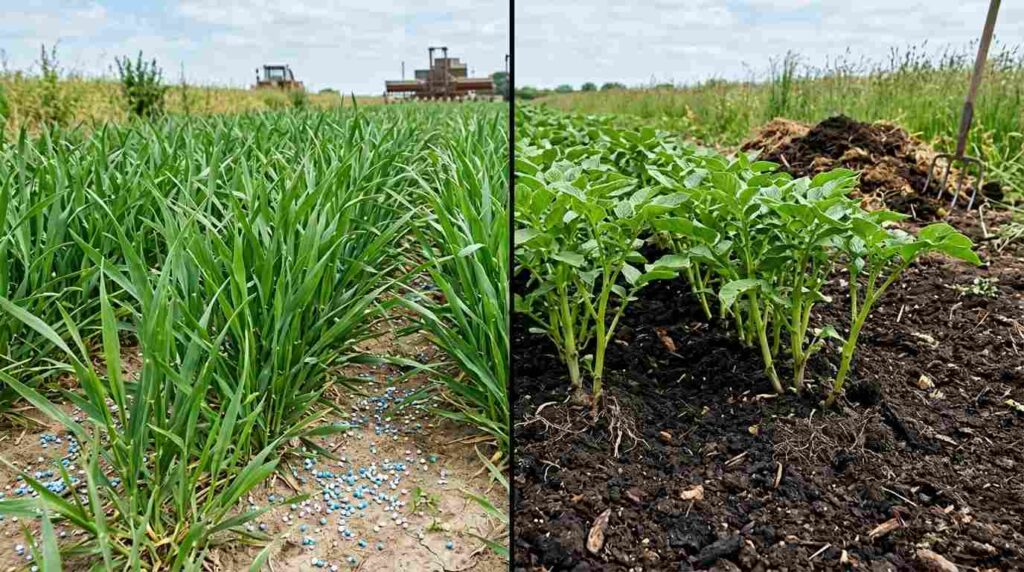
Some farmers prefer chemical fertilizers like Urea, DAP, and NPK because they give quick results. Others prefer organic fertilizer like farmyard manure (FYM), compost, or poultry manure because they improve soil health.
In this article, we will explain everything in very simple English so every farmer can understand and make the best decision.
What is NPK Fertilizer?
NPK fertilizer is a chemical fertilizer that contains three main nutrients:
- N = Nitrogen
- P = Phosphorus
- K = Potassium
These three nutrients are very important for plant growth.
1. Nitrogen (N)
- Makes plants green
- Helps in leaf growth
- Very important for wheat, rice, and maize
Common source: Urea
2. Phosphorus (P)
- Helps in strong root development
- Improves flowering and grain formation
Common source: DAP (Diammonium Phosphate)
3. Potassium (K)
- Improves plant strength
- Protects against disease
- Increases grain quality
Common source: MOP (Muriate of Potash)
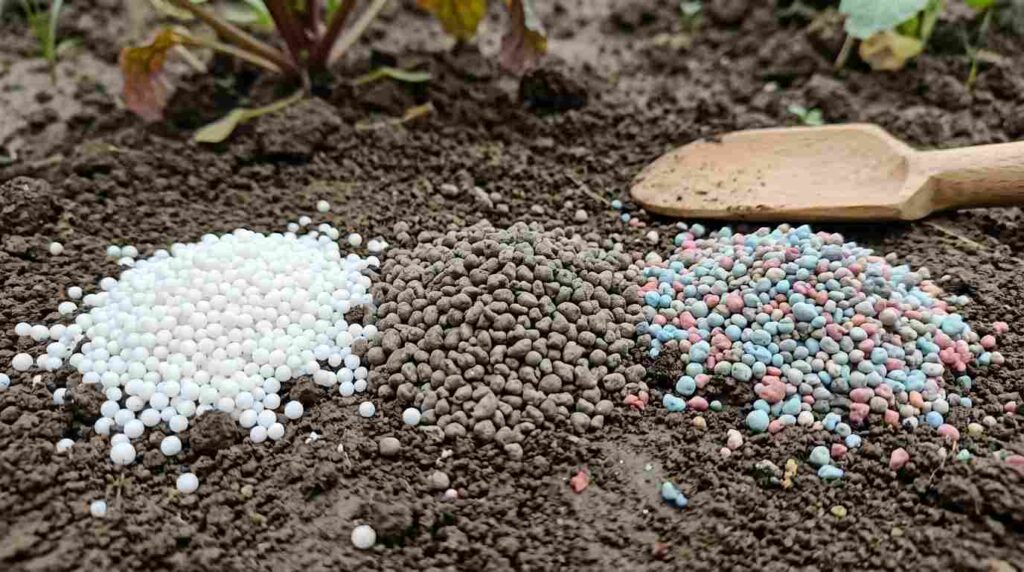
Common Chemical Fertilizers in Pakistan
✅ Urea
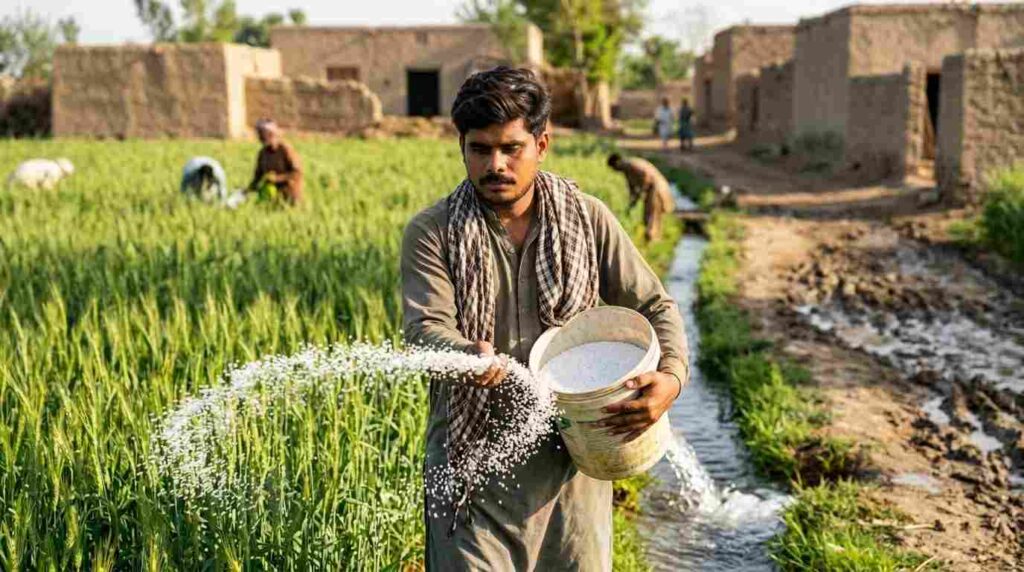
- Contains 46% Nitrogen
- White granules
- Very fast result
- Cheapest nitrogen source
✅ DAP
- Contains 18% Nitrogen and 46% Phosphorus
- Used at sowing time
- Good for root development
NPK (Mixed Fertilizer)
- Available in different combinations like:
- 15-15-15
- 20-20-0
- 10-26-26
- Provides balanced nutrition
What is Organic Fertilizer?
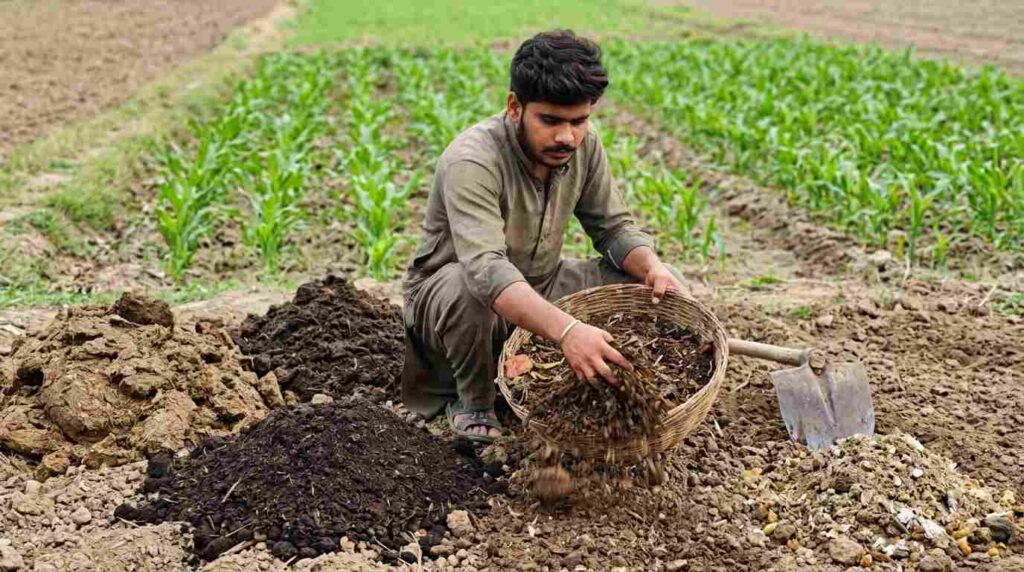
Organic fertilizer comes from natural sources.
Examples:
- Farmyard Manure (Gobar)
- Poultry manure
- Compost
- Green manure
- Crop residues
Organic fertilizer does not give very fast results, but it improves soil health for many years.
NPK vs Organic Fertilizer – Main Difference
Let’s compare both in simple words:
✅ 1. Speed of Result
NPK fertilizer:
- Fast result
- Crops become green quickly
Organic fertilizer:
- Slow result
- Improves soil slowly but permanently
✅ 2. Soil Health
NPK fertilizer:
- Gives nutrients only
- Long-term use can reduce soil fertility
- Can make soil hard
Organic fertilizer:
- Improves soil structure
- Increases organic matter
- Makes soil soft and fertile
✅ 3. Cost
NPK fertilizer:
- Expensive
- Prices change frequently
Organic fertilizer:
- Cheap if available at home
- Requires labor
✅ 4. Environmental Impact
NPK fertilizer:
- Can pollute water
- Excess use damages soil
Organic fertilizer:
- Safe for environment
- Improves biodiversity
Which One is Better for Pakistani Farmers?
The best answer is:
✅ Use both in balance.
Only chemical fertilizer is not good.
Only organic fertilizer may not give high yield.
The best method is:
Integrated Nutrient Management (INM)
Use organic fertilizer + NPK fertilizer together.
This method gives:
- High yield
- Healthy soil
- Better profit
Fertilizer Schedule for Wheat in Pakistan
Now let’s discuss a practical fertilizer schedule for wheat crop.
This schedule is for 1 acre of land.
✅ At Land Preparation
- Apply 1-2 trolleys of well-rotted FYM (farmyard manure)
- Mix well into soil
This improves soil structure.
✅ At Sowing Time
Apply:
- 1 bag DAP per acre
- Mix into soil at time of sowing
Why?
- Helps in root development
- Improves early growth
More Articles
- Cheap vs Expensive Fertilizer Comparison Which One is Better for Pakistani Farmers?
- Urea vs DAP Which Is Better? Complete Guide for Pakistani Farmers
✅ First Irrigation (20-25 Days After Sowing)
Apply:
- 1 bag Urea per acre
This improves tillering.
✅ Second Irrigation (45-50 Days After Sowing)
Apply:
- 1 bag Urea per acre
This helps in grain formation.
✅ Optional (If Soil is Weak)
You can apply:
- Half bag Potash (MOP) per acre
This improves grain quality and disease resistance.
Practical Tips for Farmers
Here are some real field-based tips:
✅ 1. Never Apply Urea on Dry Soil
- Always apply before irrigation
- Otherwise nitrogen will be lost
✅ 2. Do Soil Testing
- Test soil every 2–3 years
- Saves fertilizer cost
✅ 3. Use Well-Rotted Manure
- Fresh gobar can damage plants
- Always use decomposed manure
✅ 4. Avoid Overuse of Urea
- Too much nitrogen causes:
- Weak plants
- Lodging (plants fall down)
- Pest attack
✅ 5. Mix Organic and Chemical Fertilizer
Best combination:
- 25–30% nutrients from organic
- 70–75% from chemical
This keeps soil healthy and yield high.
Common Mistakes Farmers Make
Many farmers in Pakistan make these mistakes:
- Applying all urea at once
- Not using phosphorus at sowing
- Ignoring potash
- Using fresh manure
- Applying fertilizer without irrigation plan
Avoid these mistakes to increase profit.
Long-Term Impact: NPK vs Organic Fertilizer
If you use only chemical fertilizers for many years:
- Soil becomes hard
- Organic matter decreases
- Yield starts decreasing
If you use organic fertilizer regularly:
- Soil becomes soft
- Water holding capacity increases
- Fertilizer efficiency improves
So the smart farmer uses both wisely.
Best Strategy for Pakistani Conditions
For crops like:
- Wheat
- Rice
- Maize
- Sugarcane
Best strategy:
✅ Apply organic manure once a year
✅ Use DAP at sowing
✅ Split Urea in 2-3 doses
✅ Apply Potash if soil is deficient
✅ Do soil testing
This gives:
- Higher yield
- Lower cost per maund
- Better soil for next generation
Conclusion: NPK vs Organic Fertilizer
The debate of NPK vs Organic fertilizer is not about choosing one and rejecting the other.
Both have importance.
- NPK fertilizers (Urea, DAP, NPK) give quick and strong growth.
- Organic fertilizers improve soil health and long-term fertility.
For Pakistani farmers, the best solution is balanced use of both.
Remember:
Healthy soil = Healthy crop = Higher profit
Use fertilizers wisely, not excessively.
Frequently Asked Questions (FAQs)
1. Which is better: NPK vs Organic fertilizer?
Both are important. NPK gives quick nutrients, while organic fertilizer improves soil health. Best results come from using both together.
2. Can I grow wheat using only organic fertilizer?
Yes, but yield may be lower. For commercial farming, combine organic fertilizer with Urea and DAP for better production.
3. How many bags of Urea per acre for wheat?
Normally 2 bags per acre, applied in 2 splits:
- First irrigation
- Second irrigation
4. Is too much Urea harmful?
Yes. Overuse of Urea can:
- Burn plants
- Cause lodging
- Increase pest attack
- Reduce soil fertility
5. How often should I apply organic manure?
At least once a year before Rabi crop (like wheat). Apply well-rotted manure during land preparation.
If you are a farmer in Pakistan, start improving your soil today. Balanced fertilizer use will increase your yield and profit for many years to come. 🌾