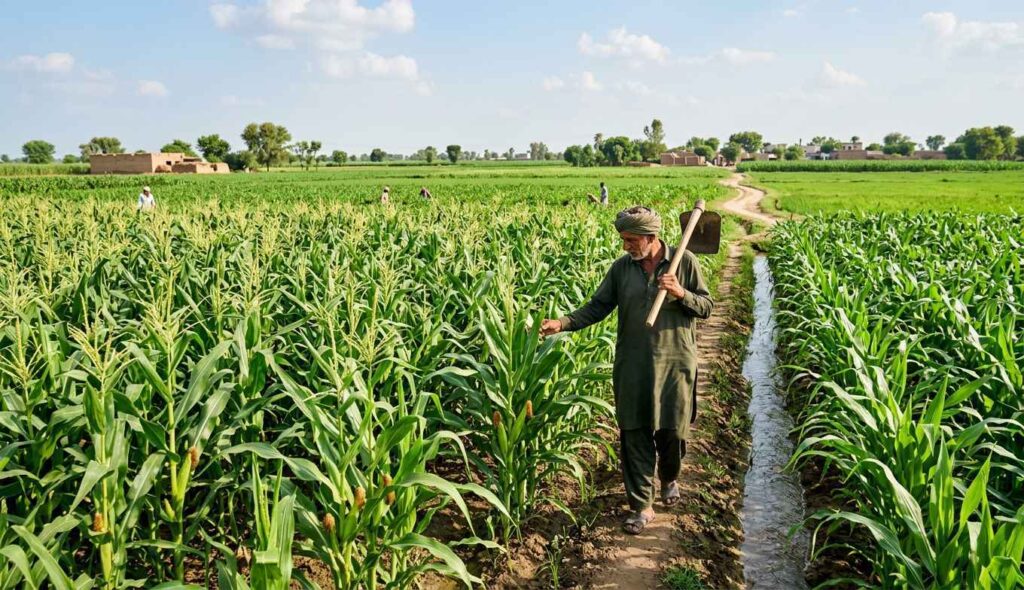
Maize in Pakistan is becoming an important crop for farmers in Pakistan, especially in Punjab, KPK, and some parts of Sindh where water, soil type, and market demand support good production. But one common question many growers ask is simple: how much fertilizer should be used per acre for maize? The answer is not the same for every field, yet there are practical recommendations that can help farmers get better plant growth, stronger cobs, and higher grain yield.
In many villages, farmers either apply less fertilizer to save money or apply too much urea hoping for a bigger crop. Both mistakes can reduce profit. Maize needs balanced nutrition, not just nitrogen. If the crop gets the right dose at the right time, the result is usually better plant health and improved grain filling. In this article, we will explain the recommended fertilizer quantity per acre for maize, along with timing, method, common mistakes, and useful field tips for Pakistani farmers.
Why Fertilizer Management Is Important in Maize
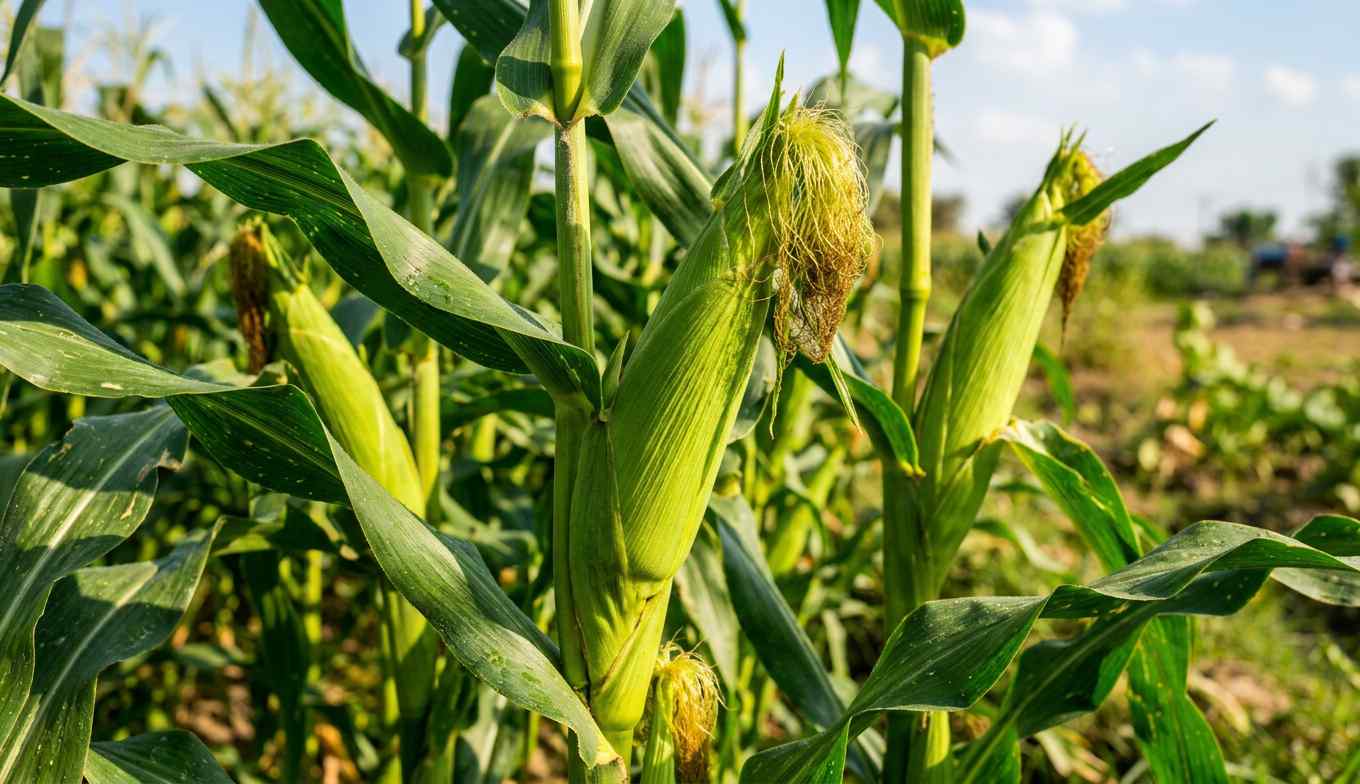
Maize is a heavy feeder crop. It takes a good amount of nutrients from the soil, especially nitrogen, phosphorus, and potassium. If these nutrients are not available in proper quantity, the crop may show weak growth, pale leaves, poor cob formation, and low grain weight.
In Pakistan, many soils are low in organic matter. This means crops often depend more on applied fertilizer. Good fertilizer management helps farmers in three ways:
- Better plant vigor from early growth
- Stronger cob development at flowering stage
- Improved grain yield and better return on input cost
Balanced use of fertilizer is more important than simply increasing the amount.
Recommended Fertilizer Quantity per Acre for Maize
The recommended fertilizer quantity per acre for maize depends on soil fertility, hybrid variety, sowing season, and irrigation availability. Still, for most irrigated maize fields in Pakistan, the following recommendation is practical and widely useful.
Standard Fertilizer Dose Per Acre
For average fertile land under irrigated conditions, use:
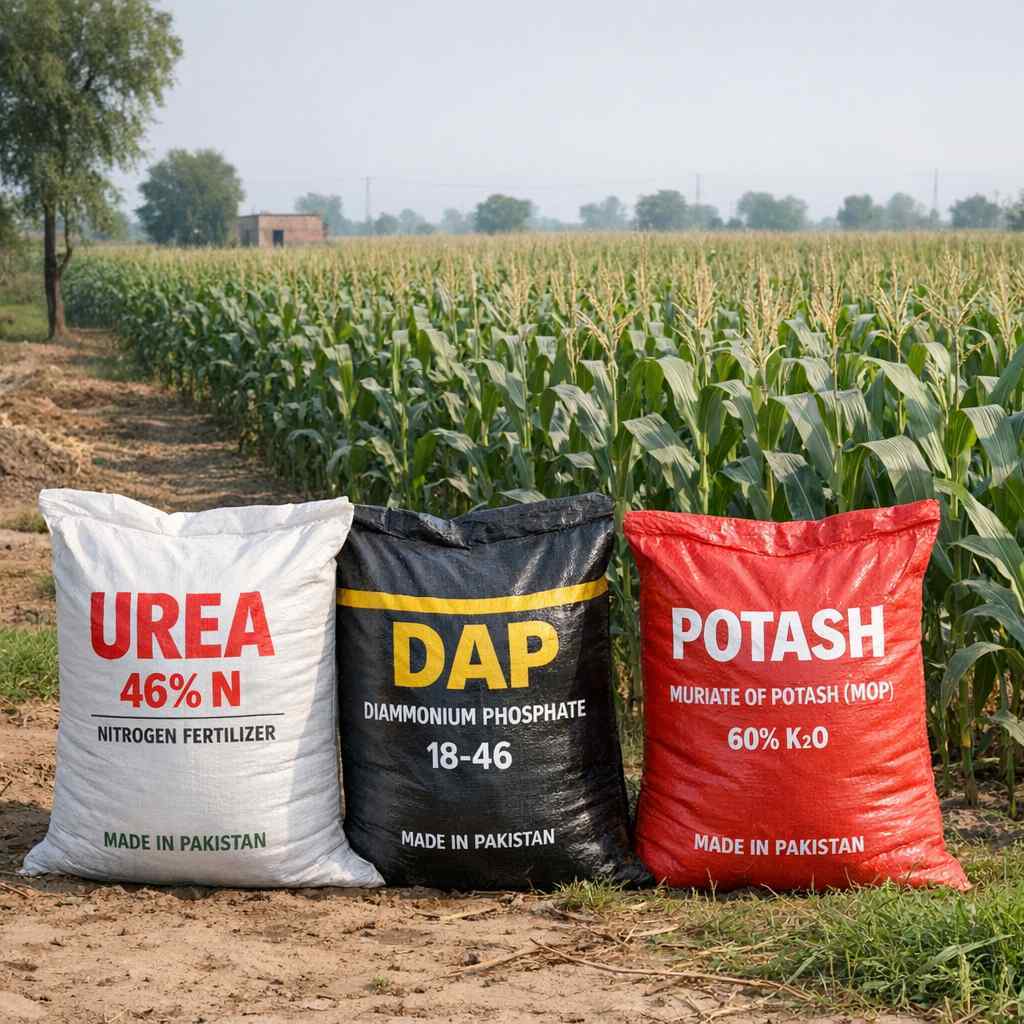
- Urea: 2 to 2.5 bags per acre
- DAP: 1 to 1.5 bags per acre
- SOP or MOP: 0.5 to 1 bag per acre
- Zinc sulphate: 5 to 10 kg per acre if zinc deficiency is common
- Boron: 1 to 2 kg per acre in boron-deficient soils, especially for better grain setting
This dose is suitable for many maize-growing areas of Punjab and KPK where farmers use hybrid seed and proper irrigation.
Nutrient Requirement in Simple Form
If we convert the above into nutrient need, maize generally requires per acre:
- Nitrogen (N): 100 to 140 kg
- Phosphorus (P2O5): 50 to 70 kg
- Potash (K2O): 25 to 50 kg
The exact amount should be adjusted according to soil test, previous crop, and field condition.
Fertilizer Recommendation by Province
Punjab
In central and northern Punjab, maize performs well under irrigation. Farmers often get good results with:
- 2.5 bags urea
- 1.5 bags DAP
- 0.5 bag SOP or MOP
If the field has good organic matter or farmyard manure was added earlier, urea can sometimes be slightly reduced.
KPK
In KPK, especially in maize belt areas, many soils respond well to nitrogen and phosphorus. A practical dose is:
- 2 to 2.5 bags urea
- 1 to 1.5 bags DAP
- 0.5 bag potash if soil is light or nutrient-deficient
Rainfed maize fields should be more careful with fertilizer timing. Apply when moisture is available.
Sindh
In Sindh, maize is often grown in selected irrigated pockets. Due to heat and irrigation conditions, nutrient loss can be higher. A practical recommendation is:
- 2.5 bags urea
- 1 bag DAP
- 0.5 to 1 bag potash
In sandy or lighter soils, split application of nitrogen is very important to avoid losses.
Step-by-Step Fertilizer Application Guide for Maize
Applying fertilizer at the right time is just as important as using the right amount. Below is a simple field guide that farmers can follow.
Step 1: Prepare the Field Properly
Before sowing, make sure the land is well prepared. Level field helps water and fertilizer spread evenly. Uneven land often causes patchy crop growth.
If possible, add:
- 1 to 2 trolleys of well-rotted farmyard manure per acre
This improves soil structure and helps fertilizer work better.
Step 2: Apply Basal Dose at Sowing
At the time of sowing, apply all phosphorus and potash, along with one-third nitrogen.
A good basal application per acre may be:
- Full DAP
- Full potash
- 0.5 to 1 bag urea
Place fertilizer slightly below and away from the seed. Do not let seed touch fertilizer directly, as it can affect germination.
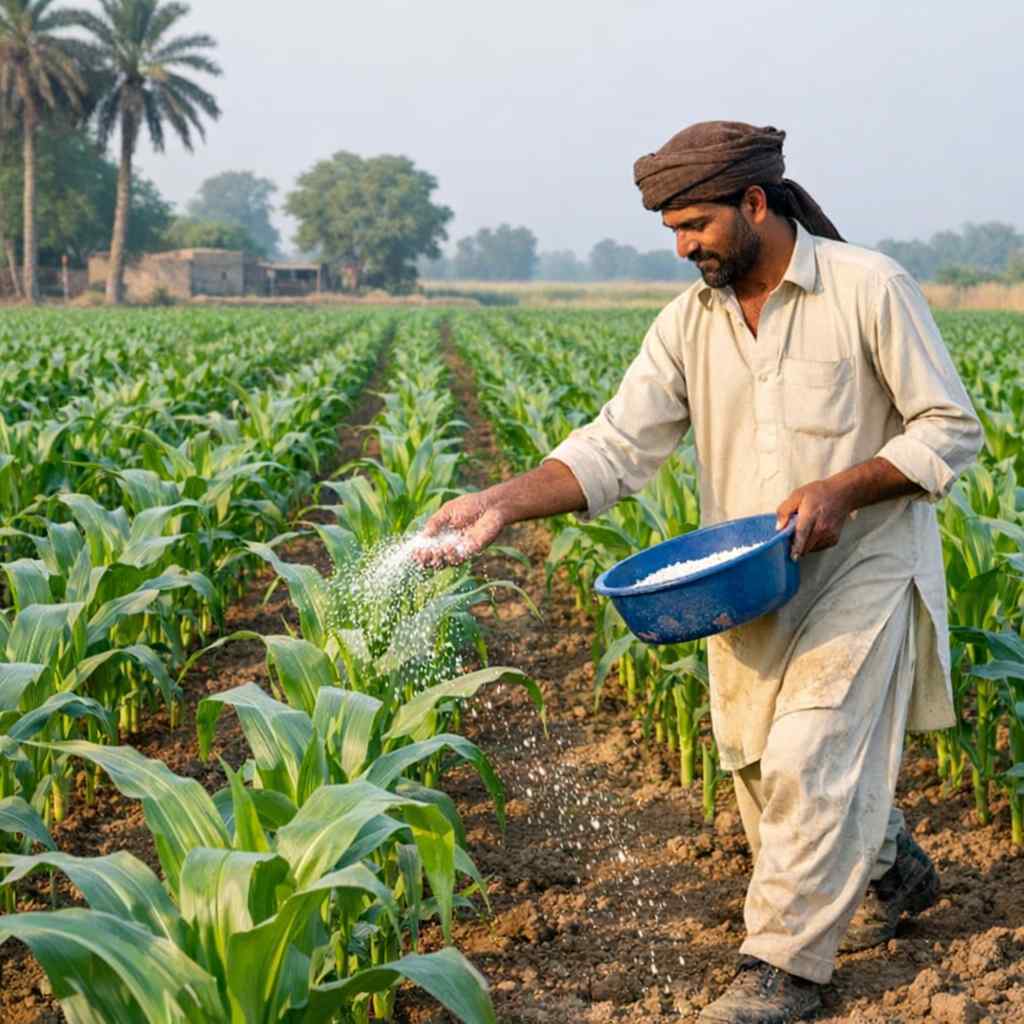
Step 3: Apply First Top Dressing
When the crop reaches knee-high stage, apply the second dose of nitrogen.
Use:
- 0.75 to 1 bag urea per acre
Apply after irrigation or before light moisture. This stage is very important for leaf and stem growth.
Step 4: Apply Second Top Dressing Before Tasseling
Before tasseling and cob formation, apply the remaining nitrogen.
Use:
- 0.75 to 1 bag urea per acre
This dose supports cob size, grain setting, and grain filling.
Step 5: Watch the Crop and Correct Deficiency
If leaves show yellowing, purpling, or poor growth, the crop may be facing nutrient deficiency.
Common signs include:
- Yellow older leaves: nitrogen deficiency
- Purple shade on leaves: phosphorus deficiency
- Leaf edge burning: potash deficiency
- White or yellow bands on young leaves: zinc deficiency
Corrective sprays or soil application may help if identified early.
Best Time to Apply Fertilizer in Maize
Timing matters a lot in maize farming. Even a good fertilizer dose can give poor results if applied too late or before heavy water loss.
General Timing Schedule
- At sowing: DAP + potash + part of urea
- Knee-high stage: second nitrogen dose
- Before tasseling: third nitrogen dose
Avoid applying urea in dry soil without moisture. It may not dissolve properly and can be wasted.
How Soil Type Changes Fertilizer Need
The recommended fertilizer quantity per acre for maize can vary with soil type.
Heavy Soil
Clay and loam soils hold nutrients better. In such soils:
- Standard fertilizer dose usually works well
- Split urea still gives better efficiency
Sandy Soil
Sandy soils lose nutrients faster. In such fields:
- Apply nitrogen in more splits
- Add organic matter if possible
- Potash becomes more important
Low Organic Matter Soil
Many fields in Pakistan have low organic matter. In these soils:
- Maize responds strongly to balanced fertilizer
- Farmyard manure or compost improves fertilizer use
- Zinc deficiency may be more common
Common Mistakes to Avoid
Many yield problems happen not because fertilizer was unavailable, but because it was used in the wrong way. Here are some common mistakes farmers should avoid.
Using Only Urea
Some growers focus only on urea because it gives quick green color. But maize also needs phosphorus and potassium. Too much nitrogen without balance can produce weak plants and poor grain formation.
Applying All Urea at Once
If the full urea dose is applied at sowing, much of it may be lost through leaching, evaporation, or poor uptake. Split application is much better.
No Soil Testing
Without a soil test, farmers often guess the dose. This can lead to underuse or overuse. Even one soil test every couple of years can improve fertilizer decisions.
Fertilizer Touching the Seed
When fertilizer is placed directly with seed, germination can suffer. Always keep some distance.
Late Fertilizer Application
If nitrogen is applied too late, vegetative growth may increase but grain filling may not improve. Timing should match crop stage.
Ignoring Micronutrients
In some areas, zinc and boron deficiency reduce yield even when NPK is applied properly. Farmers should not ignore these where deficiency is known.
Practical Tips for Better Results
Good fertilizer use is not only about buying bags from the market. It is also about smart field management. These practical tips can make a real difference.
Use Soil Test Where Possible
A soil test gives a clearer idea of what your field actually needs. This prevents waste and helps save money on unnecessary fertilizer.
Combine Chemical Fertilizer with Organic Matter
Farmyard manure, compost, or poultry manure can improve soil health. This helps roots absorb nutrients better and supports moisture retention.
Irrigate at the Right Time
Fertilizer works best when the crop gets timely moisture. In maize, moisture stress at knee-high stage, tasseling, and grain filling can reduce yield badly.
Keep Weeds Under Control
If weeds are not controlled early, they consume the same fertilizer meant for maize. Clean fields make fertilizer use more effective.
Select Good Hybrid Seed
Even the best fertilizer program cannot fully compensate for weak or poor-quality seed. Use trusted hybrid seed suitable for your area.
Observe the Crop Regularly
Walk through the field every few days. Early detection of yellowing, stunted growth, insect attack, or water stress helps avoid major loss.
Relates Artices
- Sugarcane Fertilizer Guide in Pakistan Complete Plan for Maximum Yield
- Best Fertilizers for Rice Crop in Pakistan
- Best Fertilizer for Wheat in Pakistan A Complete Guide for Farmers
- Fertilizer Application Schedule for Different Vegetables and Wheat in Pakistan
Fertilizer Program Example for One Acre of Maize
Here is a simple example farmers can follow in irrigated areas.
At Sowing
- 1.5 bags DAP
- 0.5 bag SOP or MOP
- 0.75 bag urea
At Knee-High Stage
- 0.75 bag urea
Before Tasseling
- 1 bag urea
If Zinc Deficiency Is Expected
- 5 to 10 kg zinc sulphate per acre at land preparation or early crop stage
This is a practical, balanced plan for many maize fields in Pakistan.
How Farmers Can Save Fertilizer Cost Without Reducing Yield
Input cost is a serious concern for farmers. The good news is that saving money does not always mean reducing fertilizer. Sometimes better management gives the same or better result.
Smart Ways to Reduce Waste
- Apply urea in splits instead of one time
- Use soil test recommendations
- Add organic matter to improve nutrient holding
- Avoid fertilizer application before heavy irrigation
- Place fertilizer near root zone, not too far from plants
These simple steps often improve fertilizer efficiency and reduce unnecessary expense.
FAQs
1. How many bags of urea are recommended per acre for maize?
In most irrigated maize fields in Pakistan, 2 to 2.5 bags of urea per acre are commonly recommended. The exact amount depends on soil fertility, hybrid type, and irrigation conditions.
2. Can I grow maize with only urea fertilizer?
Maize can grow, but the result is usually not ideal. Urea provides nitrogen only. For better root growth, cob formation, and grain yield, maize also needs phosphorus and potassium.
3. When should I apply urea to maize?
Urea should be applied in split doses:
- One part at sowing
- One part at knee-high stage
- One part before tasseling
This method gives better nutrient use and reduces loss.
4. Is zinc important for maize in Pakistan?
Yes, in many Pakistani soils, especially low organic matter soils, zinc deficiency is common. If the crop shows deficiency or your area is known for low zinc, apply zinc sulphate as recommended.
5. Does soil testing really help in fertilizer planning?
Yes, soil testing helps farmers know the actual nutrient condition of the field. It prevents guesswork and supports better fertilizer use, which can save money and improve crop performance.
Conclusion
The recommended fertilizer quantity per acre for maize is not just about following a fixed number of bags. It is about understanding your soil, crop stage, irrigation, and local field conditions. Still, for many farmers in Pakistan, a balanced dose of 2 to 2.5 bags urea, 1 to 1.5 bags DAP, and 0.5 to 1 bag potash per acre gives a strong starting point. If zinc or boron deficiency exists, these should also be included.
The biggest lesson is simple: maize needs balanced feeding and timely application. Avoid using only urea, do split doses, and never ignore soil condition. Farmers in Punjab, Sindh, and KPK can get better results by combining fertilizer with good irrigation, weed control, and healthy seed. If possible, take a soil test and adjust the dose according to your field. A smarter fertilizer plan often gives better profit than just a bigger fertilizer bill.