Onion Yield with Fertilizersis important crop in pakisatn. Farmers grow onion in Punjab, سندھ, Khyber Pakhtunkhwa, and Balochistan for local markets and export. Good onion production gives better income, but many farmers do not get the full yield because of poor fertilizer management. If fertilizers are used in the right amount, at the right time, and in the right method, onion bulbs become bigger, healthier, and more marketable.
In this article, we will discuss simple and practical tips for improving onion yield with fertilizers under Pakistan farming conditions. We will also explain the use of common fertilizers like Urea, DAP, and NPK in a step-by-step way.
Why Fertilizer Management Is Important for Onion Crop
Onion is a shallow-rooted crop. This means it cannot take nutrients from deep soil like some other crops. It needs proper nutrients near the root zone. If the soil is weak or fertilizer use is unbalanced, onion plants become thin, yellow, and weak. Bulb size stays small, and yield drops.
Good fertilizer management helps in:
- Better plant growth
- Strong root development
- Bigger bulb formation
- Better bulb color and quality
- Higher market value
- Improved overall yield per acre
Best Fertilizers for Onion in Pakistan
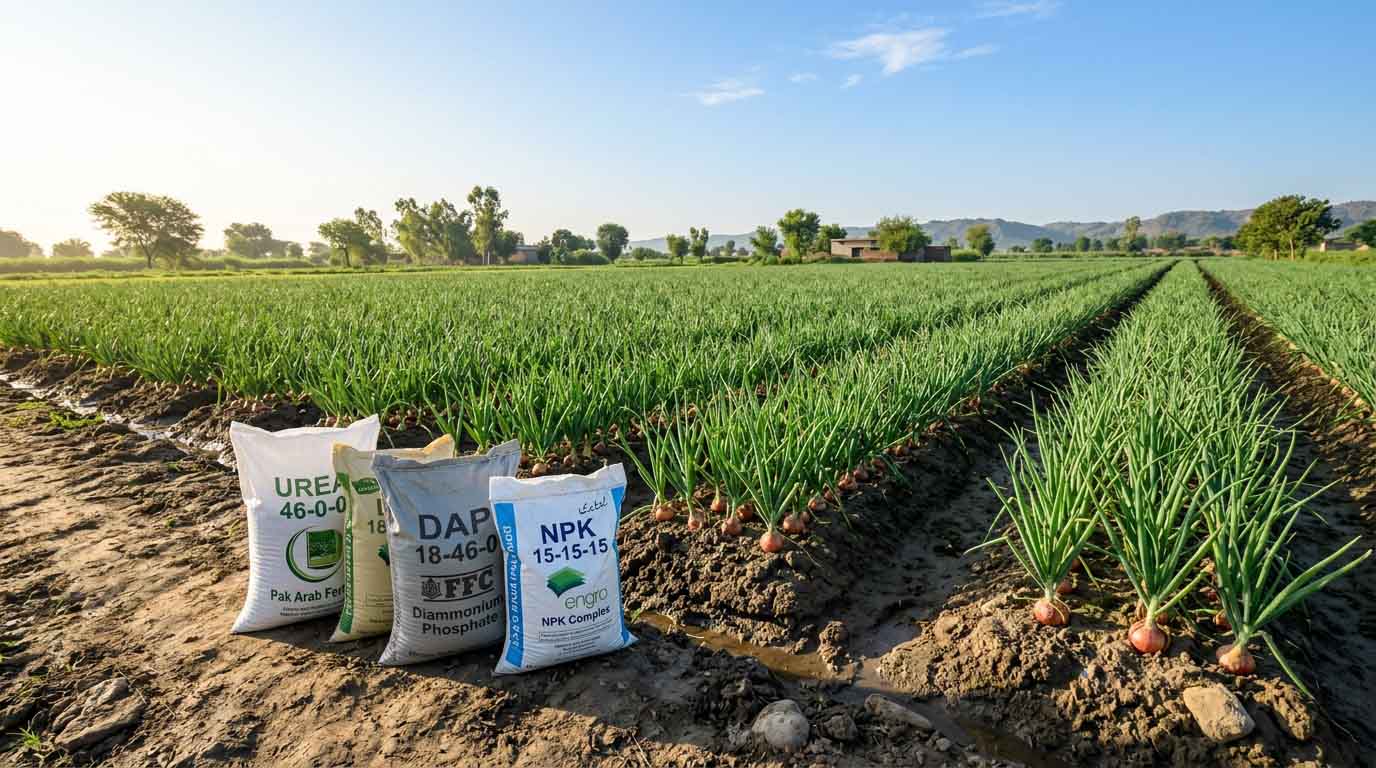
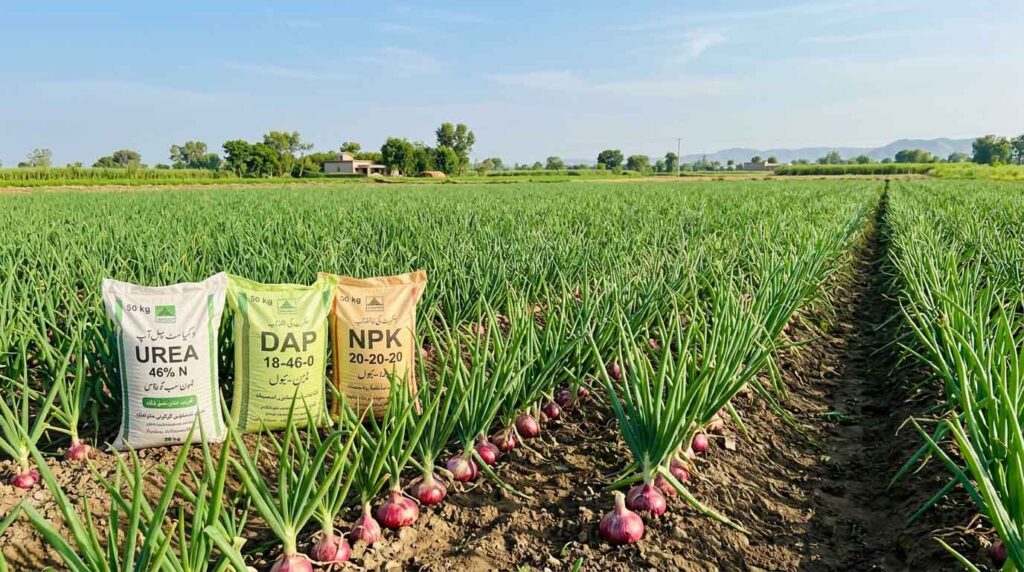
In Pakistan, farmers commonly use these fertilizers for onion crop:
Urea
Urea gives nitrogen (N). Nitrogen helps in green leaf growth. Onion needs healthy leaves because more leaves usually mean better bulb development. But too much urea can cause soft bulbs and delay maturity.
DAP
DAP stands for Diammonium Phosphate. It gives:
- Nitrogen
- Phosphorus
Phosphorus is very important in the early stage. It helps in root growth and plant establishment.
NPK
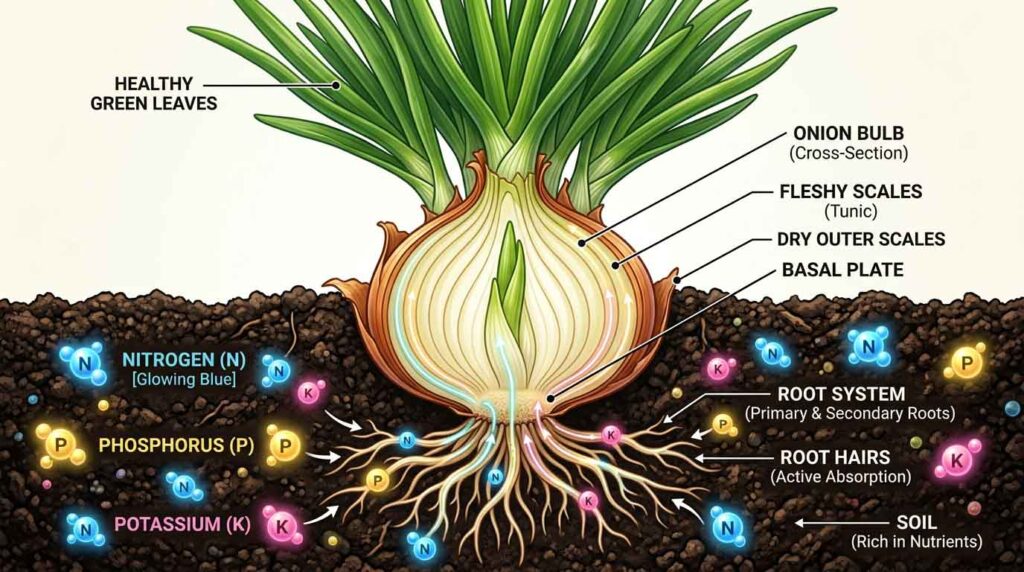
NPK fertilizers contain:
- N = Nitrogen
- P = Phosphorus
- K = Potassium
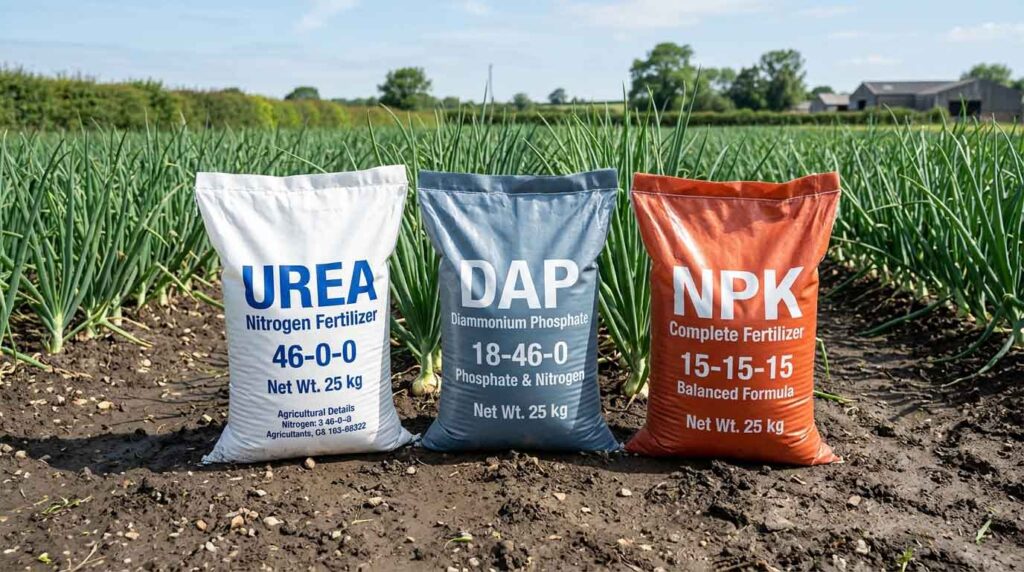
Potassium is important for bulb size, strength, and quality. It also helps the plant face stress and diseases better.
Understanding Nutrient Needs of Onion
To get good onion production, the crop mainly needs:
Nitrogen
Nitrogen supports leaf growth. Onion plants need enough leaves for better bulb making. But too much nitrogen late in the season can reduce bulb quality.
Phosphorus
Phosphorus supports:
- Root growth
- Early plant vigor
- Better nutrient uptake
Potassium
Potassium helps in:
- Bulb formation
- Better size and firmness
- Improved shelf life
- Better resistance to stress
Other Important Nutrients
Besides Urea, DAP, and NPK, onion may also need:
- Sulphur
- Zinc
- Boron
If soil is deficient, these nutrients can also improve crop performance.
Soil Testing Before Fertilizer Use
One of the best tips for improving onion yield is soil testing. Many farmers apply fertilizer without knowing what their soil actually needs. This can waste money and reduce yield.
Benefits of Soil Testing
- Helps know nutrient deficiency
- Saves fertilizer cost
- Prevents overuse of fertilizer
- Improves crop planning
- Gives better results
In Pakistan, farmers can get soil tested from agriculture departments, private labs, or extension services.
Step-by-Step Fertilizer Usage for Onion Crop
Now let us understand the step-by-step fertilizer use for onion in simple words.
Step 1: Prepare the Land Properly
Before sowing or transplanting onion, prepare the field well.
Land preparation tips:
- Plough the field 2 to 3 times
- Remove weeds and old crop residue
- Make fine soil bed
- Ensure proper drainage
- Add well-rotted farmyard manure if available
Farmyard manure improves soil structure and helps fertilizers work better.
Step 2: Apply Basal Fertilizer at Planting Time
Basal fertilizer means the fertilizer applied before sowing or at transplanting.
For onion, DAP and NPK are commonly used at this stage.
Recommended basal application idea
Under average Pakistan conditions, farmers often use:
- DAP at planting time
- Some NPK if needed according to soil condition
- Well-rotted FYM before final land preparation
This helps in early root growth and healthy plant establishment.
Practical tip
Mix the basal fertilizer well into the soil before transplanting. Do not place fertilizer directly in contact with young roots, as it may damage the plants.
Step 3: Use Urea in Split Doses
This is one of the most important points.
Do not apply all urea at one time. Onion needs nitrogen in parts. If all urea is used in one dose, much of it can be lost through water or air, and the crop may not benefit fully.
Best method: Split application
Apply urea in 2 to 3 split doses:
- First dose after plant establishment
- Second dose during active vegetative growth
- Third light dose before bulb formation if needed
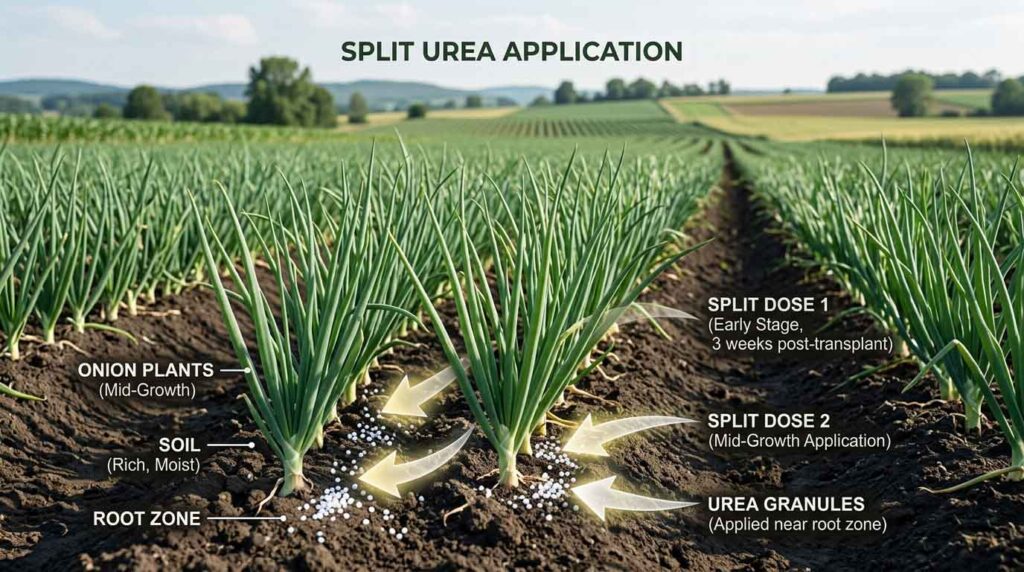
This method gives better nutrient availability and stronger crop growth.
Why split urea works better
- Reduces fertilizer loss
- Improves nitrogen use efficiency
- Helps steady crop growth
- Reduces the risk of excessive softness in bulbs
Step 4: Apply Fertilizer with Irrigation Planning
Fertilizer and water must work together. If you apply fertilizer in dry soil and do not irrigate properly, plants may not absorb nutrients well. On the other hand, too much irrigation after fertilizer can wash nutrients away.
Fertilizer and irrigation tips
- Apply fertilizer when soil has good moisture
- Irrigate soon after top dressing if needed
- Avoid waterlogging
- Keep irrigation light and regular
Onion does not like standing water. Poor drainage can damage roots and reduce fertilizer efficiency.
Step 5: Support Bulb Development with Balanced Nutrition
When bulb formation starts, onion needs balanced nutrients, not only nitrogen. At this stage, potassium becomes more important. This is where NPK fertilizer can help.
During bulb formation:
- Do not overuse urea
- Maintain balanced feeding
- Use potassium-containing fertilizer if soil needs it
- Watch plant color and growth
Too much nitrogen at this stage may produce more leaf growth but smaller or softer bulbs.
Fertilizer Schedule for Onion in Pakistan
The exact fertilizer dose depends on soil test, variety, season, and area. But a general approach used by many farmers in Pakistan is:
General fertilizer approach
- Apply farmyard manure before planting
- Use DAP as basal dose
- Add NPK if needed for balance
- Apply Urea in 2 to 3 split doses
Farmers should always adjust fertilizer rates according to:
- Soil fertility
- Previous crop
- Irrigation system
- Weather conditions
- Advice from local agriculture experts
Practical Tips for Farmers to Improve Onion Yield
Here are some simple and practical tips that can make a big difference in onion yield:
Use well-rotted organic manure
Organic manure improves soil health and helps chemical fertilizers work better.
Do not overuse Urea
Too much urea makes plants very leafy but bulbs may stay weak or soft.
Apply fertilizer at the right time
Late fertilizer application often gives poor results.
Keep weeds under control
Weeds compete for fertilizer, water, and sunlight.
Maintain proper plant spacing
Overcrowded plants produce smaller bulbs.
Ensure proper irrigation
Without moisture balance, fertilizers will not perform well.
Watch crop color
If leaves become pale or yellow, the crop may need nutrients. But first check water and disease issues too.
Use zinc or sulphur if needed
In some Pakistan soils, micronutrient deficiency affects onion growth.
Avoid fertilizer in very hot hours
Apply in the morning or evening when possible.
Follow soil test recommendation
This is the best way to save money and improve yield.
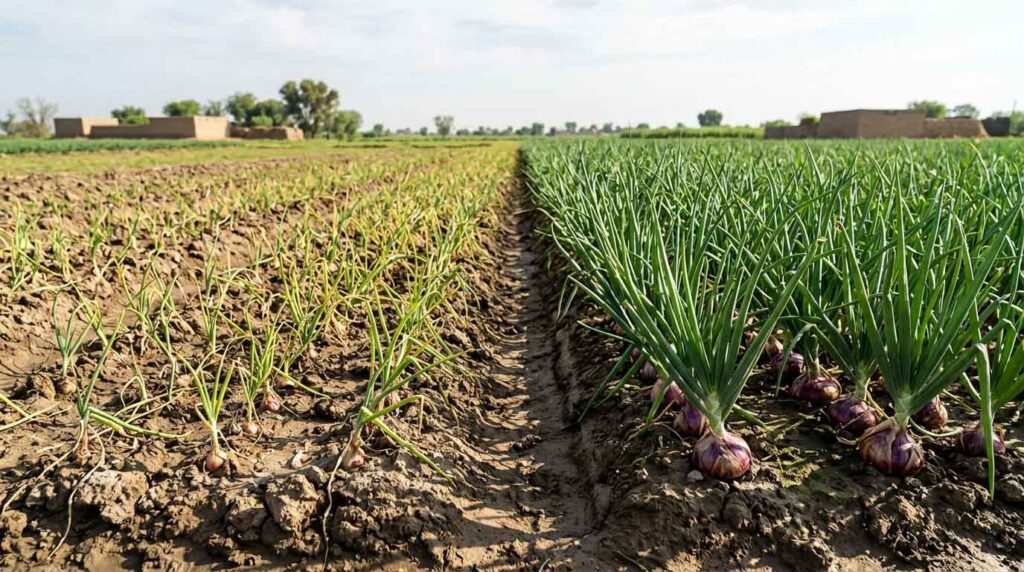
Common Mistakes Farmers Should Avoid
Many onion farmers lose yield because of simple mistakes.
Common fertilizer mistakes:
- Applying all urea in one dose
- Using fertilizer without soil test
- Over-irrigating after fertilizer
- Applying too much nitrogen near harvest
- Ignoring phosphorus at early stage
- Not using balanced fertilizer
- Applying fertilizer in dry soil
More Related Aricles
- Tomato Fertilizer Guide for Better Yield in Pakistan
- Select Cotton Crop Fertilizer Guide in Pakistan 2026
Avoiding these mistakes can improve both bulb size and total production.
Signs of Poor Fertilizer Management in Onion
If fertilizer use is not correct, onion crop may show these signs:
- Thin and weak leaves
- Yellowing plants
- Slow growth
- Small bulbs
- Uneven bulb size
- Soft bulbs
- Delayed maturity
When these signs appear, farmers should check:
- Soil fertility
- Irrigation schedule
- Pest and disease pressure
- Fertilizer timing
Best Time to Apply Fertilizer in Onion Crop
Timing is very important for onion.
Ideal timing includes:
- At planting: DAP and part of balanced fertilizer
- After establishment: First urea dose
- Vegetative stage: Second urea dose
- Before bulb formation: Light balanced feeding if needed
Do not continue heavy nitrogen use late in the crop. This can affect storage quality.
How Balanced Fertilizer Improves Profit
Many farmers think more fertilizer means more yield. This is not always true. The real secret is balanced fertilizer use.
Balanced fertilizer helps in:
- Better bulb size
- Better weight
- Better quality
- Better shelf life
- Better market price
- Lower waste of money
So, if a farmer uses DAP, Urea, and NPK in the correct way, onion yield and profit can both improve.
Conclusion
Improving onion yield with fertilizers is possible when farmers follow the right method. Under Pakistan conditions, onion crop responds well to proper fertilizer planning, especially with Urea, DAP, and NPK. The key is to use fertilizers in balance, apply them at the right time, and combine them with proper irrigation and field care.
Farmers should focus on soil testing, split application of urea, basal use of DAP, and balanced nutrition during bulb formation. Also, avoid overuse of nitrogen and manage water carefully. With these simple and practical steps, onion growers in Pakistan can produce bigger bulbs, better quality, and higher income.
FAQs About Onion Fertilizer Use in Pakistan
1. Which fertilizer is best for onion in Pakistan?
The most commonly used fertilizers for onion in Pakistan are Urea, DAP, and NPK. DAP is good for early root growth, urea supports leaf growth, and NPK gives balanced nutrition for better bulb development.
2. How many times should urea be applied to onion?
Urea should usually be applied in 2 to 3 split doses instead of one full dose. This gives better results and reduces fertilizer loss.
3. Is DAP important for onion crop?
Yes, DAP is very important at the early stage of onion crop. It provides phosphorus, which helps in root growth and better plant establishment.
4. Can too much urea damage onion yield?
Yes, too much urea can cause too much leaf growth, soft bulbs, delayed maturity, and poor storage quality. Balanced use is important.
5. Should farmers do soil testing before onion fertilizer use?
Yes, soil testing is highly recommended. It helps farmers know what nutrients the soil needs, saves money, and improves onion yield.