Method to Use Fertilizer Fertilizer is very important for good crop production in Pakistan. If farmers use fertilizer at the right time and in the right way, they can get strong plants, healthy roots, and better yield. But if fertilizer is used at the wrong time or in the wrong amount, it can waste money and damage the crop.
In Pakistan, farmers grow wheat, rice, maize, cotton, sugarcane, vegetables, and fruits in different weather and soil conditions. Every crop needs proper nutrition. This is why understanding the best time and method to use fertilizer for high yield crops is very important.
In this guide, we will explain in simple English how Pakistani farmers can use fertilizer wisely. We will also discuss the best fertilizers used in Pakistan, such as Urea, DAP, and NPK, and share practical tips for better farming results.

Why Proper Fertilizer Use Matters
Many farmers think that using more fertilizer always gives more yield. This is not true. Crops need balanced nutrition. Too much fertilizer can make the crop weak, increase pest problems, and waste money.
Proper fertilizer use helps in:
- Better seed germination
- Strong root growth
- Healthy leaf development
- Better flowering and grain filling
- Higher yield and more profit
When fertilizer is used correctly, the crop can use nutrients better, and the farmer gets a better return.
Best Fertilizers Used in Pakistan
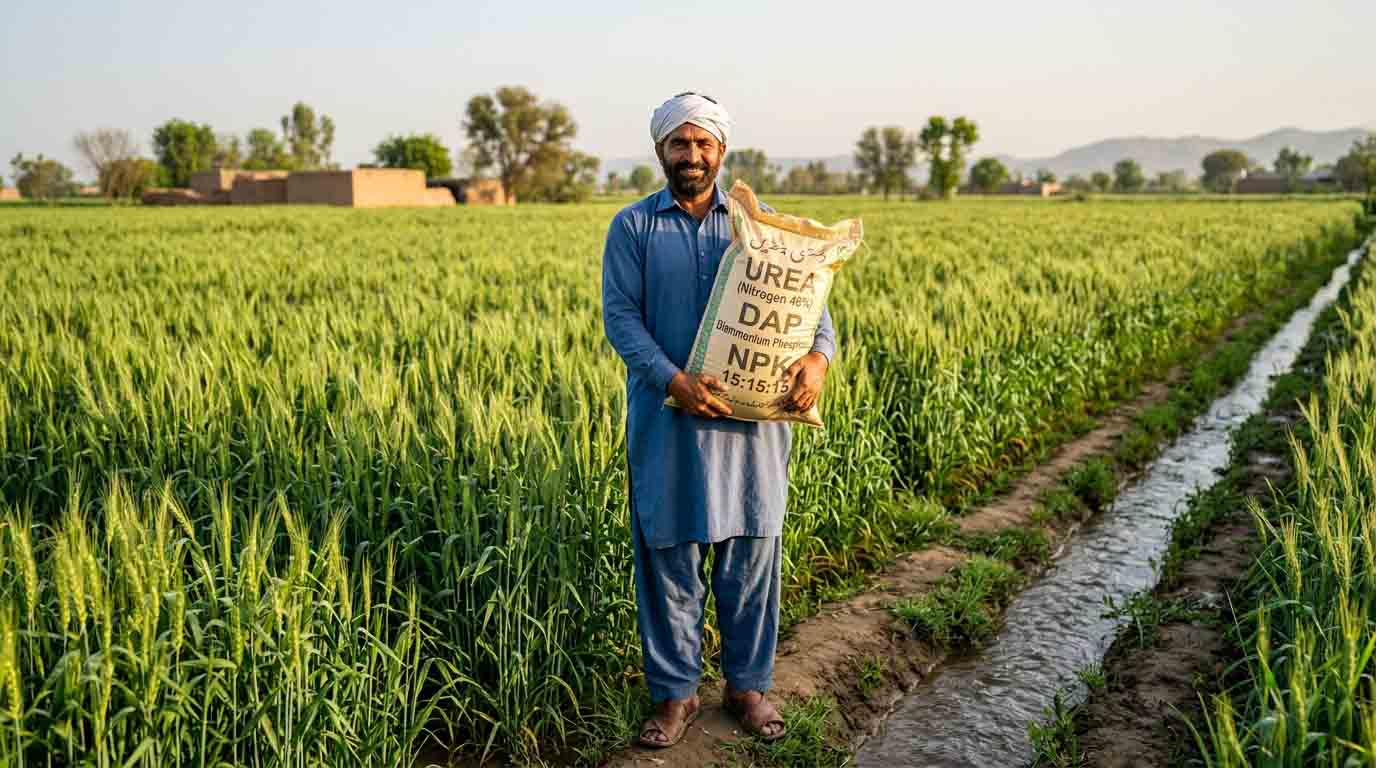
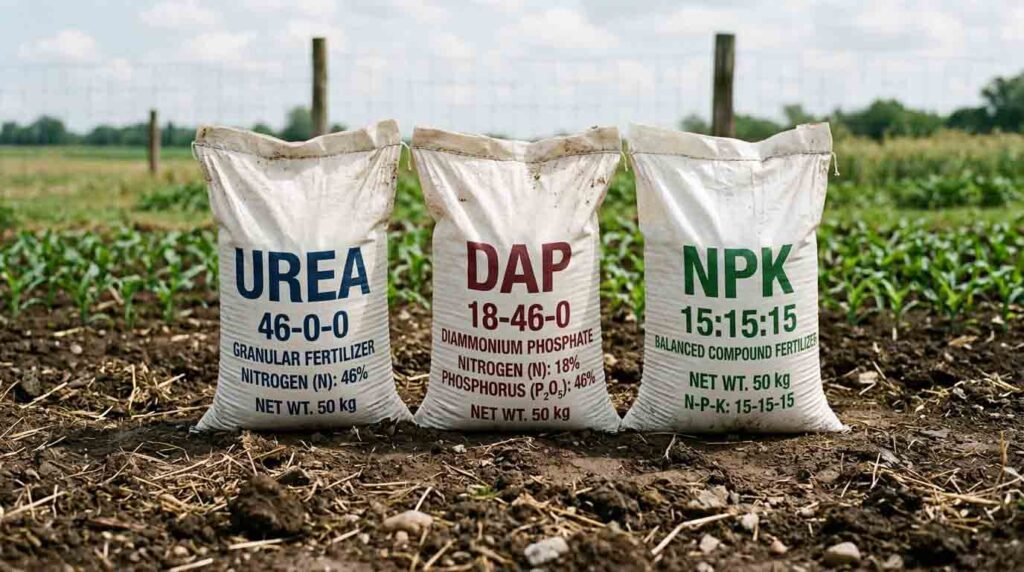
Pakistani farmers mainly use three common fertilizers. These are easy to find and suitable for many crops.
Urea
Urea is the most common nitrogen fertilizer in Pakistan. It helps plants grow green leaves and fast vegetative growth.
Benefits of Urea
- Makes plants greener
- Supports fast growth
- Useful for wheat, rice, maize, sugarcane, and vegetables
- Gives nitrogen, which is essential for crop growth
Important Point
Urea should not be applied all at once. It works better in split doses.
DAP
DAP stands for Diammonium Phosphate. It gives phosphorus and some nitrogen. It is very useful at sowing time.
Benefits of DAP
- Helps root growth
- Improves early plant development
- Supports flowering and grain formation
- Good for wheat, maize, rice, and vegetables
Important Point
DAP is best used at the time of land preparation or sowing.
NPK
NPK fertilizer contains nitrogen, phosphorus, and potassium. It gives balanced nutrition and is useful for many crops, especially vegetables, orchards, and cash crops.

Benefits of NPK
- Provides balanced nutrients
- Improves crop strength
- Helps better fruit and flower formation
- Useful for crops needing complete feeding
Important Point
Choose the right NPK formula according to crop need and soil condition.
Best Time to Use Fertilizer for High Yield
Timing is one of the most important parts of fertilizer management. The same fertilizer can give good or poor results depending on when it is applied.
1. At Land Preparation Stage
Some fertilizers should be added before sowing or during final land preparation. This helps nutrients mix into the soil.
Best fertilizers at this stage
- DAP
- Some NPK types
- Organic manure if available
Why this stage is important
- Nutrients become available near the root zone
- Crop gets a strong start
- Root development improves
For wheat, maize, vegetables, and many other crops, this stage is very important.
2. At Sowing Time
At sowing time, the crop needs phosphorus for root growth. DAP is commonly used at this stage in Pakistan.
Good practices
- Place fertilizer near seed, not directly on seed
- Mix well in soil
- Avoid overuse
This method is especially useful for wheat, maize, pulses, and vegetables.
3. After Germination or Crop Establishment
After the crop starts growing, nitrogen becomes very important. This is when urea is often applied.
Best fertilizer at this stage
- Urea
Why it is useful
- Helps leaf growth
- Improves crop color
- Supports tillering in wheat
- Increases plant height and vigor
Apply urea when the crop is established, not immediately on dry seed.
4. During Active Growth Stage
When the crop enters active growth, another fertilizer dose may be needed. This depends on the crop type and condition.
At this stage farmers may use
- Urea in second split
- NPK for balanced feeding
- Potash-based products where needed
This stage is critical for rice, maize, sugarcane, vegetables, and cotton.
5. Before Flowering and Grain Formation
Some crops need nutrients before flowering or grain making. Balanced nutrition at this time helps improve final yield.
Important for
- Wheat
- Rice
- Maize
- Vegetables
- Fruit crops
At this stage, avoid excess nitrogen because too much green growth can reduce final production in some crops.
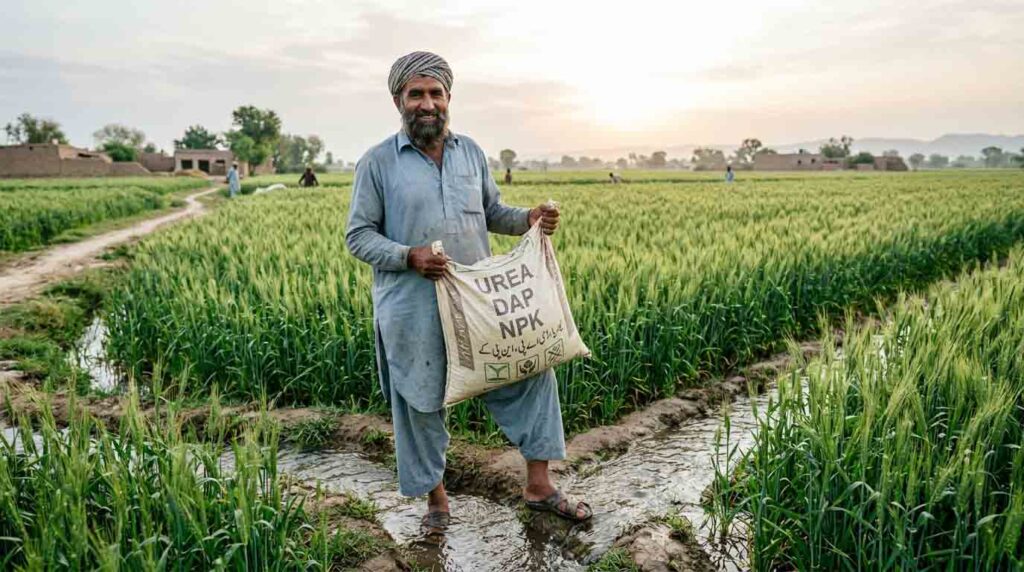
Step-by-Step Fertilizer Usage Method
Now let us look at the correct method of fertilizer use step by step. This will help farmers get better results and avoid loss.
Step 1: Check Soil Condition
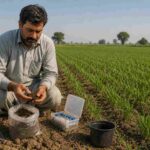
If possible, do a soil test before deciding fertilizer quantity. In many areas of Pakistan, soils differ from village to village.
Soil testing helps to know
- Nitrogen need
- Phosphorus shortage
- Potassium level
- Soil pH and fertility
If soil testing is not available, ask a local agriculture officer for crop recommendations.
Step 2: Select the Right Fertilizer
Choose fertilizer based on crop need.
General use in Pakistan
- Urea: for nitrogen and green growth
- DAP: for root growth and early stage
- NPK: for balanced nutrition
Different crops need different feeding plans. Do not use the same quantity for every crop.
Step 3: Use Basal Dose at Sowing
Basal dose means fertilizer applied at sowing or before sowing.
Common basal fertilizers
- DAP
- NPK
- Well-rotted farmyard manure
Method
- Spread evenly in field
- Mix into soil during cultivation
- Or place in rows near seed
This helps early root growth and crop establishment.
Step 4: Apply Urea in Split Doses
This is one of the best fertilizer methods for Pakistani farmers. Instead of using all urea at once, divide it into 2 or 3 parts.
Example method
- First dose after germination or establishment
- Second dose during active growth
- Third dose only if crop needs more nitrogen
Benefits of split doses
- Less nutrient loss
- Better crop uptake
- More efficient fertilizer use
- Lower waste and better yield
Step 5: Apply with Moisture
Fertilizer should be applied when the soil has moisture.
Best practice
- Apply before irrigation
- Or after light moisture in soil
- Avoid applying on completely dry soil
- Avoid heavy rain time because nutrients may wash away
In canal areas and tube well farming, fertilizer before irrigation is often very effective.
Step 6: Place Fertilizer Properly
Method of placement also matters.
Good fertilizer placement methods
- Band placement near rows
- Broadcasting with proper mixing
- Side placement near growing plants
- Ring method for fruit plants
Avoid
- Putting fertilizer directly on seed
- Leaving fertilizer on dry hard surface
- Applying too close to plant stem in heavy quantity
Step 7: Watch the Crop After Application
After fertilizer use, check crop response.
Look for
- Green and healthy leaves
- Better tillers in wheat
- Strong roots and stems
- Better flowering and grain formation
If leaves become too dark green and soft, too much nitrogen may have been used.
Crop-Wise Fertilizer Timing in Pakistan
Different crops need fertilizer at different times. Here are some simple examples.
Wheat
Common timing
- DAP at sowing
- Urea first dose after first irrigation
- Urea second dose at tillering or later growth
Important tip
Do not delay urea too much, or wheat may lose growth potential.
Rice
Common timing
- DAP during puddling or transplanting
- Urea in 2 or 3 split doses after transplanting
- NPK if needed for balanced feeding
Important tip
Do not apply all nitrogen in standing water at one time.
Maize
Common timing
- DAP at sowing
- Urea after plant establishment
- Second nitrogen dose before tasseling
Important tip
Fertilizer near the row works better than random spreading.
Cotton
Common timing
- Basal DAP or NPK at sowing
- Urea during vegetative growth
- Balanced feeding before flowering
Important tip
Too much nitrogen can increase leaf growth but reduce good boll development.
Vegetables
Common timing
- DAP or NPK at bed preparation
- Urea in small split doses
- Balanced feeding during flowering and fruiting
Important tip
Vegetables need regular but careful fertilizer management.
Practical Tips for Farmers
Using fertilizer wisely can save money and increase profit.
More Articles
- Where to Buy Cheap Fertilizer in Pakistan 2026 Guide for Farmers
- Pakistan Monthly Fertilizer Rates Urea, DAP & NPK Prices
Useful Tips
- Always use recommended dose
- Do not apply all urea in one go
- Use DAP mostly at sowing time
- Use NPK for balanced crop nutrition
- Apply fertilizer with moisture in soil
- Prefer soil testing if available
- Use farmyard manure along with chemical fertilizer
- Store fertilizer bags in a dry place
- Do not buy open or damaged bags
- Ask local agriculture experts for crop-specific advice
Money Saving Tip
Balanced fertilizer use is better than excessive fertilizer use. More bags do not always mean more production.
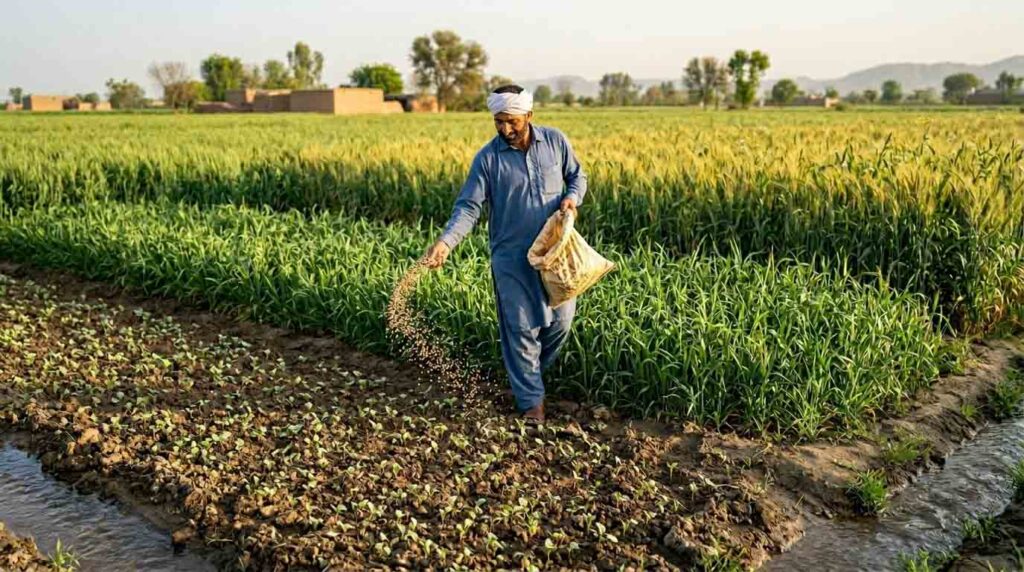
Common Fertilizer Mistakes to Avoid
Many farmers lose money due to simple mistakes.
Avoid these mistakes
- Applying fertilizer in dry soil
- Using too much urea
- Ignoring phosphorus and potassium
- Applying fertilizer too late
- Putting DAP directly with seed
- Using one fertilizer for every crop
- Applying before heavy rain
- Not checking crop condition after feeding
Smart fertilizer use means right product, right time, right amount, and right method.
Conclusion
The best time and method to use fertilizer for high yield crops depends on the crop stage, soil moisture, and nutrient need. In Pakistan, most farmers use Urea, DAP, and NPK, and these fertilizers can give excellent results when used properly.
DAP is best at sowing time for root growth. Urea should be used in split doses after crop establishment. NPK is useful when balanced nutrition is needed, especially in vegetables, orchards, and high-value crops. Proper timing, correct placement, and use with moisture can improve fertilizer efficiency and crop yield.
For Pakistani farmers, the main goal should be simple: do not just use more fertilizer, use fertilizer in the right way. This will save money, improve soil health, and increase farm profit.
FAQs
1. What is the best time to apply DAP fertilizer?
DAP is best applied at land preparation or sowing time. It helps roots grow strong in the early stage.
2. Why should urea be used in split doses?
Urea in split doses gives better results because it reduces nutrient loss and helps the crop take nitrogen slowly during growth.
3. Can I use only urea for a high yield crop?
No, only urea is not enough. Crops also need phosphorus and potassium. Balanced use of Urea, DAP, and NPK is better.
4. Should fertilizer be applied before irrigation or after irrigation?
In many cases, fertilizer works well before irrigation when soil moisture helps nutrients move into the root zone.
5. Which fertilizer is best for vegetables in Pakistan?
For vegetables, NPK and DAP at early stage and small split doses of urea later are commonly used for better growth and production.