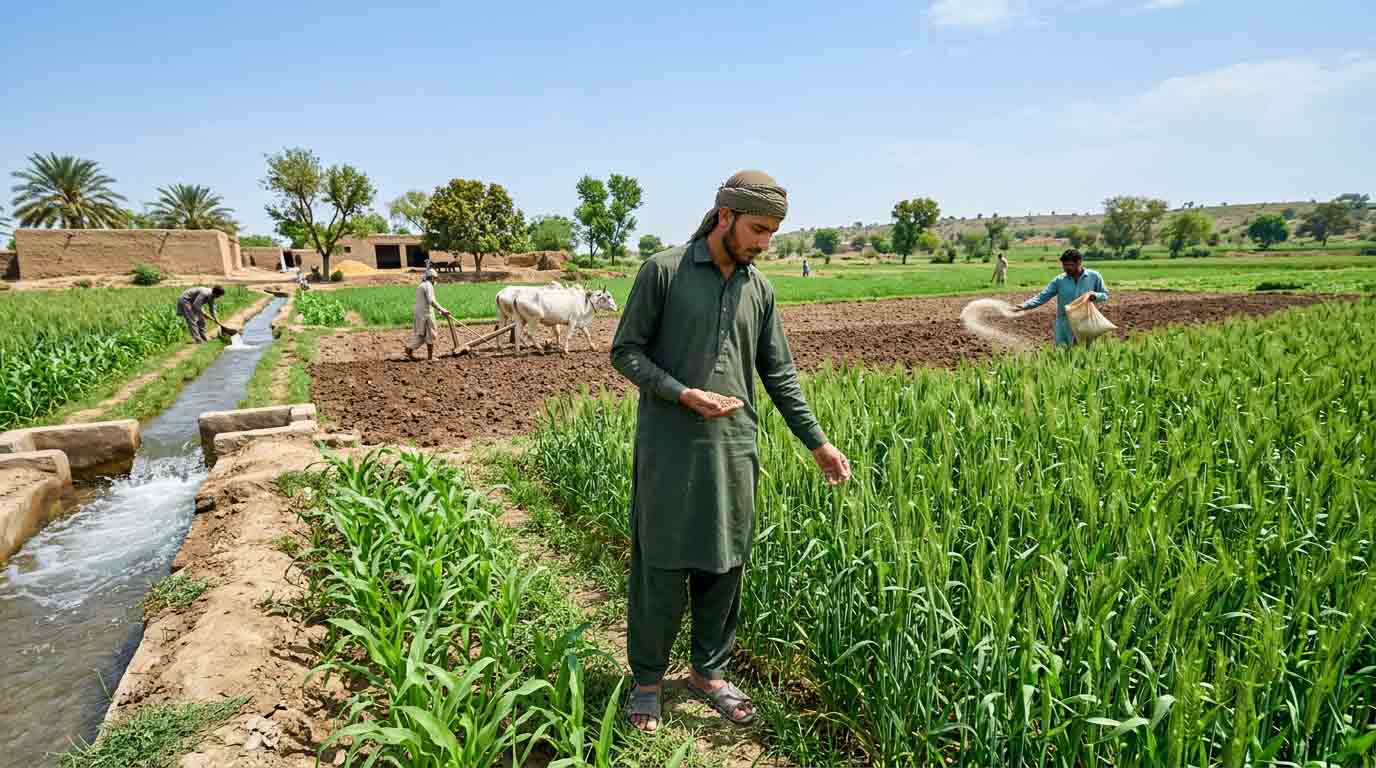
Start Farming in Pakistan Starting farming in Pakistan can be a good way to earn income and build a stable family business. But for beginners, farming can also feel confusing because of water issues, changing weather, high input prices, and market ups and downs. The good news is: if you start with a clear plan and follow simple steps, you can reduce risk and grow successfully.
This beginner-friendly guide explains how to start farming in Pakistan step by step. It focuses on local conditions (Punjab, Sindh, KP, Balochistan), includes soil testing, water planning, seed selection, and step-by-step fertilizer usage using common fertilizers like Urea, DAP, and NPK.
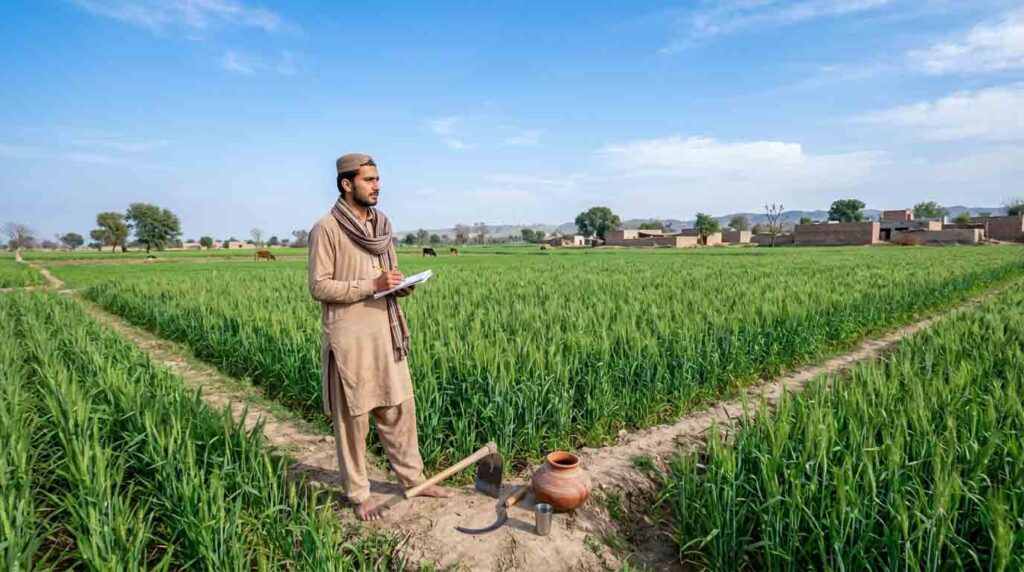
Why Farming in Pakistan Needs Planning (Not Guesswork)
Pakistan has many farming opportunities, but also these common challenges:
- Canal water timing is not always reliable
- Tube-well water can be costly and sometimes saline
- Heat waves and irregular rains are increasing
- Some soils are low in organic matter and nutrients
- Middleman (aarhti) system affects market prices
Practical idea for beginners: Start small, learn one crop cycle properly, and expand after you understand your soil, water, and market.
Step 1 — Choose Your Farming Type (Based on Your Area)
Before buying seed or fertilizer, decide what type of farming fits your land and location.
Common farming options in Pakistan
- Field crops: wheat, rice, cotton, maize, sugarcane
- Vegetables: okra, tomato, onion, potato, chilli, cucumber
- Fodder: berseem, sorghum, maize fodder
- Orchards: citrus (kinnow), mango, guava, dates
- Livestock support: growing fodder + small dairy
How to choose the right crop (simple checklist)
Pick crops based on:
- Water availability: canal, tube-well, rain-fed (barani)
- Soil type: sandy, loam, clay, saline
- Local market demand: nearby mandi, city access, cold storage
- Your budget: vegetables need more care and cash; wheat is lower cost
- Your time: vegetables require daily attention
Beginner tip: If you are new, start with wheat (Rabi) or maize (Kharif) plus a small vegetable area for learning.
Step 2 — Understand Seasons in Pakistan (Kharif and Rabi)
Kharif season (summer)
- Sowing: April to July (varies by crop and area)
- Main crops: rice, cotton, maize, sugarcane, vegetables
Rabi season (winter)
- Sowing: October to December
- Main crops: wheat, barley, gram, canola (sarson), vegetables
Practical tip: Always confirm sowing dates from your local agriculture office because timing changes by district and weather.
Step 3 — Check Land, Water, and Soil (The Foundation)
Land check (before you start)
Walk your field and note:
- Low and high spots (water standing areas)
- Salt crust (white layer)
- Hardpan (very hard soil layer)
- Weed pressure (especially in abandoned fields)
Water check (very important in Pakistan)
- If canal water: ask about wara bandi schedule
- If tube-well: check water quality (salinity) and pumping cost
- In barani areas: plan crops with rainfall pattern (chickpea, millet, sorghum)
Step 4 — Do Soil Testing (Save Money and Increase Yield)
Soil testing tells you what your soil needs and what it already has. It prevents overuse of urea and helps balance nutrients.
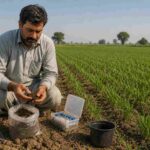
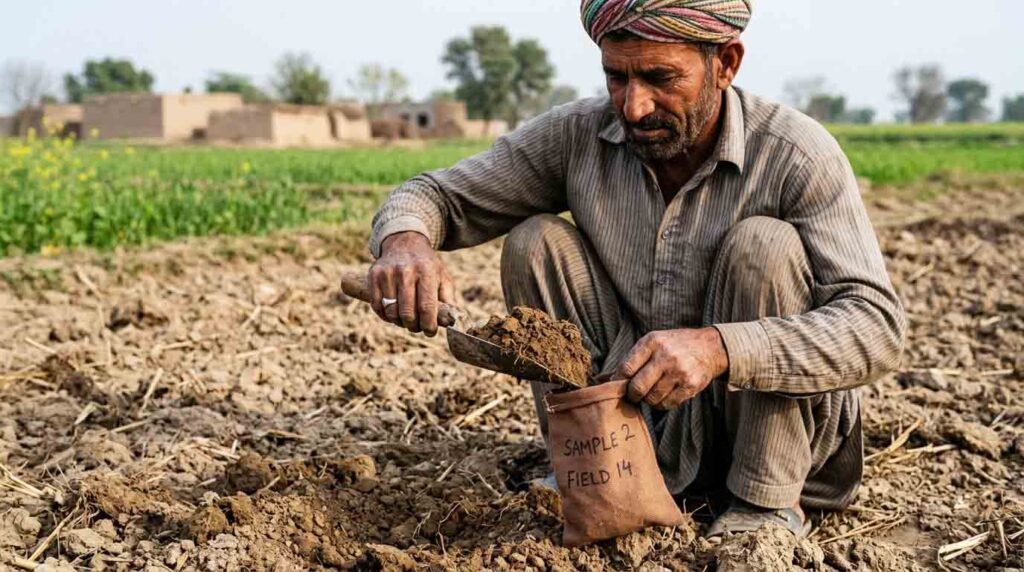
How to take a soil sample (easy method)
- Select a uniform area of the field.
- Remove surface trash and leaves.
- Take soil from 6–8 inches depth (for most crops).
- Collect 10–15 small samples from different spots.
- Mix well and make one sample (about ½ kg).
- Label it (village, field name, crop plan) and send to a soil lab.
Table: Soil Testing Methods in Pakistan (Steps + Benefits)
| Soil testing method | Where it’s used | Simple steps | Key benefits for beginners |
|---|---|---|---|
| Government/Private Lab Soil Test (NPK, pH, EC, organic matter) | All provinces (recommended for every new farmer) | Collect sample → label → send to lab → follow report | Correct fertilizer plan, better yield, saves cost |
| Rapid Soil Test Kit | On-farm quick check | Take soil → use kit → compare color | Fast basic idea of nutrients |
| EC (Salinity) Test for soil/water | Saline areas (Sindh, South Punjab, Balochistan) | Use EC meter → check soil paste / tube-well water | Helps avoid salt-sensitive crops and wrong fertilizer |
| Leaf/Tissue Test (orchards/vegetables) | High value crops | Take leaf sample → lab test | Finds hidden deficiencies early (Zn, B, Fe) |
Step 5 — Plan Your Budget (Realistic Farm Costing)
A beginner should plan costs before sowing.
Common farm costs in Pakistan
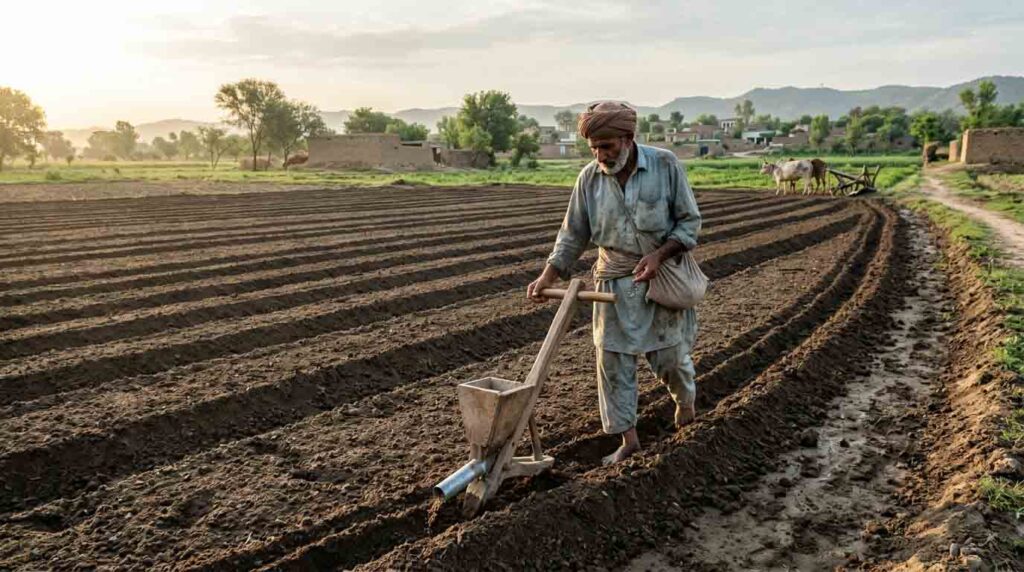
- Land preparation (tractor, rotavator, ploughing)
- Seed and sowing
- Fertilizers (Urea, DAP, NPK)
- Irrigation (diesel/electricity, labor)
- Weed control (manual or herbicide)
- Pesticides (if needed)
- Harvesting and transport to mandi
Practical tip: Keep 10–15% extra budget for unexpected costs (pests, price changes, water shortage).
Step 6 — Seed Selection and Sowing (Start Strong)
What beginners should do
- Buy seed from reputable dealers or certified sources
- Choose a variety recommended for your district
- Check germination rate (simple home test: sprout 100 seeds in a cloth)
Sowing tips
- Sowing on time is often more important than extra fertilizer
- Use proper seed rate (too much seed causes weak plants and disease)
- Use drill sowing when possible for uniform crop stand
Step 7 — Step-by-Step Fertilizer Usage (Urea, DAP, NPK)
Fertilizer gives nutrients to crops, but correct timing and method are very important. In Pakistan, the most used fertilizers are:
- Urea (Nitrogen) – for growth and green color
- DAP (Phosphorus + some Nitrogen) – for strong roots and early growth
- NPK (balanced) – supports overall plant health (different ratios)
More Articles
- Complete Guide to Water and Fertilizer Management 2026
- Complete Guide to Soil Testing Methods in Pakistan 2026
Fertilizer Step 1 — Use soil test report (or local recommendation)
- If you have a lab report, follow it.
- If not, ask local agriculture extension or experienced farmers (but still avoid overuse).
Fertilizer Step 2 — Apply basal fertilizer at sowing (DAP/NPK)
Basal means “at sowing or transplanting.”
How to apply basal fertilizer correctly:
- Apply DAP or NPK at sowing time
- Place fertilizer near the seed, but not directly touching it
- Drill method is best for wheat/maize
- For vegetables, mix properly in the root zone area
Why DAP is important early: It improves root growth, which helps the crop handle water stress better.
Fertilizer Step 3 — Split Urea into 2–3 doses (do not apply all at once)
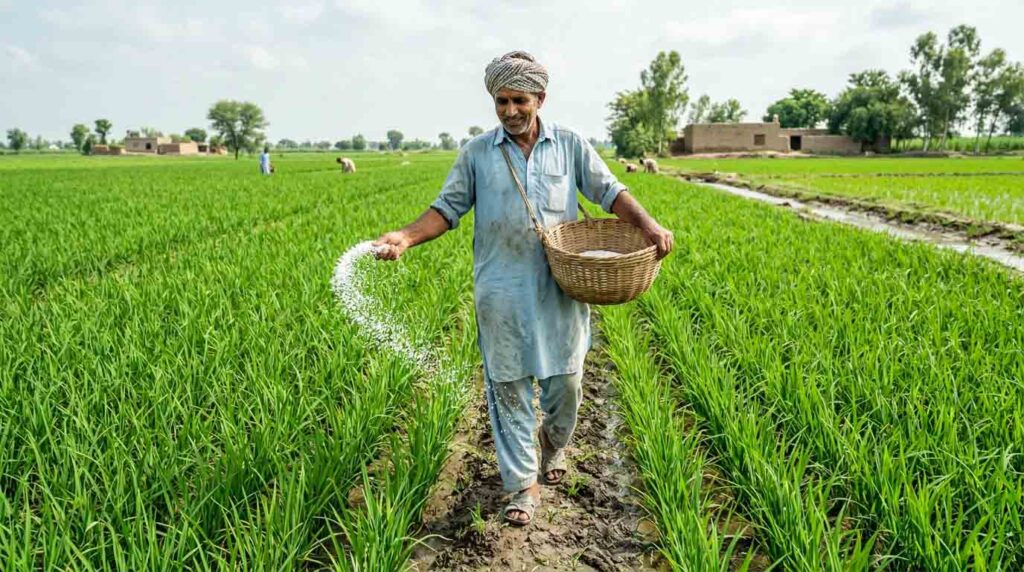
Urea is often wasted if applied wrongly.
Simple urea schedule for many crops:
- 1st dose: after germination / first irrigation
- 2nd dose: tillering or branching stage
- 3rd dose (if needed): before flowering or grain formation stage
Important rule: Apply urea when soil has moisture, and irrigate soon after (or apply just before irrigation).
Fertilizer Step 4 — Use NPK for balance (especially in weak soils)
NPK is useful when:
- Your soil is low in more than one nutrient
- You grow vegetables or high-value crops
- Your crop shows weakness even after urea
Practical tip: Too much urea can make plants soft and attract pests. Balanced feeding gives stronger plants.
Fertilizer Step 5 — Watch crop symptoms and adjust
Look for signs like:
- Yellow leaves (nitrogen deficiency)
- Purple leaves (phosphorus deficiency, common in cold)
- Leaf edge burn (possible potassium issue or salinity)
If symptoms continue, consult agriculture officer or input expert before increasing fertilizer.
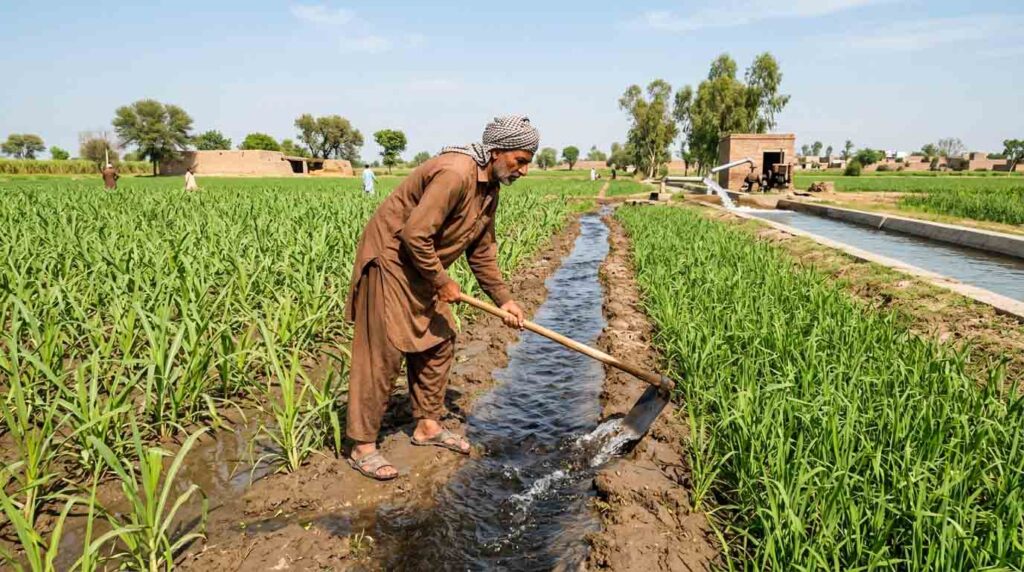
Step 8 — Water Management for Beginners (Pakistan Conditions)
Water problems are common, so plan irrigation carefully.
Simple irrigation tips
- Level your field (laser leveling if possible)
- Irrigate early morning or late evening to reduce evaporation
- Avoid over-irrigation (it wastes water and leaches fertilizer)
- If tube-well water is salty, consider mixing with canal water
Critical irrigation stages (don’t miss)
- Wheat: early growth, booting, grain filling
- Maize: knee height, tasseling/silking, grain filling
- Cotton: flowering and boll formation
- Vegetables: frequent light irrigations depending on soil
Step 9 — Weed, Pest, and Disease Control (Keep It Simple)
Weed control basics
- Weeds steal fertilizer and water
- Do early weeding (first 30–40 days is most important)
Options:
- Manual hoeing (safe but labor needed)
- Herbicides (use correct dose and timing)
Pest management tips (avoid extra sprays)
- Scout the field twice a week
- Spray only when pest level is high (not just “routine”)
- Use recommended pesticides and safety measures
Practical tip: Wrong pesticide sprays increase cost and can damage beneficial insects.
Step 10 — Harvest, Storage, and Selling (Profit Step)
H3: Harvesting
- Harvest on time to avoid grain loss and quality reduction
- Use proper drying (especially for rice, maize)
H3: Selling tips in Pakistan
- Check rates in nearby mandis before selling
- If possible, sell in bulk with neighbors to reduce transport cost
- Keep basic records: yield, cost, selling rate (helps improve next season)
Conclusion
Starting farming in Pakistan is possible for beginners if you follow a step-by-step plan. Begin with land and water assessment, do soil testing, choose the right crop for your area, and use fertilizers wisely. Apply DAP/NPK at sowing, use split urea doses, manage irrigation carefully, and control weeds early. With good planning and record keeping, you can reduce risk and steadily increase your farm profit year after year.
FAQ (Beginner Farming in Pakistan)
1) Which crop is best for a beginner farmer in Pakistan?
Wheat is often the safest beginner crop due to lower daily management needs. Maize is also good in many areas. If you have time and market access, start vegetables on a small area.
2) Do I really need soil testing before starting farming?
Yes. Soil testing helps you avoid wasting money on unnecessary fertilizer and helps improve yield. It is especially important if you bought new land or the field has salinity issues.
3) What is the best fertilizer to start with: Urea, DAP, or NPK?
Use DAP (or NPK) at sowing for strong roots, then apply urea in 2–3 splits during crop growth. NPK is helpful where balanced nutrition is needed.
4) How can I reduce fertilizer cost without reducing yield?
Do soil testing, apply urea in splits, irrigate at the right time, and control weeds early. These steps reduce fertilizer waste and improve nutrient uptake.
5) What is the biggest mistake beginners make in farming?
The biggest mistake is starting without planning—no soil test, wrong crop choice, and applying urea all at once. A simple plan and correct timing can save a lot of money.