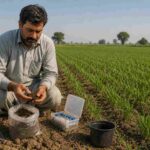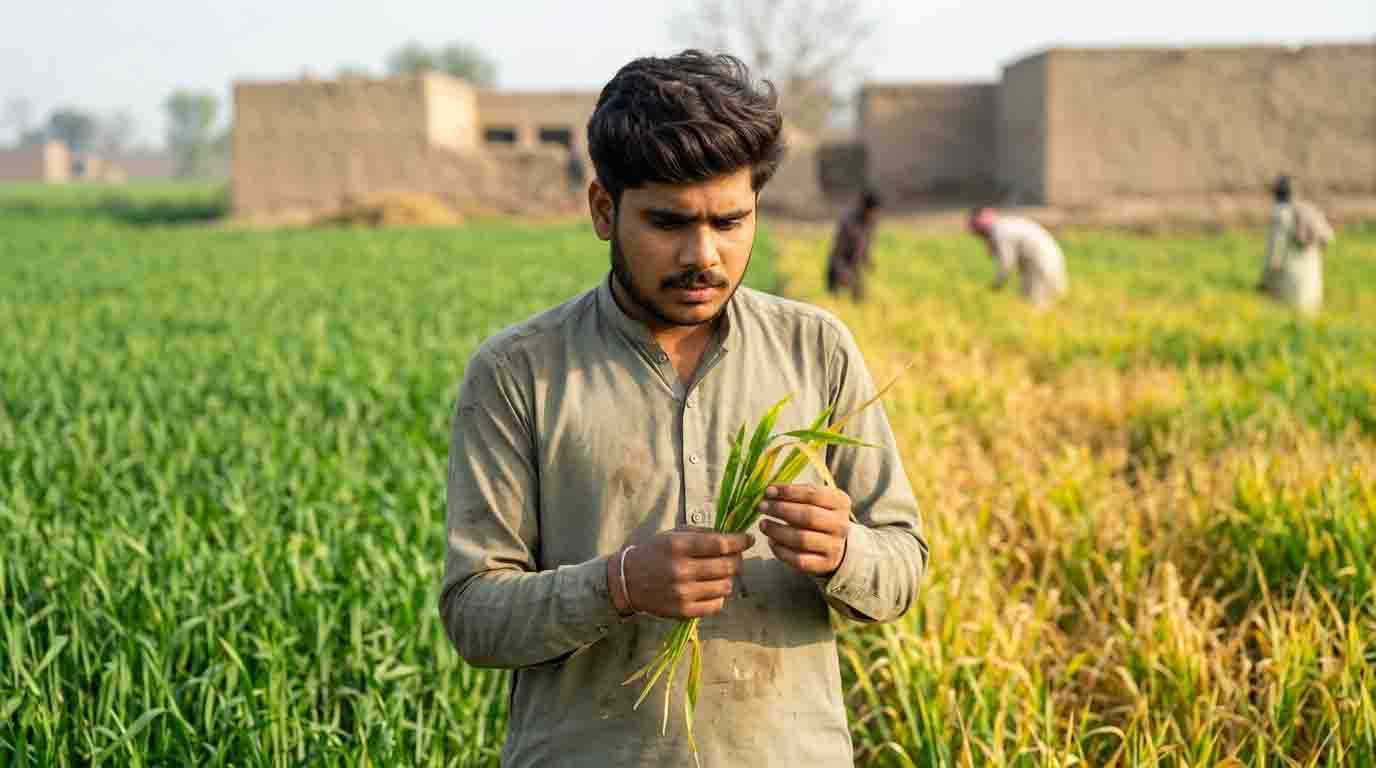
Fertilizer burn se crop Fertilizer is food for crops, but too much fertilizer or wrong method can quickly turn that food into “poison.” Many farmers in Pakistan face this issue, especially in wheat, maize, vegetables, and orchards. Leaves turn yellow, tips dry, plants stop growing, and sometimes the crop dies in patches. This problem is called fertilizer burn.
In this guide, we will explain Fertilizer burn se crop kaise bachayein in very simple English, with practical field tips, correct use of Urea, DAP, and NPK, and a proper wheat fertilizer schedule that Pakistani farmers can follow.

What is fertilizer burn?
Fertilizer burn happens when fertilizer salts become too strong around the seed or roots. The plant loses water (like dehydration) and roots get damaged. This is why the plant looks “burnt” even without heat.
Fertilizer burn is common when:
- Fertilizer touches the seed
- Fertilizer is applied in dry soil and not irrigated
- Too much urea is applied at one time
- Foliar spray is too strong or done in hot weather
How to पहचान (recognize) fertilizer burn in crops
Look for these signs within 1 to 7 days after fertilizer use:
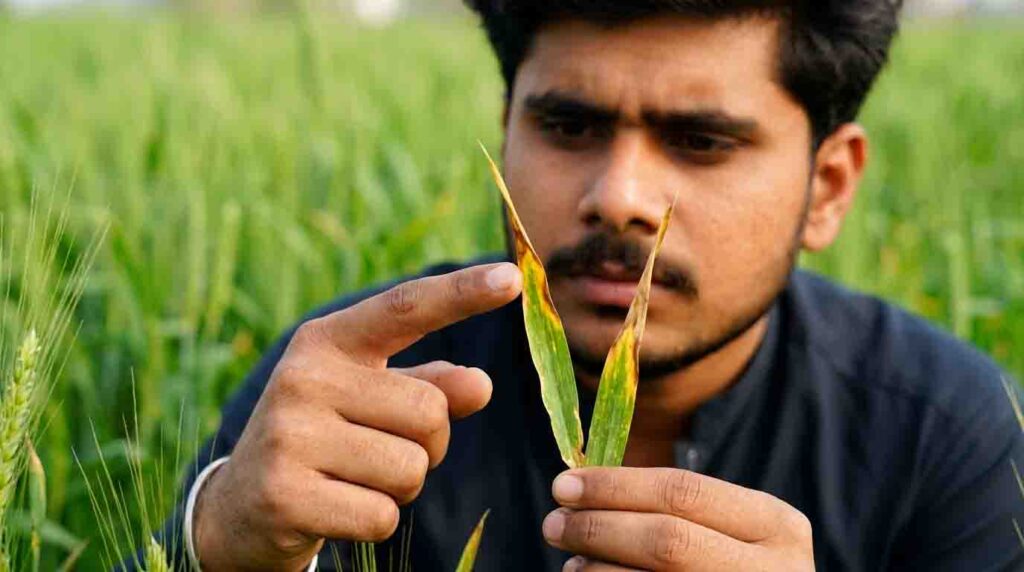
Common symptoms
- Leaf tips turn yellow, then brown
- Leaves look dry and burnt
- Seedlings become weak or fall
- Plant growth becomes slow
- Crop shows patches (some areas damaged, some healthy)
- Roots look black/brown and weak (if you pull out a plant)
Don’t confuse with other problems
Fertilizer burn can look like:
- Drought stress
- Disease
- Pest attack
- Zinc deficiency
But one big clue is timing: burn often starts soon after fertilizer application.
Main reasons fertilizer burn happens in Pakistan
Here are the most common practical reasons in our fields:
1) Over dose (too much fertilizer)
Applying extra bags “for more yield” can backfire. More fertilizer does not always mean more production.
2) Wrong placement (fertilizer touching seed)
This is very common in wheat when DAP or urea is placed directly with seed during drilling.
3) Applying urea in dry soil and not irrigating
Urea needs moisture. If you apply urea and delay irrigation, salt concentration increases near roots.
4) Too much urea at one time (one heavy split)
When farmers apply all urea in one go, crop can burn and lodging risk also increases later.
5) Strong foliar spray in hot weather
High-dose NPK foliar sprays in midday heat can burn leaves quickly.
Fertilizer burn se crop kaise bachayein: 12 practical tips (field-tested)
Follow these simple steps to protect your crop.
1) Always apply fertilizer on moisture (or irrigate soon)
- Best time: after irrigation when soil is workable, or before irrigation so water dissolves salts.
- If soil is dry, avoid applying urea and leaving it for days.
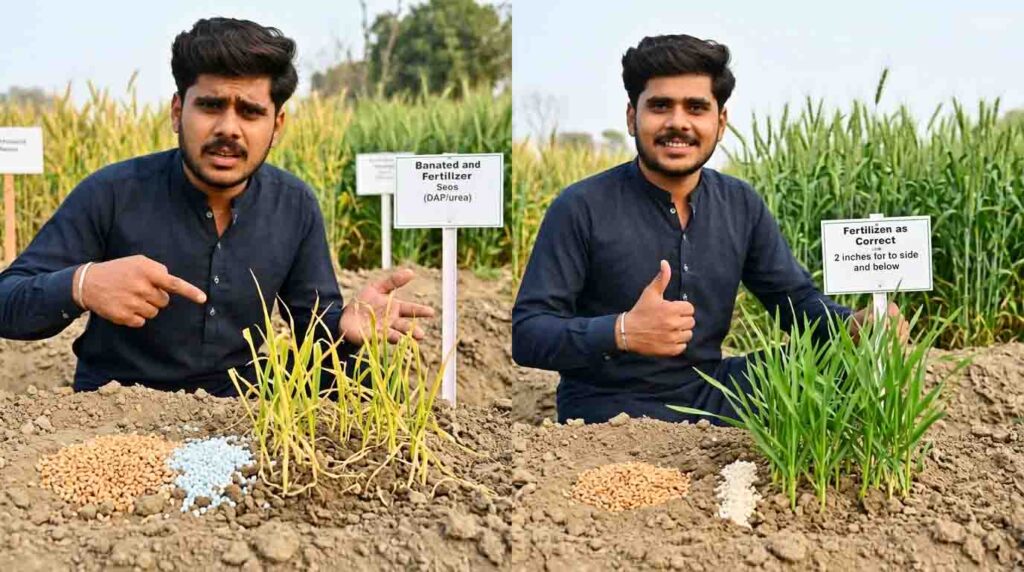
2) Never let DAP/urea touch the seed
This is one of the biggest rules to prevent burn.
Safe method:
- Place fertilizer 2 inches below and 2 inches away from seed (band placement).
- If using seed drill, use fertilizer attachment properly.
3) Split urea into 2–3 applications
Instead of one heavy dose, split it. This reduces salt stress and improves nitrogen use.
4) Do not apply fertilizer in very hot midday
Especially for foliar sprays:
- Spray in early morning or late evening
- Avoid windy, hot conditions
5) Use the right fertilizer for the right purpose
- Urea = Nitrogen (fast growth, green color)
- DAP = Phosphorus + nitrogen (root growth, early strength)
- NPK = balanced nutrients (useful when soil needs multiple nutrients)
6) Use clean water for foliar sprays
Salty tube-well water can increase burn risk. If water EC is high, avoid foliar mixing or use safer dose.
7) Don’t mix fertilizers randomly
Some mixes can increase leaf burn or reduce effectiveness.
Avoid risky mixing without guidance:
- Strong urea + strong micronutrients in one spray
- High-dose NPK + pesticides together
8) Measure properly (don’t guess)
Use a proper scale, cup, or bag measurement. Guessing leads to overdose.
9) Use organic matter to reduce salt stress
Farmyard manure (well-rotted), compost, and humic acid improve soil structure and reduce fertilizer shock.
10) Apply potassium if your soil is low
Potassium improves plant tolerance and reduces stress damage. Many Pakistani soils are becoming K-deficient in intensive farming.
11) Do soil test (at least once in 2–3 years)
A simple soil test tells you how much NPK your land really needs. This is the easiest way to avoid overdose and save money.
12) Keep record of what you applied
Write down date, fertilizer type, and quantity. It prevents double dosing by mistake.
Special tips for Urea, DAP, and NPK (to avoid burn)
Urea burn prevention
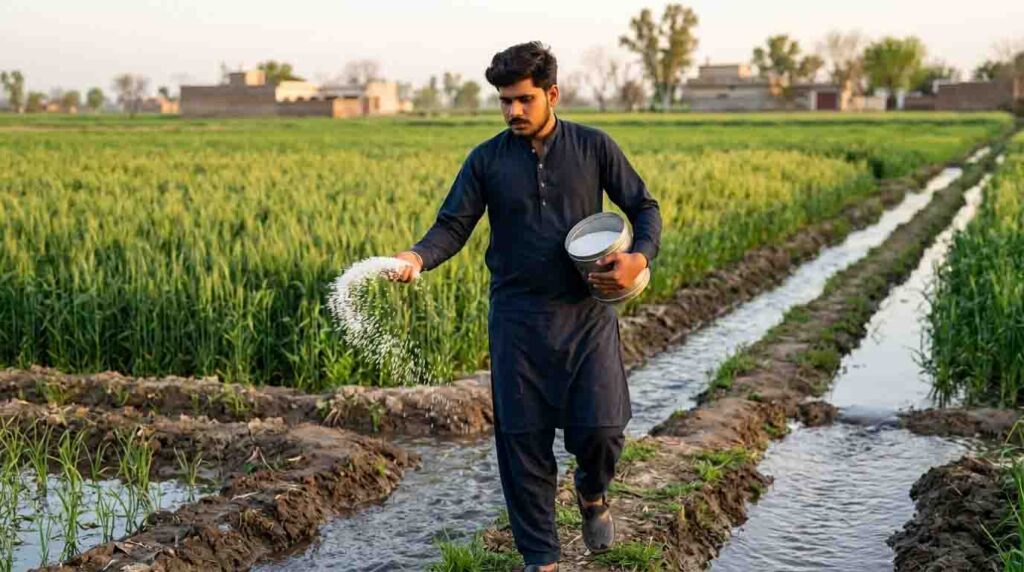
Urea is the most common cause of fertilizer burn because it is used heavily.
Safe practices:
- Split urea into 2–3 doses
- Apply when soil has moisture
- Irrigate within 24 hours if possible
- Avoid throwing urea directly on small seedlings
DAP burn prevention
DAP is strong near the seed because of its salt effect.
Safe practices:
- Use DAP as basal dose
- Keep it away from seed (band placement)
- Don’t overuse in dry soil
NPK burn prevention
NPK is balanced but still can burn if overdosed, especially in foliar spray.
Safe practices:
- Follow label dose strictly
- For foliar, keep concentration low and spray in cool hours
- If using granular NPK, apply on moisture and mix lightly in soil
Proper wheat fertilizer schedule (Pakistan) – simple and practical
This is a general schedule for wheat. Exact requirement depends on soil test, variety, and irrigation availability. Below is a safe and farmer-friendly plan to reduce burn risk and improve yield.
Recommended general dose (per acre)
Many irrigated wheat fields do well with:
- DAP: 1 to 1.5 bags (50 kg each) per acre (basal)
- Urea: 2 to 2.5 bags per acre total (split)
- Potash (SOP/MOP): 0 to 0.5 bag per acre (if soil is low in K)
If you want to use NPK instead of separate bags, you can use a suitable NPK blend based on availability and soil need (example: 15-15-15), but farmers usually still add some urea later because wheat needs more nitrogen.
Wheat schedule by stages (easy plan)
1) At sowing / drilling (Basal dose)
Apply:
- DAP: 1 bag/acre
- Urea: 0.5 bag/acre (optional, if soil is light and you want early boost)
- Potash: 0 to 0.5 bag/acre (only if needed)
Important: Keep DAP/urea away from seed.
2) First irrigation (about 20–25 days after sowing)
Apply:
- Urea: 1 bag/acre
Best method:
- Broadcast urea on wet soil just before irrigation, or on moisture after irrigation.
3) Second irrigation (about 45–55 days after sowing)
Apply:
- Urea: 0.5 to 1 bag/acre (depending on crop color and target yield)
Tip: If crop is already dark green and heavy, reduce dose to avoid lodging.
4) After booting stage (optional, only for high-yield fields)
If crop is pale and soil is sandy, you may apply:
- Urea: 0.25 to 0.5 bag/acre (only with irrigation)
Avoid late heavy urea because it can increase lodging and disease risk.
What to do if fertilizer burn already happened (rescue steps)
If you suspect burn, act fast:
Immediate actions
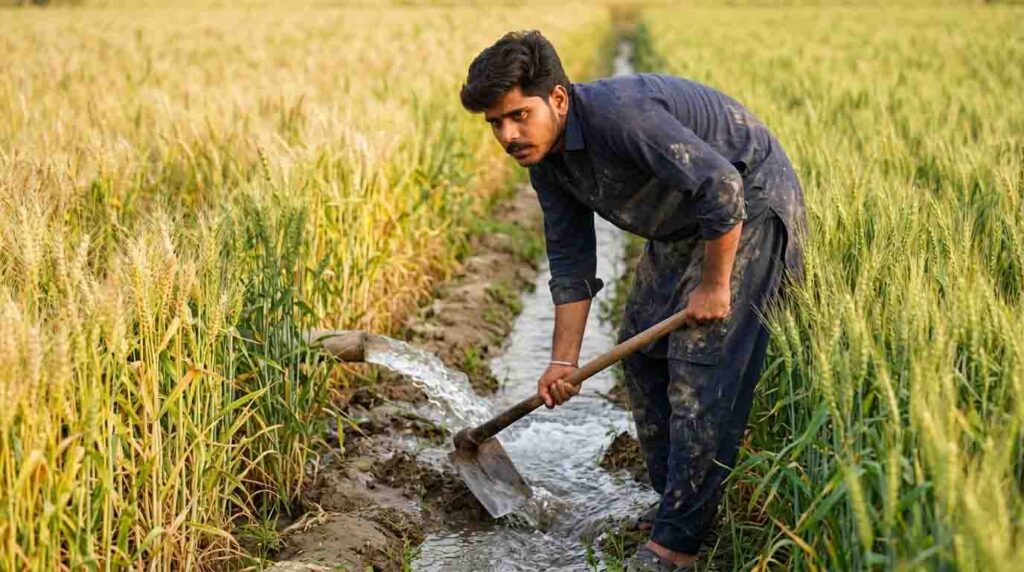
- Irrigate the field to dilute salts (best quick remedy)
- Stop further fertilizer for some days
- In severe patches, lightly flush with extra water if drainage allows
Support recovery
- Apply humic acid (as per label) to help roots recover
- Use a mild foliar spray (very low dose) only after plants stabilize
- If plant population is badly affected in patches, consider gap filling early (where possible)
What NOT to do
- Don’t apply more urea thinking crop is yellow due to deficiency
- Don’t spray strong NPK in heat to “recover fast”
Common farmer mistakes that cause fertilizer burn
- Applying urea on dry soil and delaying irrigation
- Putting DAP directly with wheat seed
- Applying all nitrogen in one split
- Using high-dose foliar spray in midday
- Using salty water for foliar mixing
- Following neighbor’s schedule without checking your own soil condition
Conclusion
Fertilizer burn is avoidable if you focus on right dose, right time, right method, and right moisture. The best answer to “Fertilizer burn se crop kaise bachayein” is simple: don’t overdose, keep fertilizer away from seed, split urea, and irrigate on time. Use DAP mainly at sowing, manage urea in splits, and use NPK carefully with proper measurement. With these small steps, you will protect your crop, save fertilizer cost, and improve yield.
FAQs (Farmers’ common questions)
1) What is the fastest solution for fertilizer burn?
The fastest solution is irrigation. Water dilutes fertilizer salts and reduces root stress quickly.
2) Can urea burn wheat crop?
Yes. Urea is the most common cause of fertilizer burn, especially when applied in dry soil or in very high dose.
3) Is DAP safe for wheat at sowing?
Yes, DAP is good at sowing, but it must not touch the seed. Place it slightly below/away from seed.
4) Can NPK foliar spray cause leaf burn?
Yes, if the dose is strong or sprayed in hot weather. Spray early morning/evening and keep concentration low.
5) How many urea splits are best for wheat?
Usually 2 splits are safe and effective. In high-yield irrigated fields, 3 splits can be even better.