Low yield ke reasons Many farmers work very hard, but still get low yield in wheat, rice, cotton, maize, and vegetables. This is painful because diesel, seed, fertilizer, and labor are expensive. The good news is: in most fields, low yield is not “luck”. It usually comes from a few common mistakes that we can fix step by step.
In this article, you will learn Low yield ke reasons aur solution in simple English, with real practical tips and a proper wheat fertilizer schedule using Urea, DAP, and NPK.

Low yield ke reasons aur solution: Why crop yield becomes low?
Low yield usually happens due to one (or more) of these issues:
- Weak soil fertility (nutrient shortage)
- Late sowing or wrong seed rate
- Poor land preparation and leveling
- Wrong fertilizer timing or wrong dose
- Water problems (less irrigation or waterlogging)
- Weed attack
- Insects and diseases
- Poor variety/low germination seed
- Salinity (kallar), hard soil, or micronutrient deficiency
Now let’s go reason-by-reason and see the solution.
1) Soil fertility problem (land is “tired”)
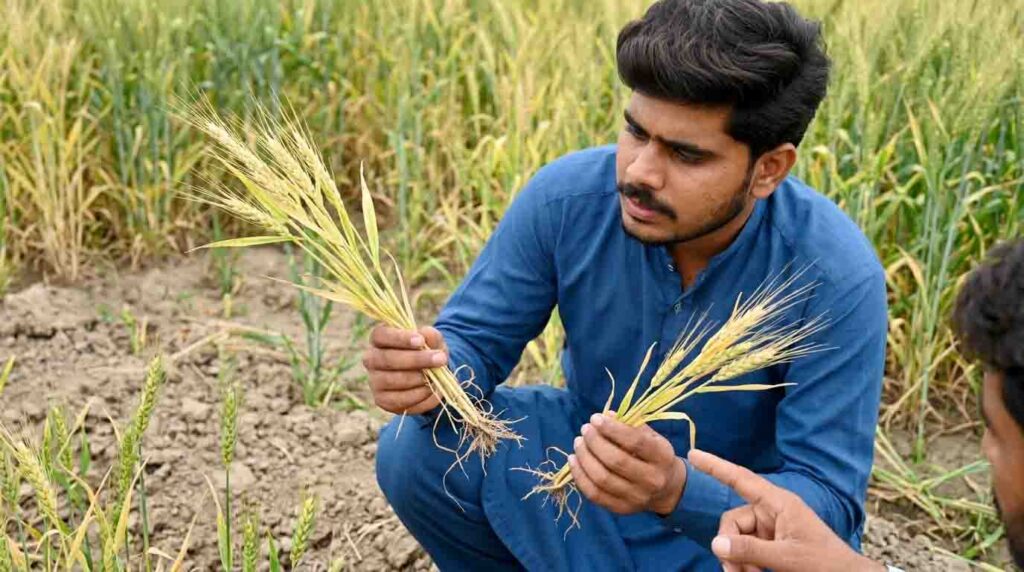
Signs
- Crop looks pale/yellow
- Growth is slow, less tillers in wheat
- Grain size is small, ear is weak
Practical solutions
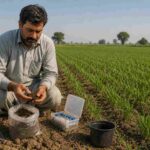
- Do soil test once in 2–3 years. It saves money because you apply the right fertilizer.
- Add organic matter:
- Well-rotten farmyard manure (FYM) 1–2 trolleys per acre (if available)
- Crop residue incorporation (where possible)
- Avoid burning residues. It reduces soil life and fertility.
Farmer tip: If you cannot do a soil test, at least compare 2 small strips in the field with slightly different fertilizer plan and observe results next season.
2) Wrong seed selection and poor germination
Common mistakes
- Using old seed with low germination
- Unapproved variety
- Seed not treated (diseases come early)
- Wrong seed rate (too low or too high)
Solutions
- Use certified seed of recommended variety for your area.
- Do a simple germination test at home:
- Put 100 seeds in a wet cloth for 3–4 days.
- If less than 80 sprout, change seed.
- Seed treatment (if available): protects from early fungal diseases and improves stand.
Wheat seed rate (general):
- 45–50 kg per acre (normal sowing with drill)
- If late sowing, seed rate can go slightly higher.

3) Late sowing (especially in wheat) = direct yield loss
Why it reduces yield
Late sowing shortens the growing season. Wheat gets less time for tillering and grain filling.
Solution
- Try to sow wheat in the best window (generally mid-November to mid-December) depending on your zone (Punjab/Sindh/KPK).
- If you are getting late due to previous crop, consider:
- Faster land prep
- Better planning for irrigation and harvest timing
4) Poor land preparation and leveling
What happens
- Uneven field = uneven water distribution
- Some areas stay dry, others get waterlogged
- Germination becomes patchy
Solutions
- Do proper plough + planking.
- If possible, do laser leveling. It improves water use and uniform crop stand.
- Avoid sowing in big clods; seed-soil contact must be good.
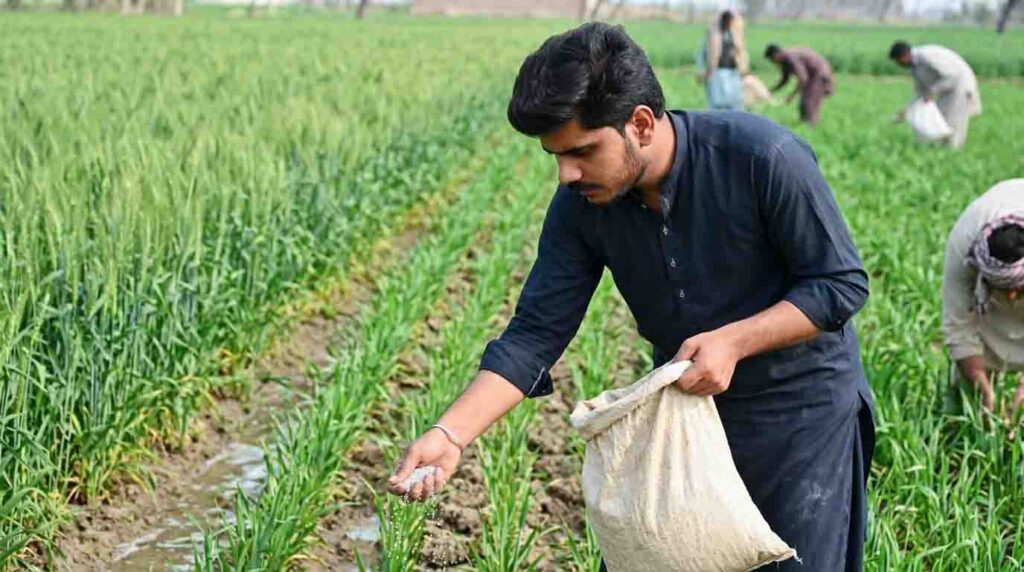
5) Fertilizer mistakes (most common reason)
Many farmers apply fertilizer, but yield still stays low because:
- Fertilizer is not balanced (only urea, no phosphorus/potash)
- Fertilizer timing is wrong
- Fertilizer is broadcasted carelessly and not placed near seed roots
- Urea is applied and no irrigation is given, so nitrogen is lost
Fertilizer types (must know)
- Urea: gives Nitrogen (N) for green growth and tillers
- DAP: gives Phosphorus (P) + some Nitrogen; important for roots and early growth
- NPK: balanced fertilizer (Nitrogen + Phosphorus + Potash). Good for overall crop strength, grain filling, and stress tolerance
Wheat fertilizer schedule (Urea, DAP, NPK) – Practical Plan
Below is a general schedule for irrigated wheat on average Pakistani soils. Exact dose can change with soil test, previous crop, and manure use.
✅ Recommended fertilizer schedule for wheat (per acre)
| Stage / Time | Fertilizer | Quantity (per acre) | Method / Notes |
|---|---|---|---|
| At sowing (with seed drill) | DAP | 1 bag (50 kg) | Place with drill (not touching seed directly) |
| At sowing (optional but very useful) | NPK (example: 15-15-15 or similar) | ½ bag (25 kg) | Improves balance, helps weak fields |
| 1st irrigation (20–25 days, tillering stage) | Urea | 1 bag (50 kg) | Apply before irrigation or on moist soil |
| 2nd irrigation (45–55 days, booting stage) | Urea | ½ to 1 bag (25–50 kg) | Increase dose if crop is pale/weak |
| If crop looks weak during grain filling | (Only if needed) Urea | ¼ bag (12–13 kg) | Light dose, do not overdo late nitrogen |
Important notes (very practical)
- If you use more NPK at sowing, you can slightly reduce DAP, but don’t remove phosphorus completely.
- Do not apply all urea at once. Split application gives better yield and less loss.
- After urea, irrigation timing is critical. Without proper moisture, nitrogen can be wasted.
Warning: Over-urea makes crop too leafy, increases lodging (falling), pests, and sometimes reduces grain quality.
6) Water problems: less irrigation or waterlogging
Common situations
- Water shortage during critical stages
- Over-irrigation causing waterlogging and root damage
Solutions
- Give irrigation at critical wheat stages:
- First irrigation (tillering)
- Booting/heading
- Grain filling (if water available)
- Avoid standing water for long time.
- Improve drainage in low spots.
Farmer tip: If your field has patches where water stands, make small drains (nali) before sowing. Those patches often cause low yield in the whole field.
7) Weed attack (silent yield killer)
Weeds steal:
- Fertilizer
- Water
- Sunlight
Solutions
- Do early weed control. First 30–45 days are most important.
- Keep field borders clean (weeds start from edges).
- Use mechanical weeding or recommended herbicide (as per local extension advice).
Practical tip: If you see weeds after first irrigation, don’t wait. Late control gives much less benefit.
8) Insects and diseases
Why farmers face loss
Sometimes farmers spray late or use wrong pesticide.
Solutions
- Walk in the field every week (especially after irrigation).
- Learn basic identification:
- Aphids (sucking insect)
- Rust in wheat (orange/brown spots)
- Use integrated pest management (IPM):
- Healthy seed + balanced fertilizer
- Remove heavily infected plants (in vegetables)
- Spray only when needed and with correct dose
Real tip: Many diseases increase when crop is weak OR when nitrogen is too high and field is too dense.
More Articles
- Fertilizer burn se crop kaise bachayein Simple Guide for Pakistani Farmers
- Why Wheat Crop is Turning Yellow in Pakistan Causes and Solutions
9) Salinity (kallar) and hard soil issues
Signs
- White layer on soil
- Patchy crop, poor stand
- Leaves burn from tips
Solutions
- Apply gypsum if recommended (after soil/water test).
- Improve drainage and avoid over-irrigation with saline water.
- Add organic matter to improve soil structure.
Quick checklist: Low yield ke reasons aur solution (field actions)
Use this simple checklist before and during the season:
- Certified seed + good germination
- Sowing in recommended time
- Field leveled, no clods
- DAP at sowing (roots need it early)
- Urea split in 2 doses
- Optional NPK at sowing for balance
- Irrigation at critical stages
- Weed control in first 45 days
- Weekly field walk for pests/diseases
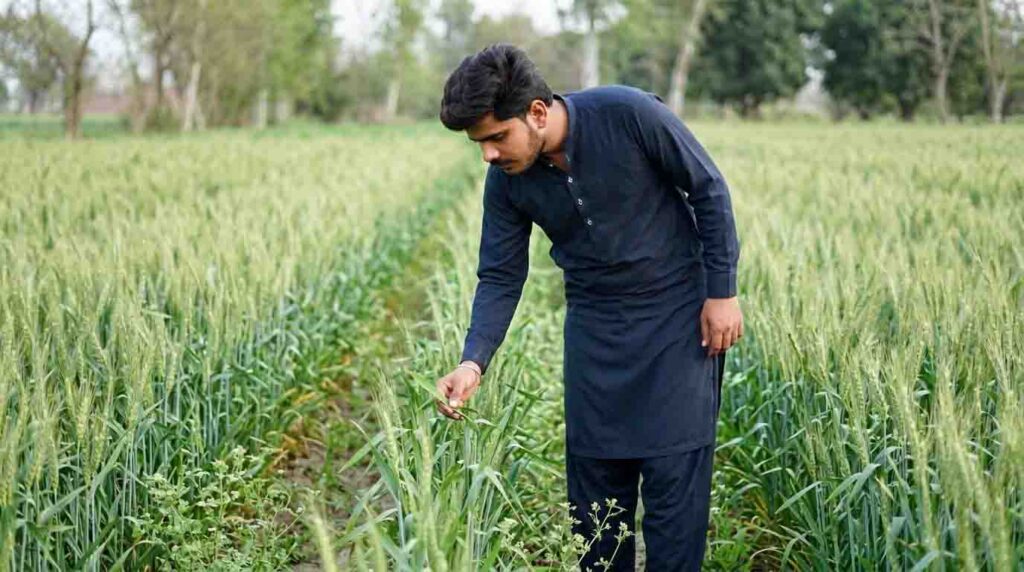
Conclusion
Low yield is not one big mystery. Most of the time, it is caused by small management gaps: late sowing, weak seed, unbalanced fertilizer, poor water control, and weeds. If you follow the steps shared in this guide—especially the wheat fertilizer schedule using Urea, DAP, and NPK—you can improve plant health, increase tillers, and get better grain filling.
If you remember one line from this article, remember this: “Low yield ke reasons aur solution” starts with balanced nutrition, right timing, and regular field checking.
FAQs (Low yield ke reasons and solutions)
1) What is the biggest reason for low wheat yield in Pakistan?
The most common reasons are late sowing, unbalanced fertilizer (only urea), and poor weed control in early season.
2) Can I apply DAP after germination?
DAP is most useful at sowing because phosphorus helps early root growth. Late DAP gives less benefit. If missed, consult a local expert for alternatives.
3) When is the best time to apply urea in wheat?
Best practice is split application.
- 1st dose at tillering (with first irrigation)
- 2nd dose at booting stage (with second irrigation)
4) Is NPK necessary if I already use DAP and urea?
Not always necessary, but NPK helps balance (especially potassium) and improves stress tolerance and grain filling. It is very useful in weak soils or where potash is low.
5) My crop is green, but the yield is still low. Why?
Possible reasons:
Lodging due to over-urea or over-irrigation
Too much nitrogen (lush crop, less grain set)
Water stress at heading/grain filling
Hidden deficiency (like zinc) or disease